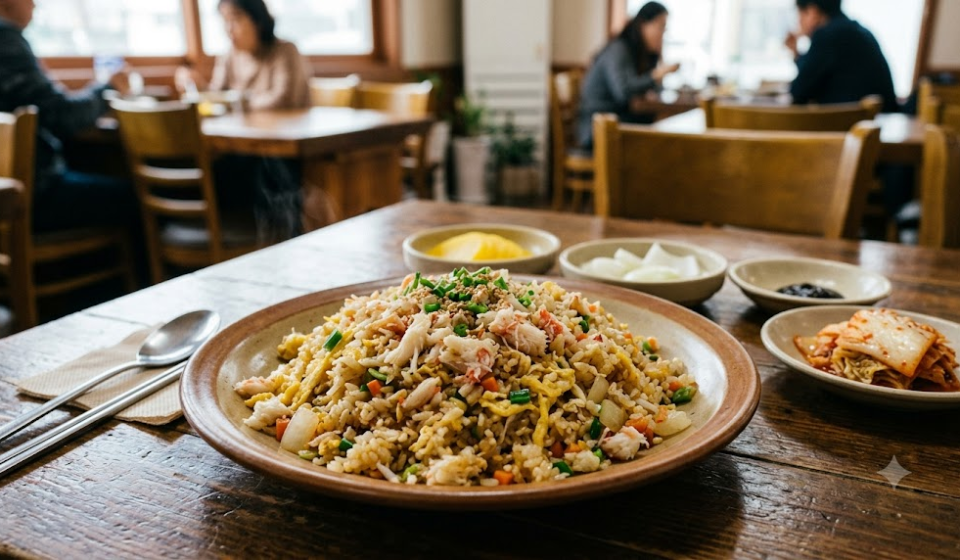

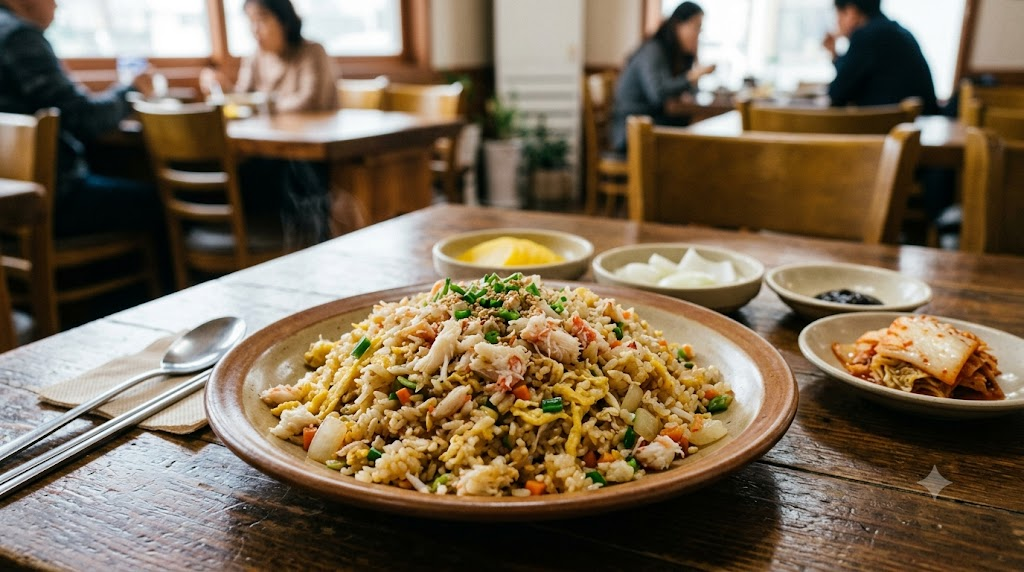
When you look through the rice section of a Korean-Chinese restaurant menu, several kinds of fried rice often appear below jajangmyeon and jjamppong. Shrimp fried rice makes its main ingredient obvious from the name, but crab meat fried rice can make you pause for a moment: is it rice topped with crab meat, or rice stir-fried together with crab? If the menu also uses Chinese characters, the unfamiliar name 蟹肉炒饭 may catch your eye.
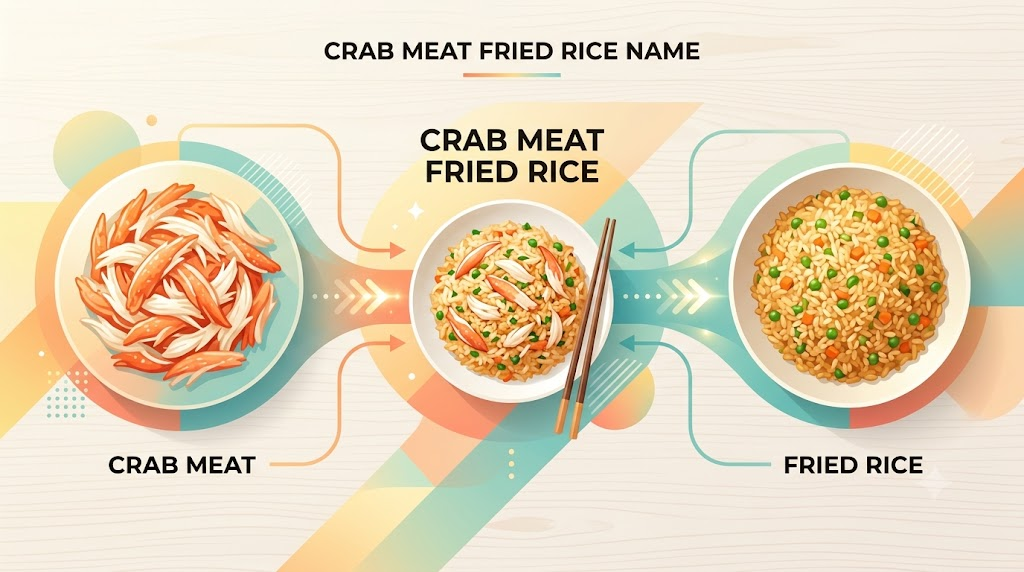
The meaning of crab meat fried rice is clearer when the name is split into two parts
The meaning of crab meat fried rice becomes clear when the name is divided into “crab meat” and “fried rice.” Crab meat refers to the meat removed from a crab, while fried rice means rice cooked by stir-frying it with other ingredients. The name itself is essentially a description of fried rice made with crab meat.
Here, “crab meat” does not necessarily mean that large pieces of crab meat must sit on top of the rice. Shredded crab meat may be stir-fried together with egg or vegetables, while some restaurants may add crab meat on top of the finished rice. Even under the same name, the presentation and combination of ingredients can vary somewhat from one restaurant to another.
How should 蟹肉炒饭 be read on a Chinese menu?
One expression used on Chinese menus for crab meat fried rice is 蟹肉炒饭. Broken down by meaning, 蟹肉 means crab meat, while 炒饭 means fried rice. Like the Korean name for crab meat fried rice, it combines the main ingredient with the cooking form.
In the food-name translation materials from the Korea Tourism Organization, crab meat fried rice is also rendered in English as “fried rice with crab meat,” making both the ingredient and cooking method clear. In Chinese as well, the name is less like a complicated proper dish name and more like a direct description of “fried rice with crab meat.”
So if you see 蟹肉炒饭 on a menu, it is closer to reading it as the Chinese name corresponding to crab meat fried rice than assuming it is a completely different unfamiliar dish.
Why are names on Korean-Chinese menus so straightforward?
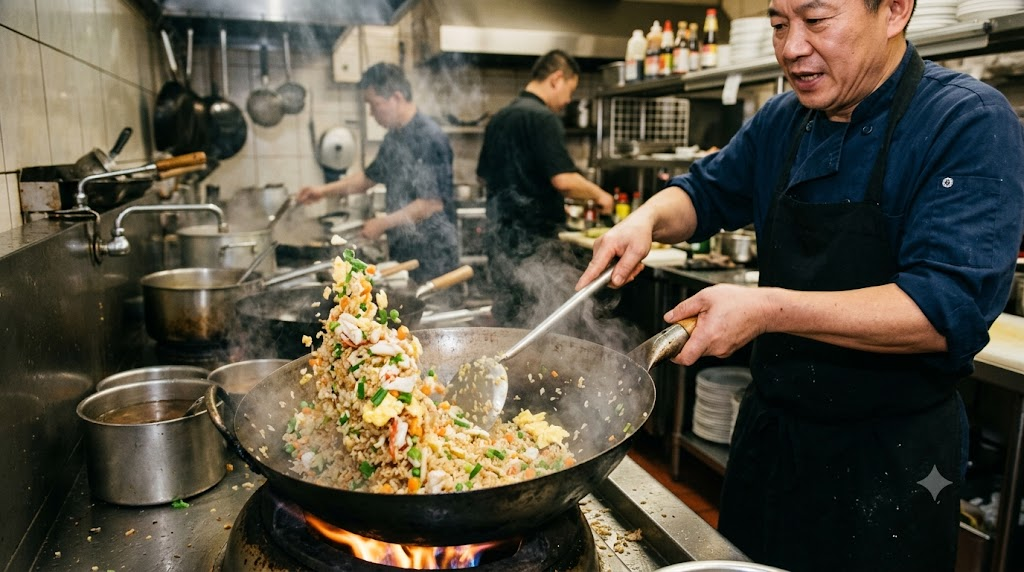
Korean-Chinese restaurant menus often place the ingredient name before “fried rice.” If shrimp is the main ingredient, it becomes shrimp fried rice; if crab meat is emphasized, it becomes crab meat fried rice. This structure makes it fairly easy to guess what is in the dish even on a menu made up only of text and no photos.
Crab meat fried rice also tends to be named for the ingredient it contains rather than for a particular seasoning or place name. That is why restaurants may use the same menu name even when the combination of supporting ingredients such as egg, green onion, and carrot differs, as long as the main idea remains “fried rice with crab meat.”
Still, the name alone does not tell you what kind of crab was used, how much crab meat is included, or every ingredient in the dish. Frozen foods and ready-made products sold in stores may use the same name, so if you want to know the actual ingredients, checking the product label or the restaurant’s information is more accurate.
The difference is easier to see beside shrimp fried rice and three-delicacy fried rice
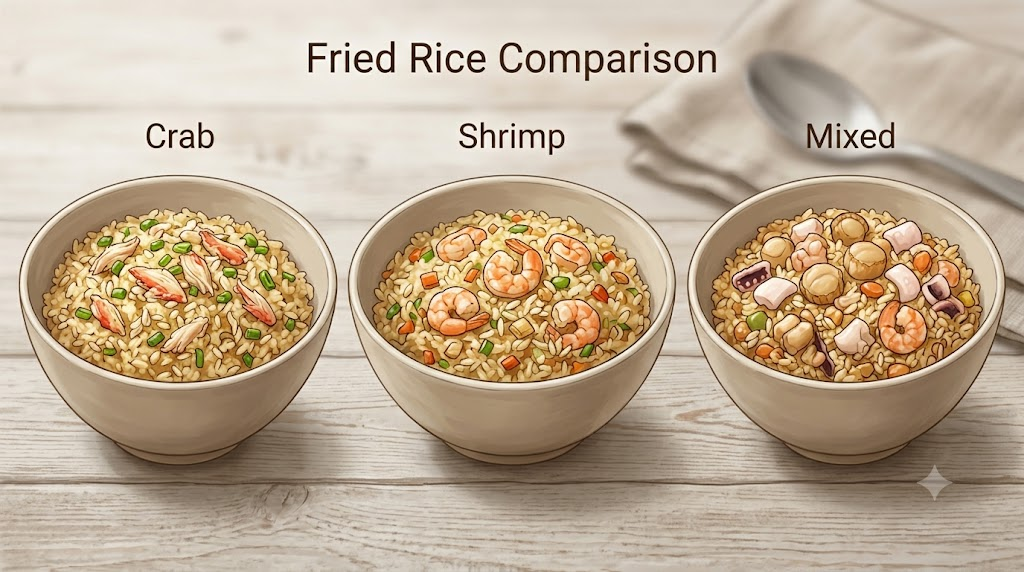
Rather than looking at crab meat fried rice by itself, comparing it with other fried rice names makes the naming pattern easier to see. In particular, placing it beside shrimp fried rice and three-delicacy fried rice, both commonly found on Korean-Chinese menus, helps show what each name emphasizes.
| Menu name | What the name emphasizes | Example Chinese name | How to read it on the menu |
|---|---|---|---|
| Crab meat fried rice | Crab meat | 蟹肉炒饭 | Fried rice with crab meat |
| Shrimp fried rice | Shrimp | 虾仁炒饭 | Fried rice centered on shrimp as the main ingredient |
| Three-delicacy fried rice | Three delicacies | 三鲜炒饭 | A Chinese-style fried rice name highlighting several ingredients |
Crab meat fried rice and shrimp fried rice are very similar in that the main ingredient appears directly at the front of the name. By contrast, the “three delicacies” in three-delicacy fried rice is different in character from using the name of a single ingredient such as crab meat. When reading a menu quickly, looking at the word placed first in the name is a useful way to see what the dish is emphasizing.
How much can the word “crab meat” tell you about the actual ingredients?
A food name can give you a general idea of the dish, but it does not show every detail like a full cooking description. The name crab meat fried rice tells you that crab meat is the key ingredient, but it does not define a fixed standard for the form or amount of crab meat.
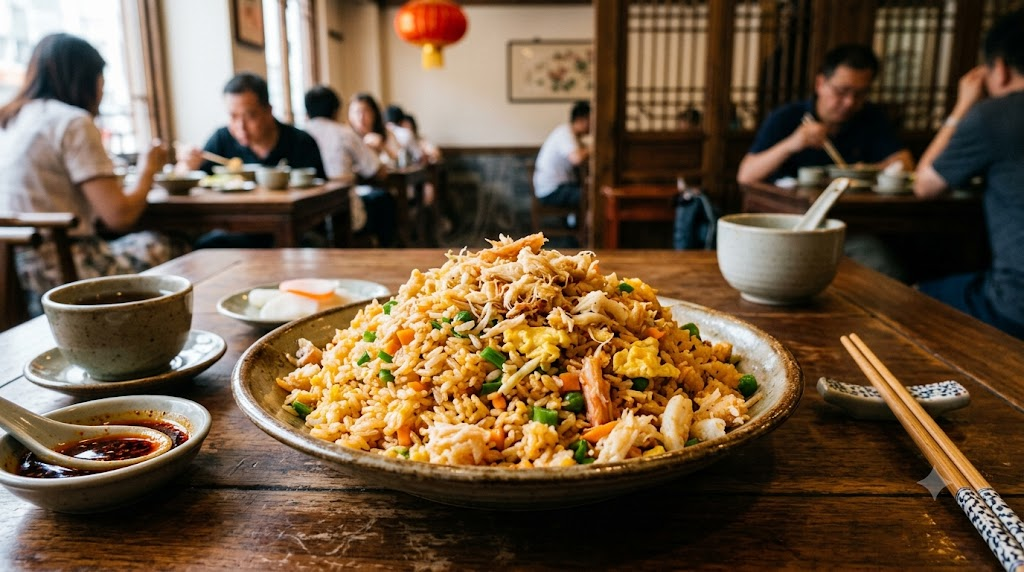
Some places mix finely shredded crab meat and egg throughout the rice, while others add more visibly noticeable crab meat. Packaged crab meat fried rice products also do not necessarily use identical ingredient combinations. The dish name and the actual ingredient list provide different kinds of information.
So if you want to know the type of crab meat used or how much crab is included, it is better not to stop at the menu name “crab meat fried rice” and instead check the ingredient label or the restaurant’s description.
What the name tells you when you see crab meat fried rice on a menu today
The meaning of crab meat fried rice is simply fried rice centered on crab meat as the main ingredient, and the Chinese menu name 蟹肉炒饭 can be understood through the same “crab meat + fried rice” structure. On Korean-Chinese menus, it is best read not as a special proper name but as a dish name that shows its character by placing the ingredient first.
The next time crab meat fried rice, shrimp fried rice, and three-delicacy fried rice appear one after another on a Chinese restaurant menu, the first part of each name may tell you more than the appearance of the rice itself. Once “crab meat” appears at the front, much of what the fried rice is centered on is already clear.
※ This content is provided as a reference for food names and food culture information.
※ Food origins, regional names, and cooking methods may be passed down differently depending on documents, regions, households, and restaurants, so please also refer to official materials and the actual menu information.
Korean version: 한국어로 읽기