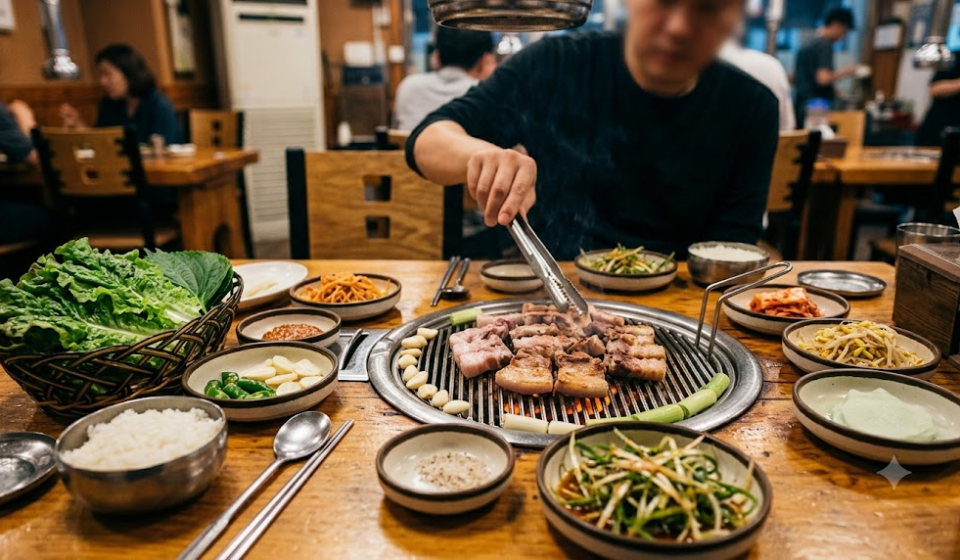

Open a Korean barbecue menu and you may see several similar names, from fresh samgyeopsal and frozen samgyeopsal to aged samgyeopsal and ogyeopsal. They are easy to pass over as simple names for pork cuts, but once you stop to think about what “samgyeop” actually means, you may wonder why the number 3 is part of the name. Looking at the cut surface of a piece of meat makes the name easier to understand.
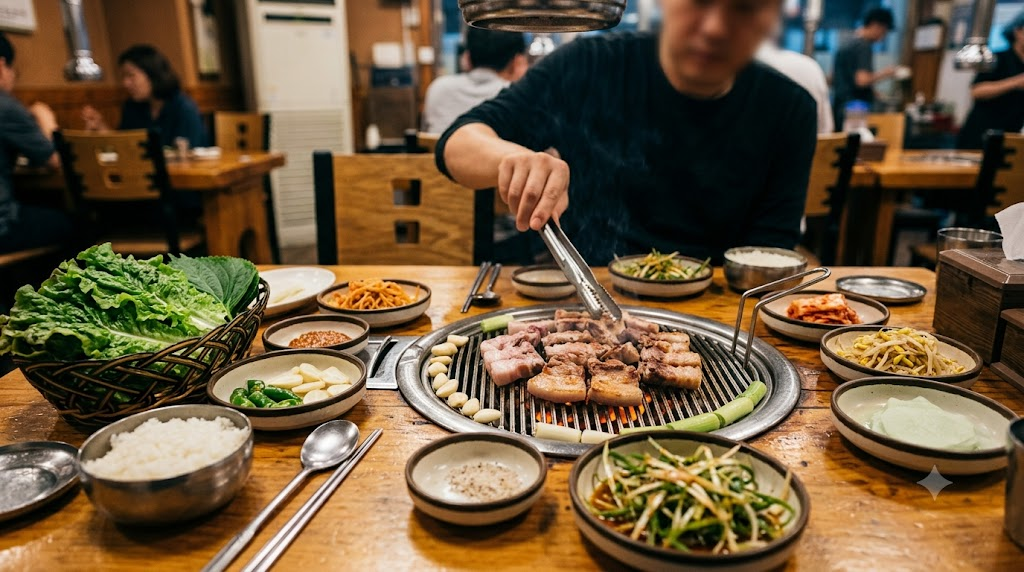
The meaning of samgyeopsal comes from the meat’s cross section
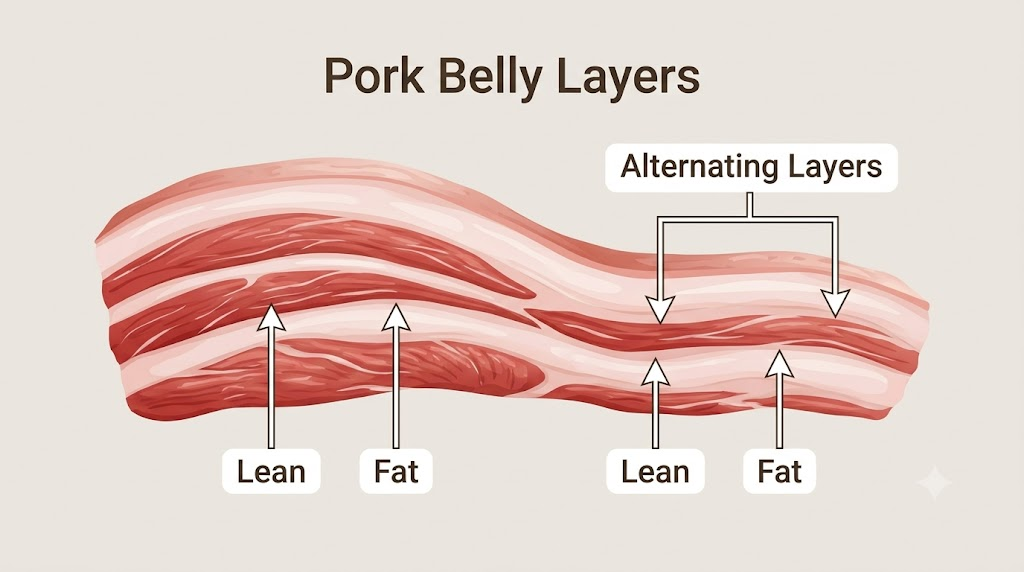
The National Institute of Korean Language’s Standard Korean Language Dictionary lists samgyeopsal as “삼겹-살(三겹살).” It also describes it as meat attached around the pork rib area in which the fat and lean meat appear to form three layers. Here, “sam” is the Chinese character 三, meaning three, while “gyeop” refers to layers placed one over another.
In modern terms, the meaning of the name samgyeopsal can therefore be explained as “pork called three-layered because the lean meat and fat appear stacked in several layers.” The name does not mean that every piece was measured to confirm exactly three lines. Instead, it describes the visible layers of meat and fat in the cut surface.
The word “segyeopsal” also appears in the dictionary
Because of the “sam” in samgyeopsal, the whole name may look as though it is made from Chinese-derived words, but its structure is a little different. The Chinese character “sam(三)” is followed by the native Korean words “gyeop” and “sal.” The dictionary also lists “segyeopsal” as a word with the same meaning as samgyeopsal.
However, the name samgyeopsal is much more familiar and much more common on restaurant signs and in supermarket meat sections. For that reason, someone seeing the word segyeopsal for the first time might assume it is a completely different cut, but in dictionary usage the two do not refer to different parts of the pig.
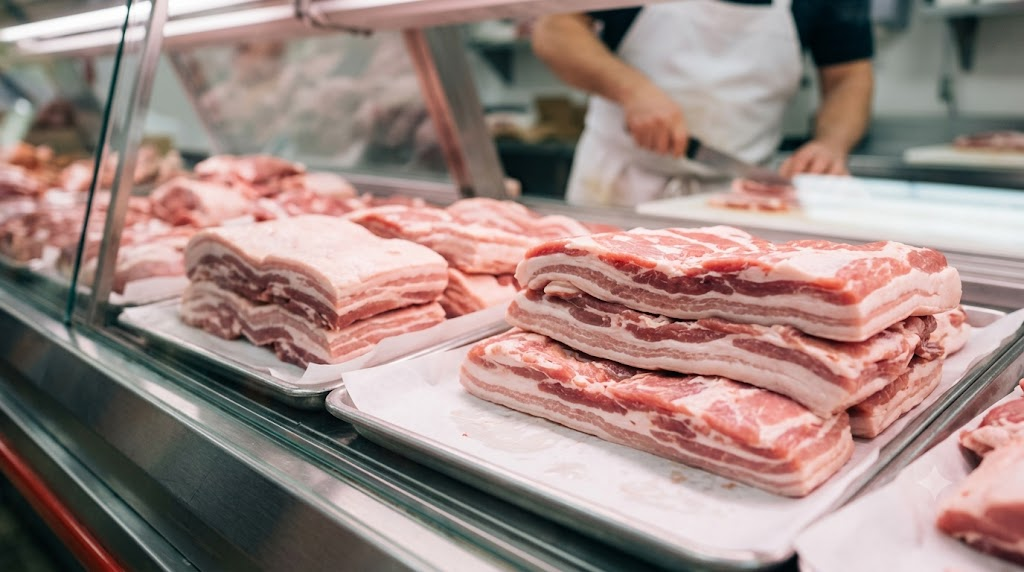
Fresh and frozen samgyeopsal do not change the meaning of “samgyeop”
Fresh samgyeopsal, frozen samgyeopsal, and quick-frozen samgyeopsal can look like names for different cuts when they appear on a menu. But the word “samgyeopsal” at the end still refers to the same cut, while the words placed before it describe its storage condition or the way it is sold.
Restaurants also often shorten these names to expressions such as “fresh samgyeop,” “quick-frozen samgyeop,” or “aged samgyeop.” Here too, “samgyeop” comes from the name of the cut in which lean meat and fat appear layered. Cutting it thick or thin does not turn samgyeopsal itself into a different pork cut.
What should you look for when ogyeopsal appears next to it?
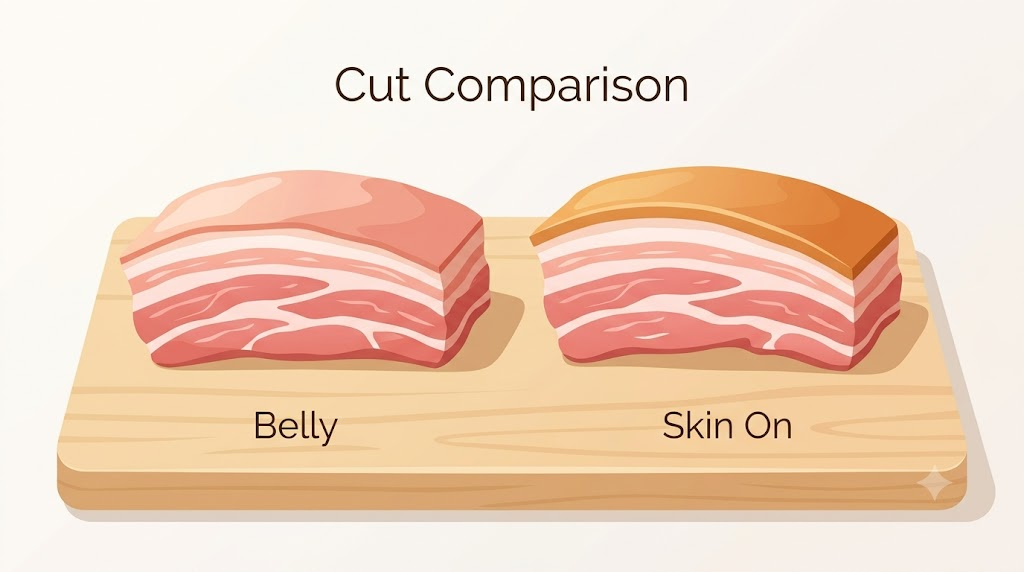
Ogyeopsal is another name often seen next to samgyeopsal. In restaurant and product names, the term commonly refers to a samgyeopsal cut with the pork skin left on. Rather than treating it as a completely different cut simply because the number 5 appears in the name, it is easier to read the menu if you understand it as a name that distinguishes the way the samgyeopsal cut has been trimmed.
However, there is no reason to take the dictionary explanation for samgyeopsal and conclude that ogyeopsal “must have exactly five layers.” Trimming methods and menu names can vary by restaurant, so checking whether the skin is left on gives a clearer idea of what will be served.
The exact starting point of the name is separate from its meaning
The meaning of the word samgyeopsal can be understood from dictionary explanations, but the question of who first created the name and when it first came into use is a separate matter. Stories that trace the word samgyeopsal to one specific person or one particular event are difficult to accept as established fact.
What can be stated clearly is that the current Korean dictionary lists it as “三겹살” and explains it as pork in which the fat and meat appear to form three layers. Rather than connecting the beginning of the name to a single story, it is better to separate the meaning confirmed in dictionary sources from stories that have been passed down.
On a menu, look at the words around the number
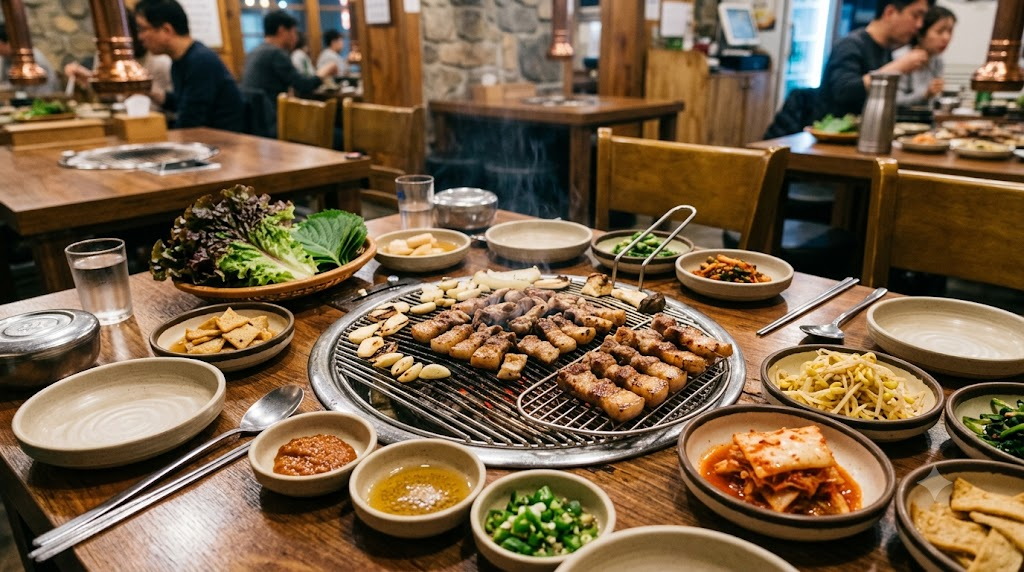
The meaning of the name samgyeopsal ultimately comes from the cut surface of the meat. The alternating layers of fat and lean meat are described with the word “samgyeop,” and “sal,” meaning meat, is added after it. Names such as fresh samgyeopsal or quick-frozen samgyeopsal simply add a word describing the condition of the meat, while the basic name of the cut remains the same.
If you see samgyeopsal and ogyeopsal side by side on a restaurant menu, it makes more sense to check how the meat has been trimmed than to focus only on the numbers. The name “samgyeopsal” refers to a pork cut in which lean meat and fat appear stacked in layers.
※ This content is provided as reference information about food names and food culture.
※ Food origins, regional names, and cooking methods may be described differently depending on documents, regions, households, and restaurants, so please also refer to official sources and the actual menu information.
Korean version: 한국어로 읽기