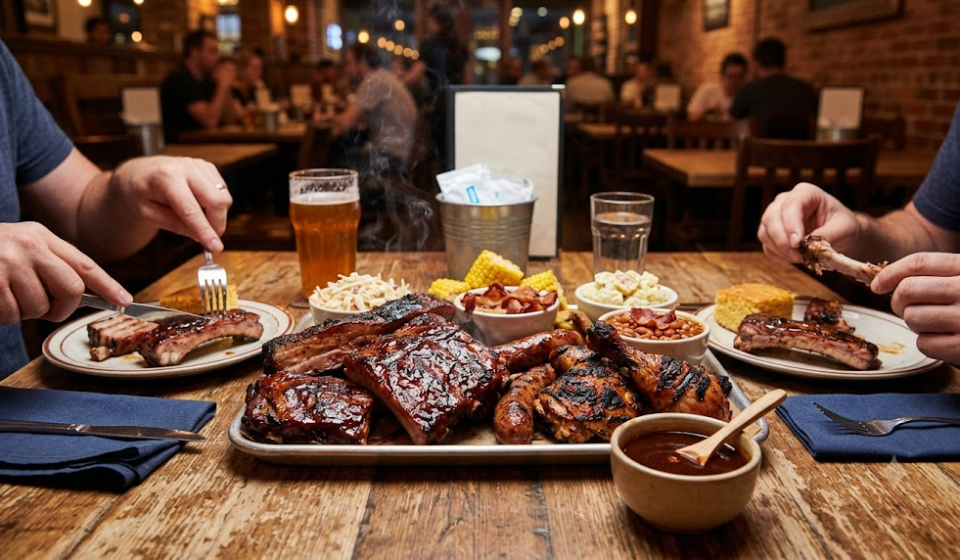

When you look through a steakhouse or pub menu, the same word appears in dishes such as barbecue ribs, barbecue chicken, and barbecue platters. Supermarkets have barbecue sauce in a separate section, and BBQ also appears on outdoor cooking equipment. It can be hard to tell whether the word refers to one cooking method or more broadly to food cooked over heat.
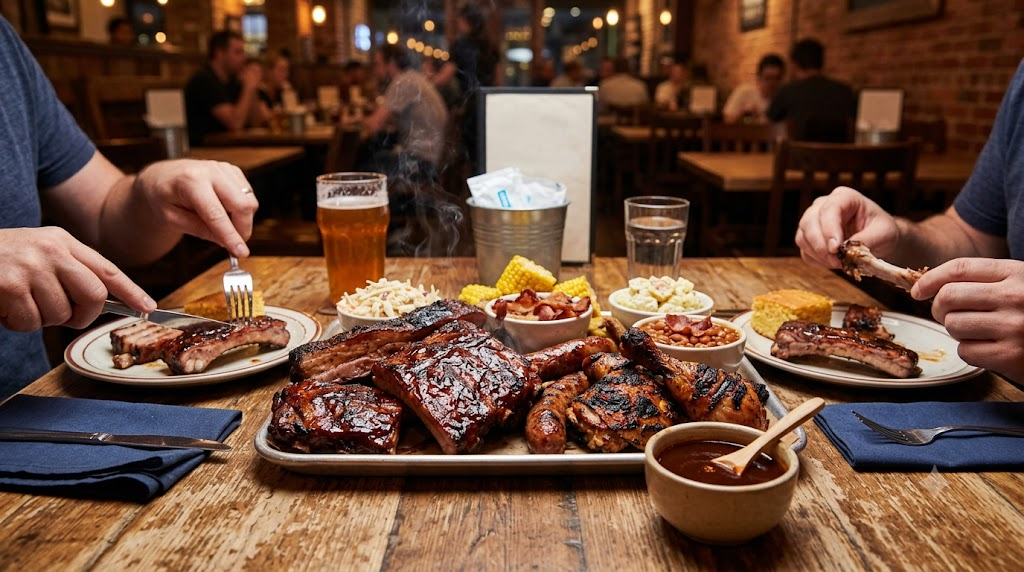
Barbecue on a Menu Does Not Refer to Just One Kind of Food
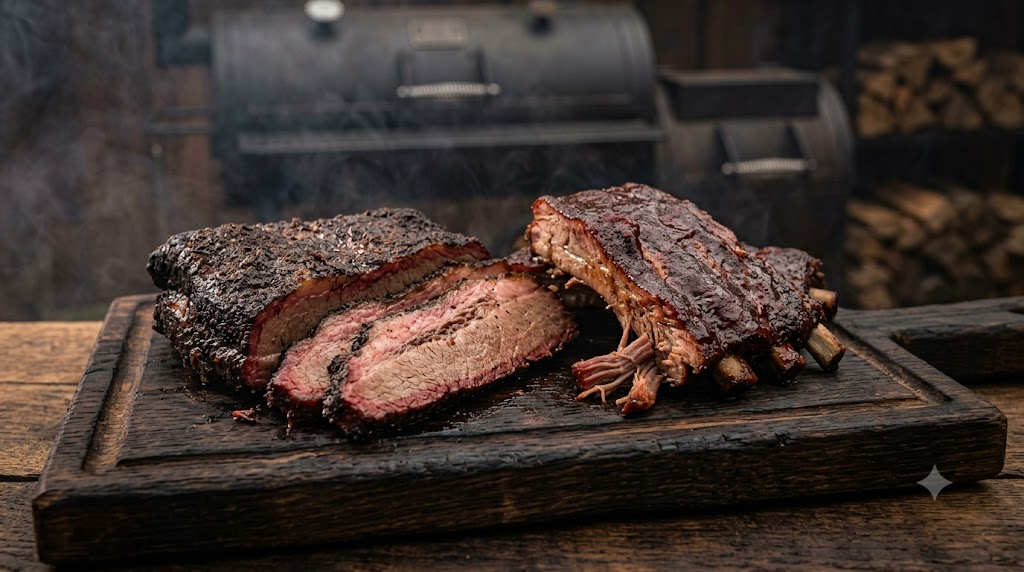
In English today, barbecue is used broadly for cooking meat, fish, and other foods close to fire or another heat source. Cooking meat slowly with low heat and smoke is also widely associated with barbecue.
The word is not limited to the cooking method. Barbecue can also refer to the cooked food itself, a gathering where barbecue food is eaten outdoors, or the cooking equipment. This is why the same word can point to slightly different things on menus and product packaging.
On Korean menus, names such as “barbecue chicken” and “barbecue ribs” do not always mean that one fixed cooking formula was used. The term may cover flame-grilled food, meat cooked with sauce, or dishes that emphasize smoking, depending on how a restaurant presents the dish.
The Barbecue Name Meaning Starts with a Rack Rather Than the Meat
The English word barbecue is connected to the Spanish word barbacoa, which was used in the Americas. Merriam-Webster describes the word as referring to a wooden structure used to support meat or other food for cooking or drying, and links its background to the Taíno language of Hispaniola.

The dictionary of the Royal Spanish Academy also explains that barbacoa may come from Taíno. In Spanish today, the word continues to refer to a grill used outdoors for cooking meat or fish, as well as food prepared there.
In simple modern terms, the barbecue name meaning is close to “a name that expanded from a rack used to cook food near fire and the cooking method connected with it.” It did not originally refer to one particular cut of meat or one particular sauce.
From Barbacoa to Barbecue, the Meaning Became Broader
In English-language records, barbecue appears from the late 1600s as a word for a structure used to cook meat or fish and for the act of cooking in that way. Later, the meaning expanded to include gatherings where people ate food cooked outdoors and the food served there.
One distinction is worth keeping. Rather than saying that the earliest form of barbecue was definitely one exact cooking method, the clearer historical pattern is that a word used in the Caribbean passed through Spanish into English and developed a broader meaning.
Even within the United States today, barbecue can bring to mind different meats, sauces, wood smoke, cooking temperatures, and cooking times depending on the region. Treating the origin of the word and every modern regional barbecue tradition as the same thing would make the explanation too simple.
What Should You Look for When Grill and Barbecue Appear Together?
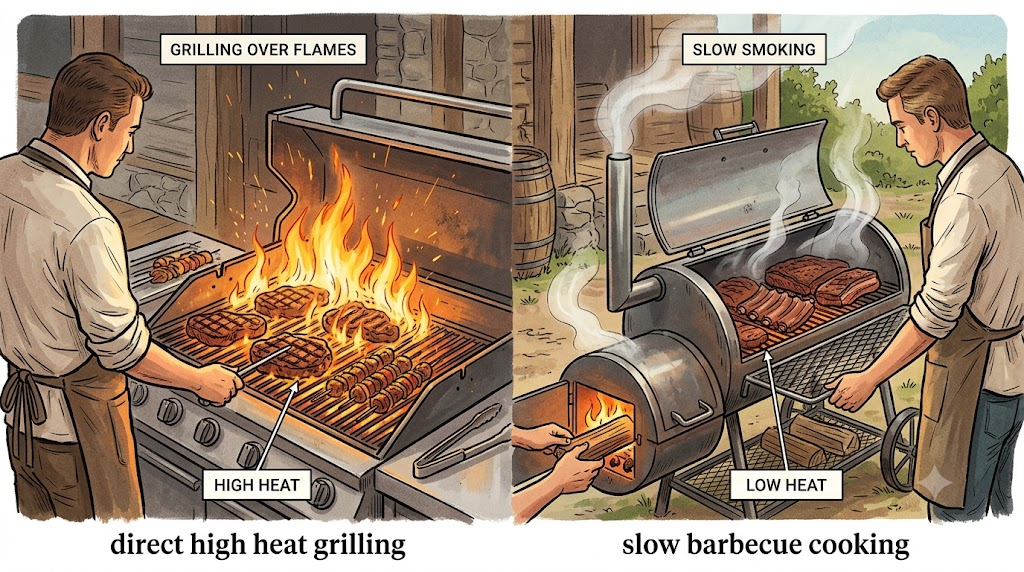
When grill and barbecue both appear on a menu, reading one more line of the cooking description is usually the quickest approach. Grill often points directly to cooking food close to fire or another heat source, while barbecue has a broader range that can include grilling, low heat and smoke, seasoning and sauce, and even the finished dish name.
| Word on the menu | What it usually refers to | What to check when ordering |
|---|---|---|
| Grill | Cooking close to fire or another heat source | Direct flame, doneness, type of meat |
| Barbecue | Broad use covering grilling, smoking methods, and finished dish names | Smoking, sauce, cooking time |
| BBQ | An abbreviated form of Barbecue | Check the menu description for the actual cooking method |
For example, even when a menu says “BBQ ribs,” not every restaurant prepares the ribs in the same way. Some smoke the meat and then add sauce, while others cook it in an oven or on a grill and emphasize the flavor of barbecue sauce.
Why Is the Short Form BBQ So Common?
BBQ is an abbreviated English form of barbecue. It often appears where shorter wording is convenient, such as restaurant signs, sauce names, delivery menus, and outdoor cooking equipment.
In Korean, “바비큐” is widely used. In English, barbecue is the standard spelling, while the variant spelling barbeque also appears. Seeing BBQ on a menu does not mean that it is a separate food name.
In Korean product names, expressions such as “barbecue flavor” and “barbecue sauce” have also expanded beyond the cooking method to describe a flavor profile. In these cases, the name may suggest a sweet and savory sauce or smoky flavor rather than food that was actually cooked outdoors over fire for a long time.
The Simplest Way to Read Barbecue on a Menu Today
The roots of the barbecue name meaning can be traced to a barbacoa-related word connected to an Indigenous language of the Caribbean. As the word entered English as barbecue, its meaning expanded to cover a cooking rack, a cooking method, food, and an outdoor meal gathering.
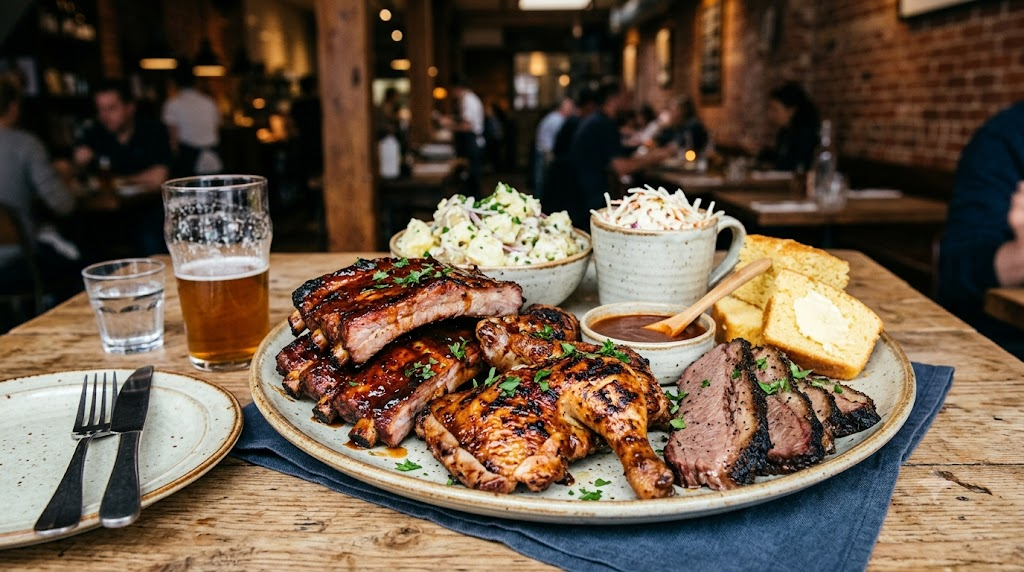
So instead of assuming one cooking method from the word “barbecue” alone, it is more accurate to read nearby descriptions such as smoked, grilled, ribs, and chicken. When barbecue ribs and barbecue chicken appear side by side on a menu, those extra words give a better idea of what will actually arrive on the plate.
※ This content is provided as reference information about food names and food culture.
※ Food origins, regional names, and cooking methods may be described differently depending on documents, regions, households, and restaurants, so please also refer to official sources and the actual menu information.
Korean version: 한국어로 읽기