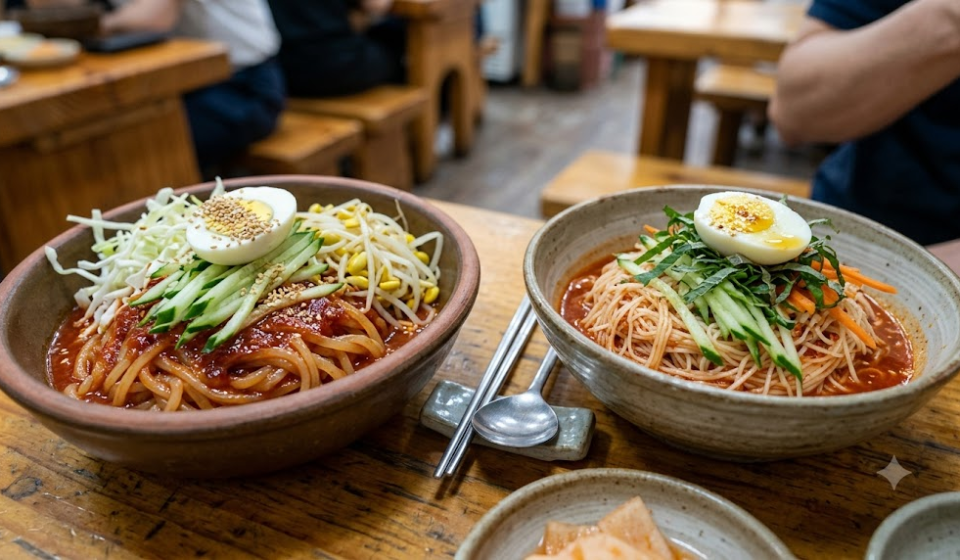

When you look at a snack-bar menu, you may pause between jjolmyeon and bibim guksu. In the photos, both dishes often have red sauce with cucumber, egg, and vegetables, so they can look almost the same. Instead of wondering how the sauce will taste, it is easier to choose by thinking about the kind of noodles you want to eat.
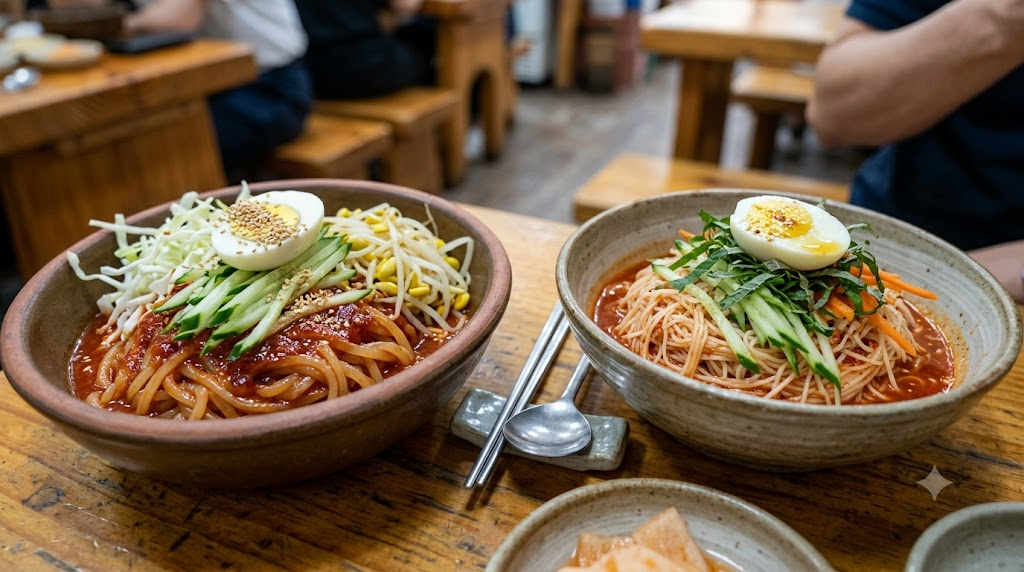
Choose jjolmyeon if you want thick, chewy noodles
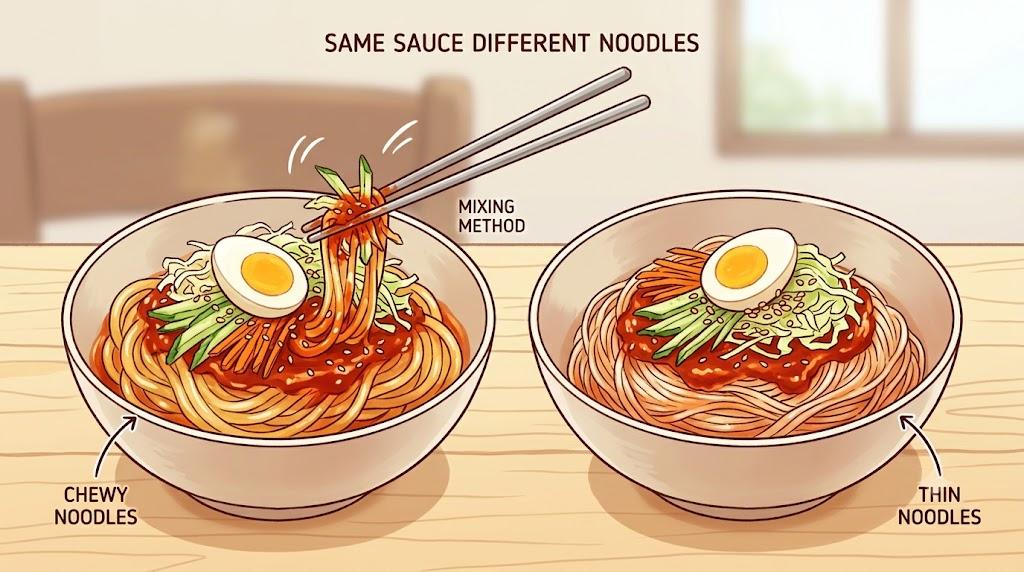
Jjolmyeon noodles are thicker and much chewier than the noodles commonly used for guksu. When you lift a strand with chopsticks, its thickness is easy to see, and the chewy texture lasts as you bite into it.
If you prefer noodles with more bite rather than soft noodles that slide down easily, jjolmyeon is the closer match. How many vegetables are piled on top or how red the sauce looks can come later.
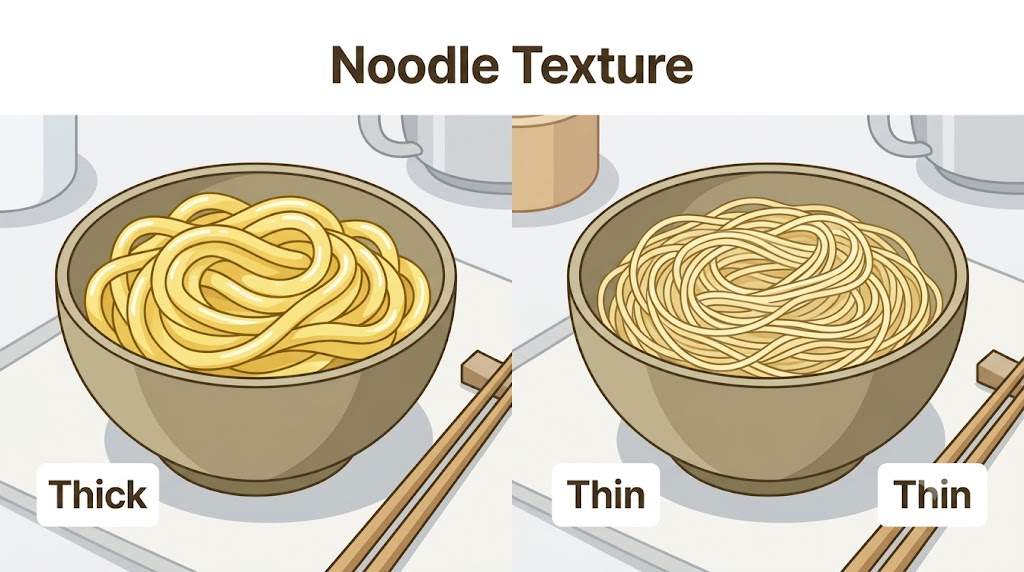
Choose bibim guksu if you want thin noodles mixed with sauce
Bibim guksu is usually made with thin wheat noodles that are boiled and rinsed in cold water. The noodles are thinner than jjolmyeon, so they feel softer with the sauce and are less chewy when you bite into them.
Here, “bibim” describes how the food is eaten. It means the noodles are mixed with sauce rather than served in broth. That is also why the name differs from noodle dishes such as myeolchi guksu or janchi guksu, which are served with broth.
The names emphasize different parts of the dish
With bibim guksu, the idea of mixing the noodles stands out in the name. Jjolmyeon, on the other hand, draws more attention to the type of noodle being used.
Today, jjolmyeon at snack bars is also usually mixed with a spicy, tangy sauce, so it can look quite similar to bibim guksu when served. Even so, the name jjolmyeon puts more emphasis on the character of the noodles, while bibim guksu puts more emphasis on the way the noodles are mixed.
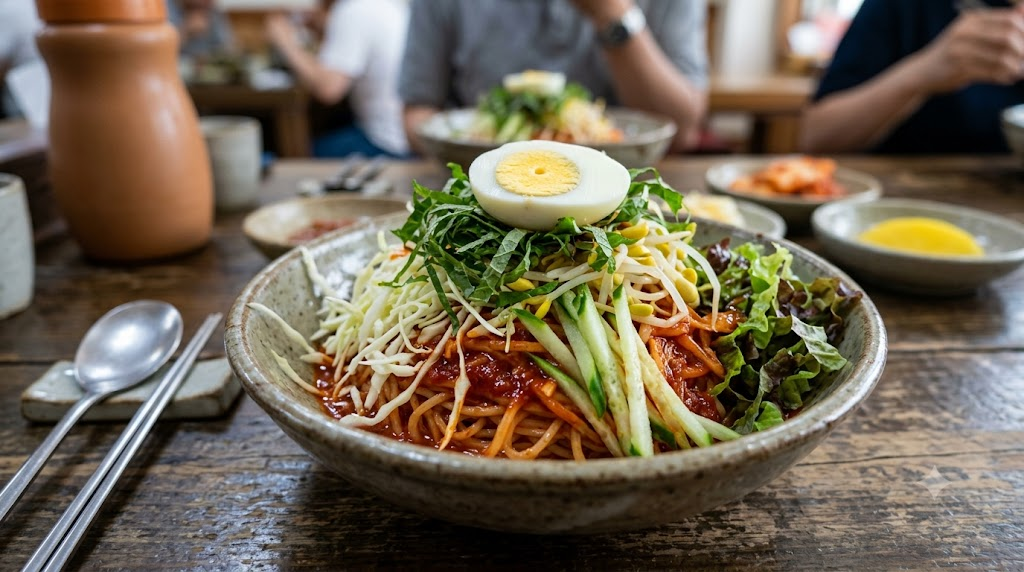
Vegetables and sauce are not as reliable as they look
Jjolmyeon often comes with plenty of crisp vegetables such as cabbage, bean sprouts, cucumber, and carrot. Add a boiled egg, and the bowl looks much like the familiar jjolmyeon served at Korean snack bars.
Bibim guksu can look very similar. It may be topped with cucumber, lettuce, seaweed flakes, and egg, or mixed with kimchi or yeolmu kimchi. Some restaurants also serve jjolmyeon very simply, so toppings alone do not always separate the two dishes clearly.
The same is true of the sauce. Both dishes are commonly seasoned with spicy, sweet, and tangy sauces based on gochujang or chili powder. Rather than assuming one dish is always hotter or more sour, it is more accurate to expect the sauce balance to vary by restaurant.
| Category | Jjolmyeon | Bibim Guksu |
|---|---|---|
| What stands out in the name | Chewy, springy noodles | Noodles mixed with sauce |
| Typical noodle appearance | Thick and plump | Thin guksu noodles |
| Texture | Springy with a strong chew | Softer and lighter to eat |
| Toppings | Bean sprouts, cabbage, cucumber, and other vegetables are common | Cucumber, seaweed flakes, kimchi, and yeolmu vary widely |
| Sauce | Spicy and tangy mixed sauce is common | Spicy and tangy mixed sauce is common |
Seeing “bibim jjolmyeon” on a menu is not unusual
Jjolmyeon is often found on snack-bar menus alongside tteokbokki, gimbap, and mandu. Bibim guksu is also common at noodle restaurants and Korean restaurants, and ingredient names may be added, as in yeolmu bibim guksu.
Some restaurants also use the name “bibim jjolmyeon.” In this expression, “bibim” describes the way the noodles are eaten, while “jjolmyeon” tells you which noodles are used. The two words are not repeating the same idea; they describe different parts of the dish.
Right before ordering, think about texture
If you are choosing between jjolmyeon and bibim guksu, start with the texture you want. Pick jjolmyeon if you like thick, very chewy noodles, or bibim guksu if you want thin noodles mixed with spicy sauce.
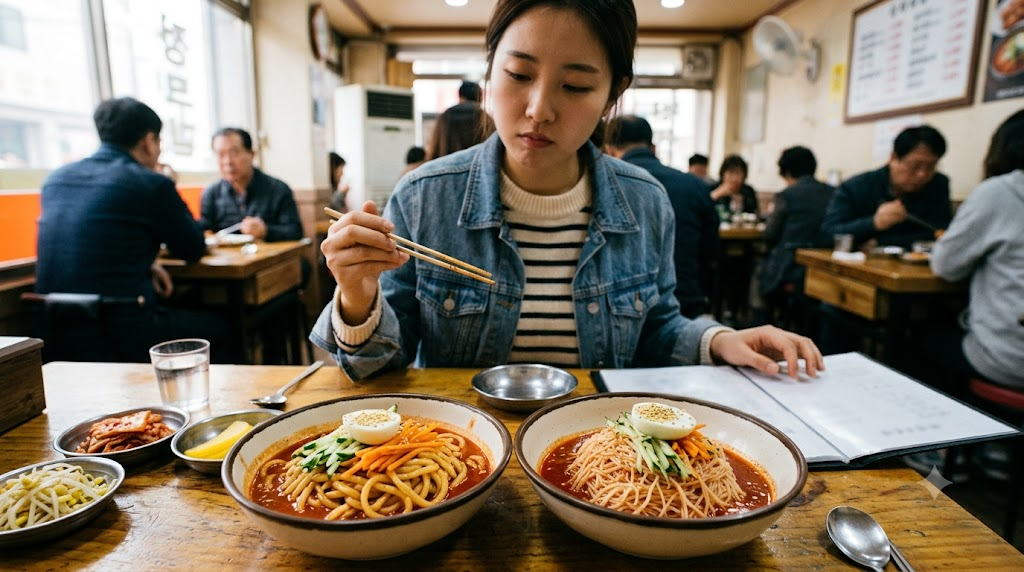
The difference between jjolmyeon and bibim guksu comes down to the noodles used and what each name highlights. Jjolmyeon stands out for its thick, chewy noodles, while bibim guksu is made by mixing thin noodles with sauce. Even when the menu photos look similar, thinking about which noodle texture you want can make the choice much easier.
※ This content is provided as a reference for food names and food culture information.
※ Food origins, regional names, and cooking styles may vary by source, region, household, and restaurant, so please also check official references and the actual menu information.
Korean version: 한국어로 읽기