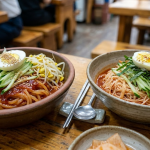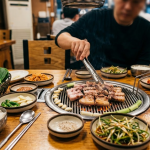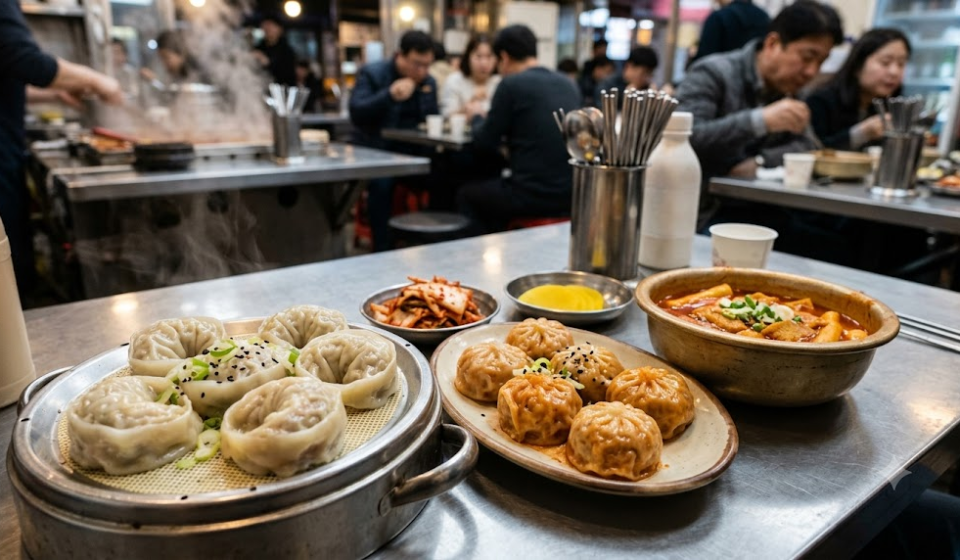

At a bunsik shop, meat mandu and kimchi mandu often appear side by side on the menu near tteokbokki and sundae. Steamed dumplings may not look very different from the outside, so why are words such as “meat” and “kimchi” added to distinguish them? The name meat mandu is less about explaining where mandu came from and more about identifying what kind of filling is inside.
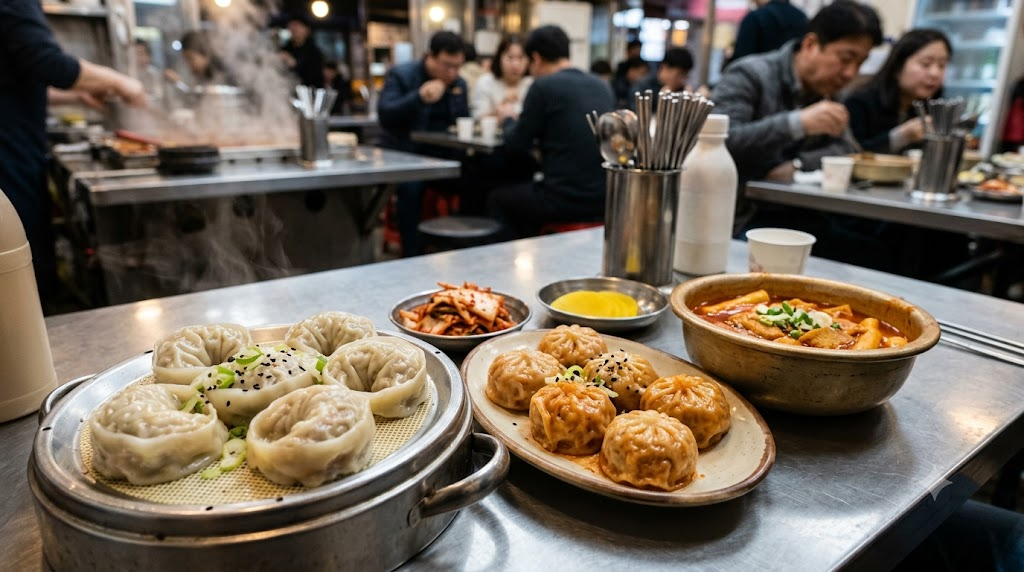
The meaning of meat mandu is found inside the dumpling
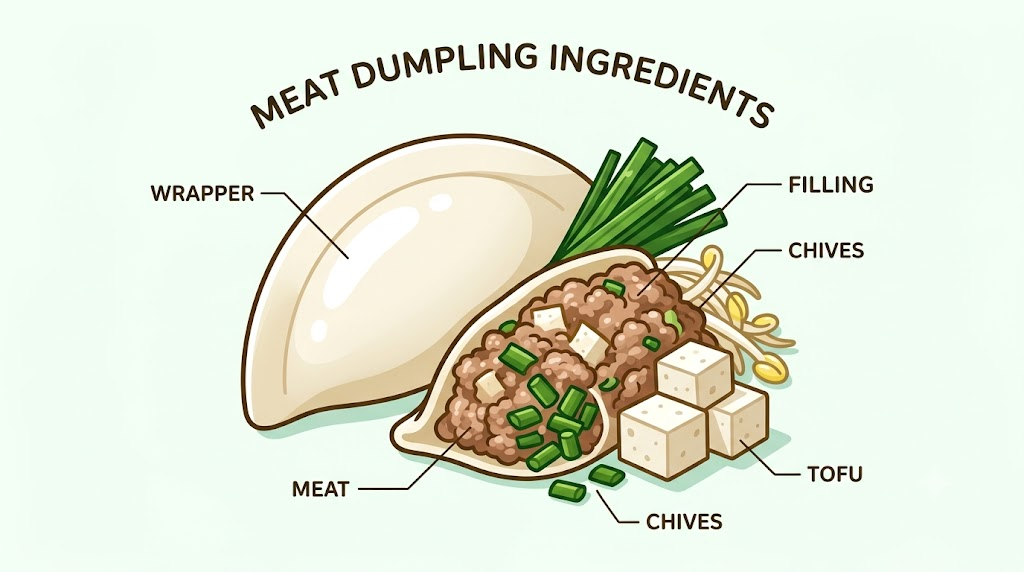
The name “meat mandu” combines the words “meat” and “mandu.” Here, “meat” refers not to the outer wrapper but to an ingredient in the filling. Mandu is made by filling a wrapper made from wheat or buckwheat flour dough, shaping it, and cooking it. Different names have been used depending on what goes into the filling.
The mandu entry in the Encyclopedia of Korean Culture also lists varieties based on their fillings, including hobak mandu, meat mandu, mushroom mandu, and kimchi mandu. In that sense, the “meat” in meat mandu is better understood as a word placed before mandu to indicate what is inside, rather than as an old independent food name that has simply survived unchanged.
The history of the name mandu should be separated from the name meat mandu
Mandu itself is an old food name. The Encyclopedia of Korean Culture explains that mandu came to Korea from China, while noting that the exact period of introduction cannot be clearly identified. However, a record from the reign of King Chunghye in the Goryeosa mentions the punishment of a person who stole and ate mandu, suggesting that the food was already known during the Goryeo period.
That record does not mean that the specific menu name “meat mandu,” as used in bunsik shops today, existed at that time. The broader name mandu has a long history, while meat mandu is an easy way to distinguish one type of mandu by what is inside it. The documented history of mandu and the specific food names found on modern menus are better kept separate.
The meaning becomes clearer next to kimchi mandu
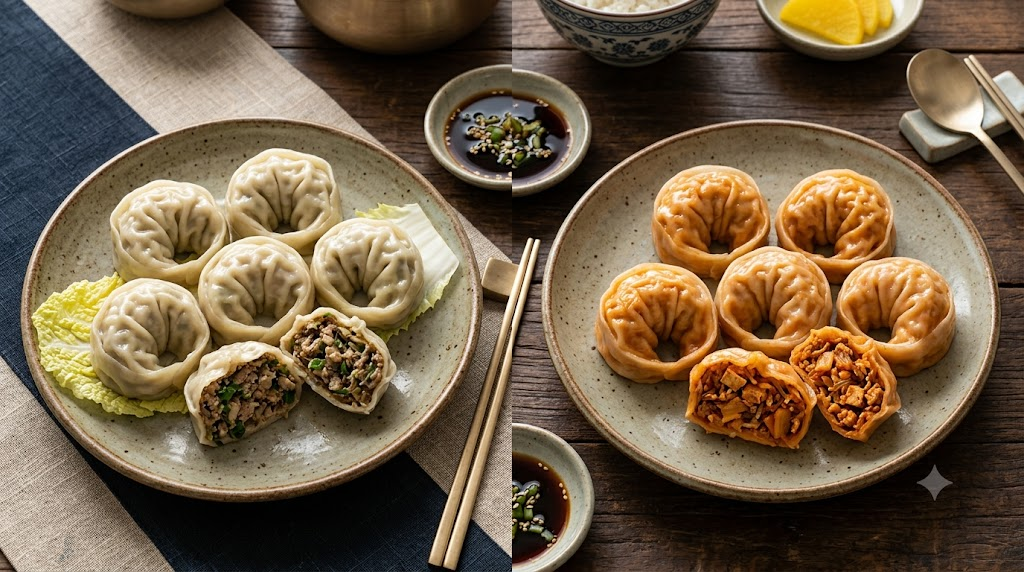
On a bunsik menu, the meaning of meat mandu is easiest to notice when it appears next to kimchi mandu. Both are mandu, while the word placed in front tells you about the main character of the filling. Meat mandu is named around a filling containing meat, while kimchi mandu is named around a filling in which kimchi stands out.
| Menu name | What appears first in the name | How to read the name on a menu |
|---|---|---|
| Meat mandu | Meat | A name centered on mandu filling that contains meat |
| Kimchi mandu | Kimchi | A name centered on mandu filling that contains kimchi |
| Steamed mandu | Steaming method | A name that emphasizes how it is cooked rather than the filling |
The ingredients and proportions inside meat mandu are not identical from one shop to another. The filling is often not meat alone and may also include ingredients such as tofu, mung bean sprouts, and chives. So reading the word “meat” as meaning that no other ingredients are included may not match the dumpling that is actually served.
Steamed mandu and fried mandu follow a different naming rule
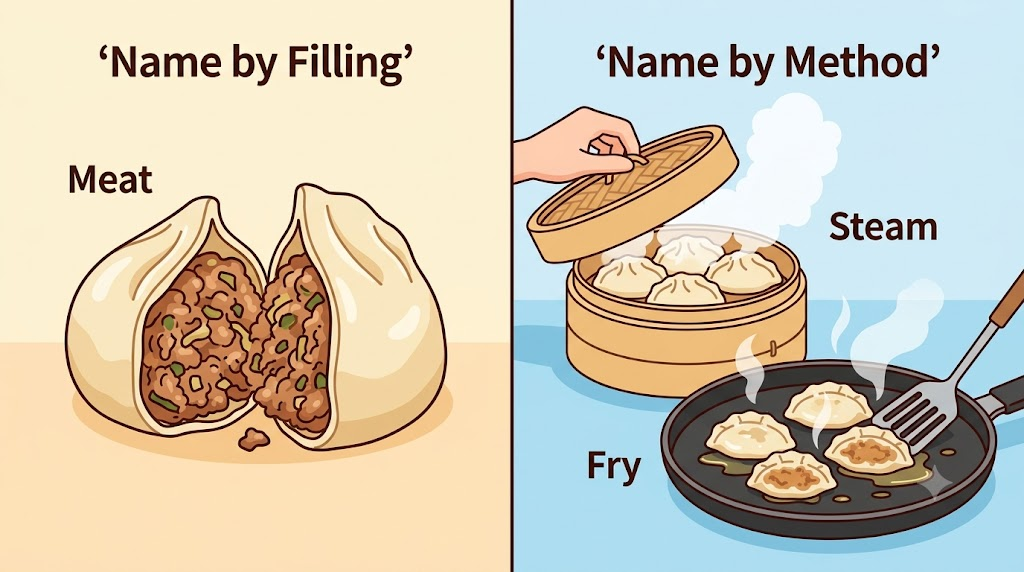
It can be confusing to assume that meat mandu and steamed mandu were named in the same way. Meat mandu points mainly to what is inside, while steamed mandu places the cooking method at the front of the name. The Encyclopedia of Korean Culture also describes steamed mandu as mandu that is steamed and eaten without broth.
A single dumpling can therefore fit both descriptions. A dumpling with a meat filling that is steamed can be called meat mandu when classified by filling and steamed mandu when classified by cooking method. On actual bunsik menus, shops often highlight just one of these characteristics to make the choices easier to read.
Meat mandu at a bunsik shop does not refer to one fixed cooking style
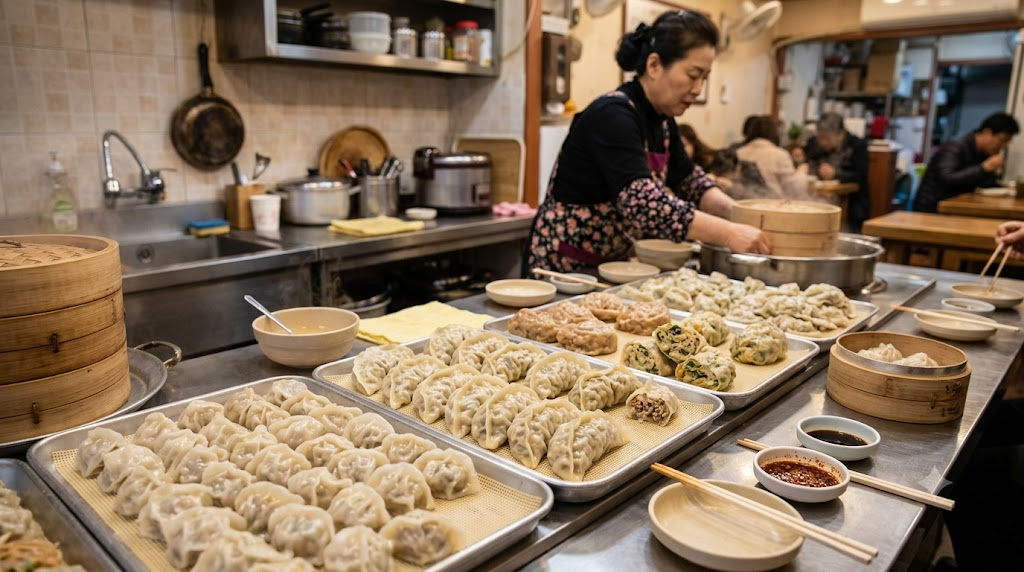
On today’s bunsik menus, the name meat mandu is used for many different kinds of dumplings. The thickness and shape of the wrapper, the type and amount of meat, and the vegetables mixed into the filling may all vary by restaurant. Sharing the same name does not mean that every ingredient and flavor inside will be identical.
Alongside “meat mandu,” it is also common to see names such as “wang mandu,” which refers to size, “son mandu,” which refers to hand-shaped dumplings, and “galbi mandu,” which highlights a particular meat filling. When these names appear together on a menu, meat mandu often functions less as an explanation of the original meaning of mandu and more as a label for the basic group of dumplings with a meat-based filling.
A short explanation of the name meat mandu
The meaning of meat mandu is easier to understand from the filling than from any elaborate origin story. It is a name that places the representative filling ingredient, “meat,” before the older food name “mandu” to distinguish it from other types. The history of mandu itself can be traced back to records from the Goryeo period, but it is difficult to state exactly when the specific modern menu name “meat mandu” became established.
When meat mandu and kimchi mandu appear side by side on a bunsik menu, look at the first word. “Meat” tells you what is inside the dumpling rather than its shape or cooking method.
※ This content is provided as a reference for information about food names and food culture.
※ Food origins, regional names, and cooking methods may be described differently depending on documents, regions, households, and restaurants, so please also refer to official sources and the actual menu information.
Korean version: 한국어로 읽기