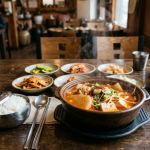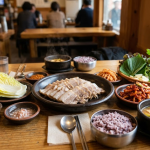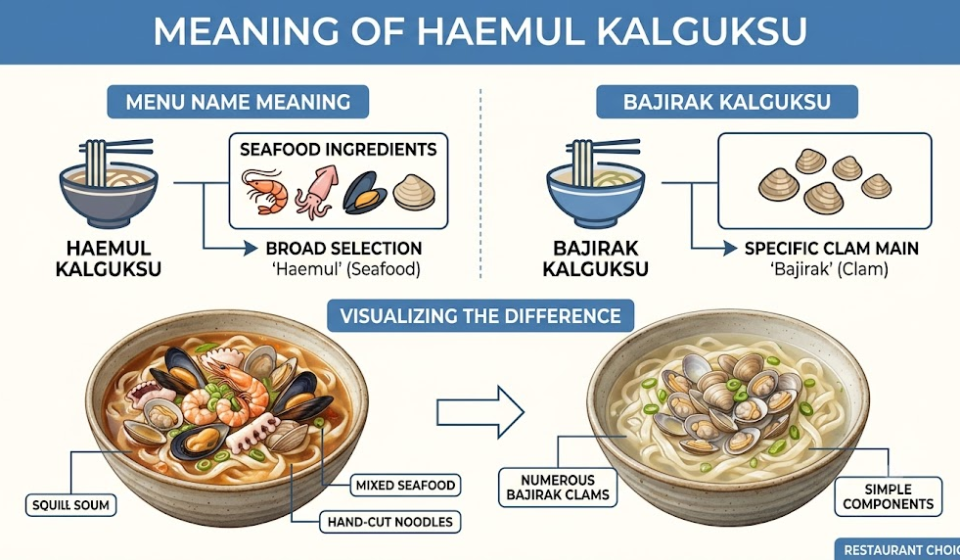

When two dishes appear side by side on a kalguksu restaurant menu, it can be hard to tell them apart from the photos alone. Both may have shellfish on top, and the noodles can look almost the same. In that situation, checking the word at the beginning of the menu name is usually faster than comparing the color of the broth. The meaning of haemul kalguksu also becomes clear when you look at that first word.
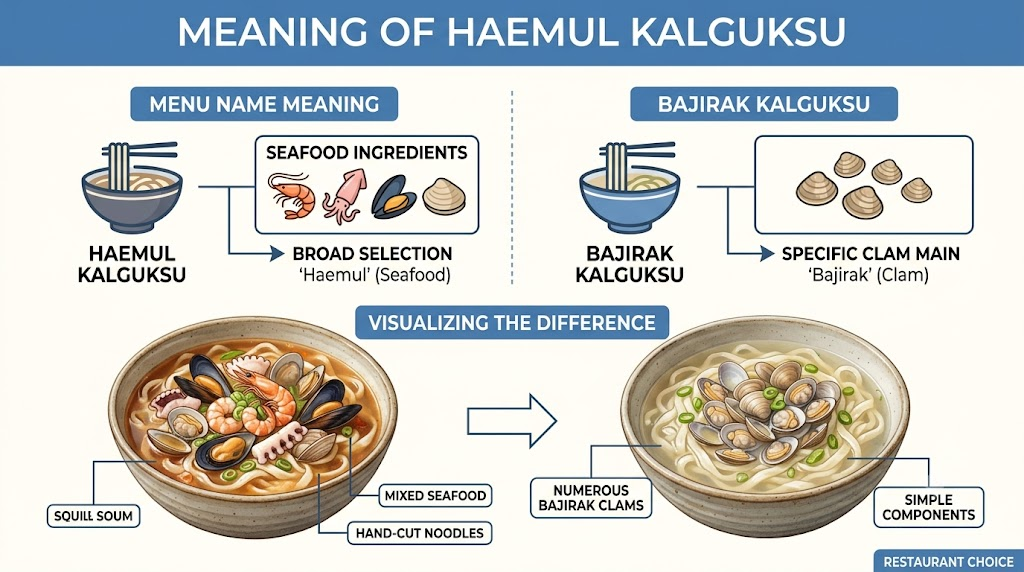
Where do haemul kalguksu and clam kalguksu first differ?
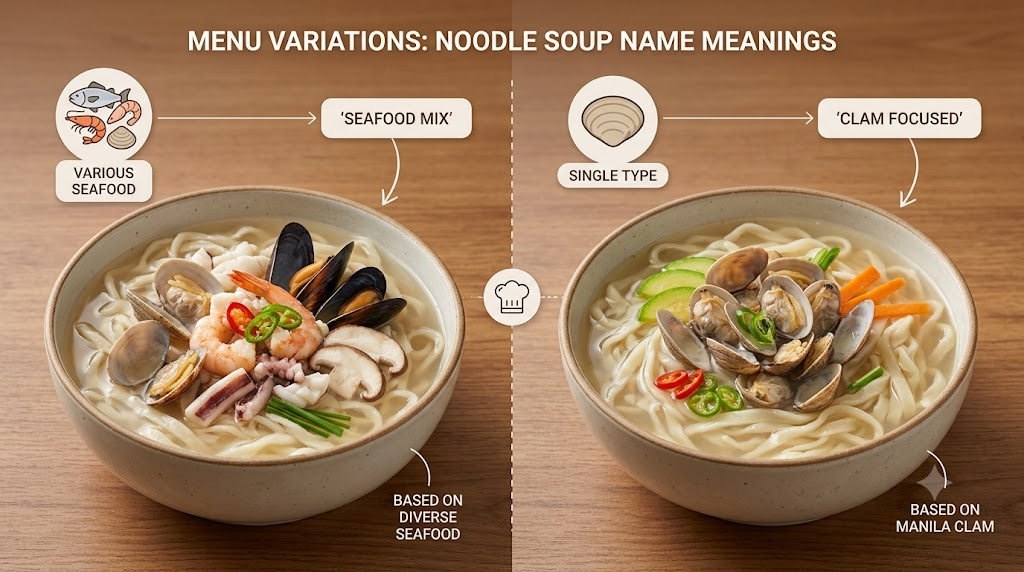
Bajirak kalguksu, or clam kalguksu, puts one specific ingredient right at the front of its name. The menu name immediately tells you that bajirak clams are the main ingredient in the broth or toppings.
Haemul kalguksu covers a wider range of ingredients. “Haemul” is a general word for food from the sea, so it may include shellfish such as bajirak clams and mussels as well as squid or shrimp. The exact ingredients and amounts vary from one restaurant to another.
| Menu name | Word at the front | What the name tells you on the menu |
|---|---|---|
| Haemul kalguksu | Haemul | Kalguksu featuring a broad mix of seafood |
| Bajirak kalguksu | Bajirak | Kalguksu featuring bajirak clams as the main ingredient |
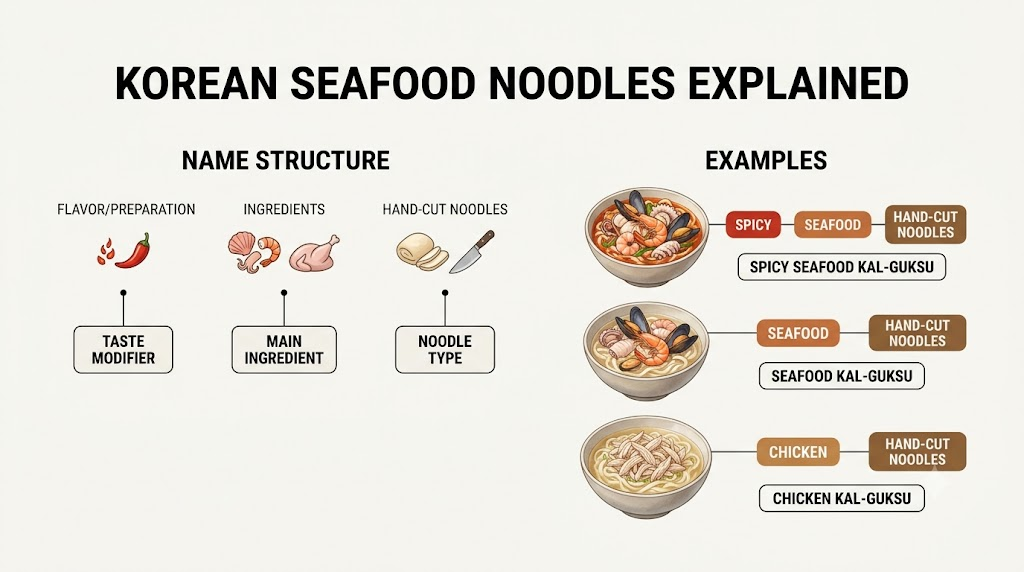
| Dak kalguksu | Dak | Kalguksu emphasizing chicken or chicken broth |
| Deulkkae kalguksu | Deulkkae | Kalguksu featuring the flavor of perilla seeds in the broth |
Even within the same family of kalguksu dishes, changing the first word changes the ingredient the restaurant wants to highlight. If haemul kalguksu and bajirak kalguksu appear together on a menu, this is the distinction to keep in mind.
So what can be included in “haemul”?
Because the word haemul does not refer to just one ingredient, there is no single fixed way to prepare the dish. One restaurant may build a deep shellfish flavor, while another may add shrimp and squid for a bowl with more seafood pieces.
That means the name alone does not guarantee that a particular ingredient such as bajirak clams, mussels, shrimp, or squid will always be included. If you specifically want or want to avoid a certain kind of seafood, check the menu description or ask the restaurant.
The word “haemul” also does not tell you whether the broth will be pale or spicy. The same name can be used for a clear and mild broth, a hot and spicy broth, or a version filled with plenty of vegetables.
The name “kalguksu” comes from how the noodles are made, not from the ingredients
If the first word, “haemul,” tells you about the ingredients, the word “kalguksu” tells you what kind of noodle dish it is. The Encyclopedia of Korean Culture explains kalguksu as noodles made by rolling out flour dough with a rolling pin and cutting it into thin strips with a knife.
Old cooking records include noodles similar to today’s kalguksu under the name “jeolmyeon.” The name carries the meaning of noodles made by cutting, and accounts also say that buckwheat flour was commonly used at the time. The ingredients used in the past were not always the same as the wheat-flour kalguksu commonly served in restaurants today.
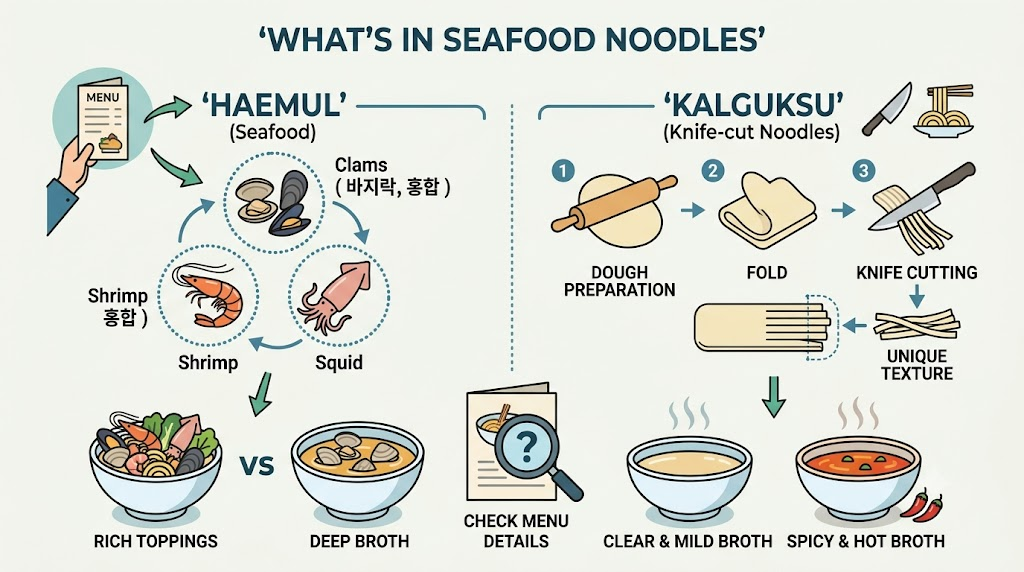
Today, it is common to see wheat dough rolled out and cut into noodles, then cooked in warm broth or boiled separately before being added to the bowl. Add seafood to these noodles and the dish can be called haemul kalguksu; use chicken as the main ingredient and the name becomes dak kalguksu.
Eolkeun haemul kalguksu follows the same naming pattern
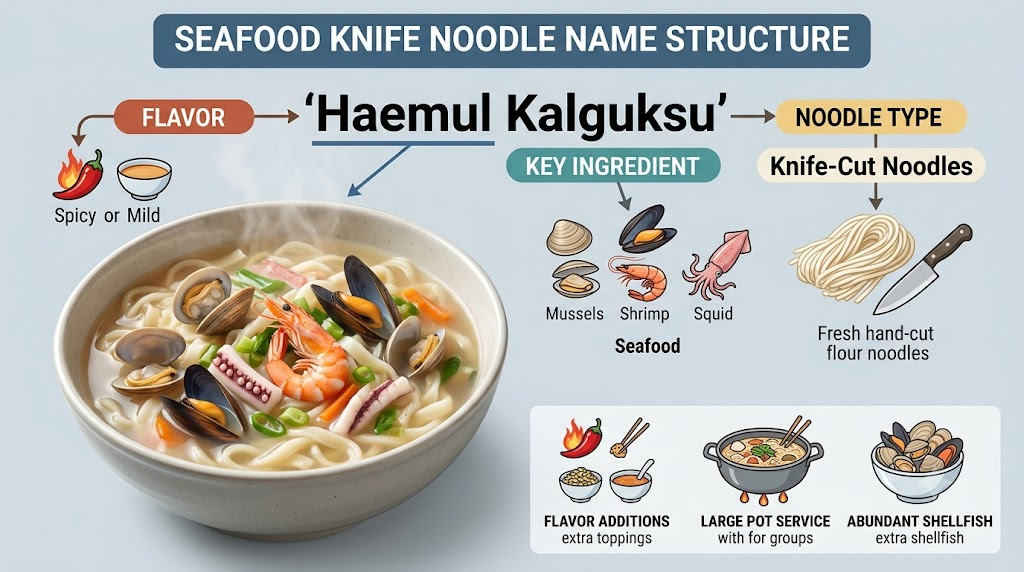
Restaurant menus may also list names that are longer than simply haemul kalguksu. One example is “eolkeun haemul kalguksu,” with an extra word at the beginning describing the flavor. In this name, “eolkeun” tells you that the broth is pleasantly spicy, “haemul” identifies the main ingredients, and “kalguksu” shows the basic type of noodle dish.
Some restaurants cook the seafood and noodles together in a large pot, while others serve the dish with especially generous amounts of shellfish and still call it haemul kalguksu. The same name does not mean every bowl must look exactly alike.
It helps to separate old kalguksu records from today’s menu names
The history of noodles cut with a knife goes back further than the modern restaurant menu name “haemul kalguksu.” The Encyclopedia of Korean Culture describes jeolmyeon appearing in Joseon-period cookbooks and also discusses the ingredients used at the time.
By contrast, names such as haemul kalguksu, dak kalguksu, and deulkkae kalguksu are better read as modern menu names that quickly show differences in ingredients or flavor. There is not enough evidence to treat the names found in old records and today’s detailed menu names as one continuous origin story.
When ordering, look at the word before “kalguksu”
The simplest way to explain the haemul kalguksu name meaning is “kalguksu made with various kinds of seafood.” Haemul refers to the ingredient side of the dish, while kalguksu is the food name connected to noodles cut with a knife.
If it appears next to bajirak kalguksu, start by comparing whether the dish highlights one kind of clam or a broader mix of seafood. Dak kalguksu and deulkkae kalguksu can be read in the same way.
So when you see haemul kalguksu on a menu, there is only one short idea to remember. Break the name into “haemul + kalguksu,” and it immediately shows both the featured ingredients and the type of noodle dish.
※ This content is provided as a reference for food names and food culture information.
※ Food origins, regional names, and preparation methods may be described differently depending on documents, regions, households, and restaurants, so please also refer to official sources and the actual menu information.