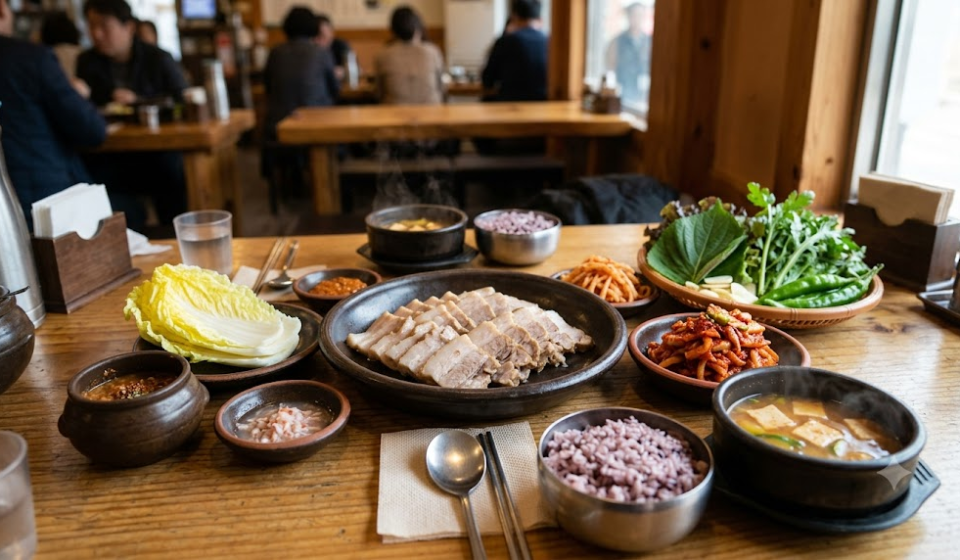

At a jokbal restaurant or Korean restaurant, it is common to see “bossam,” “suyuk,” and “bossam set meal” grouped together on the menu. The photos may look similar because each shows thinly sliced pork, but bossam often comes with kimchi and salted napa cabbage, while suyuk may put more emphasis on the meat itself. Thinking about the bossam name meaning reveals that the menu name does not refer only to the way the pork is cooked.
What does “ssam” refer to in the bossam name meaning?
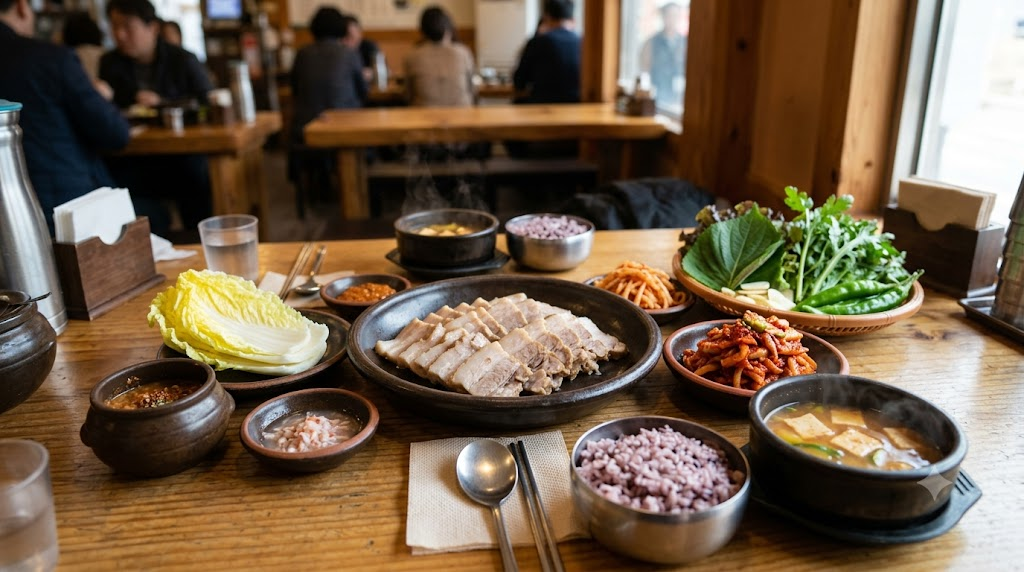
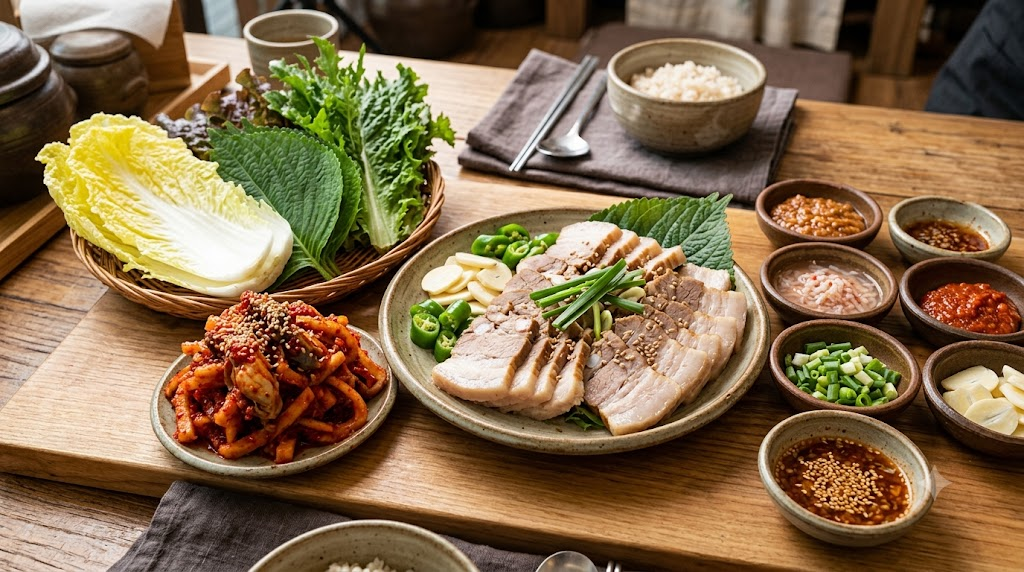
Today, bossam in restaurants generally means sliced boiled or cooked pork served with kimchi, salted napa cabbage, vegetables, saeujeot, and other accompaniments. The pork can be eaten on its own, but it is also familiar to place the meat and seasonings on cabbage or vegetables and wrap them together.
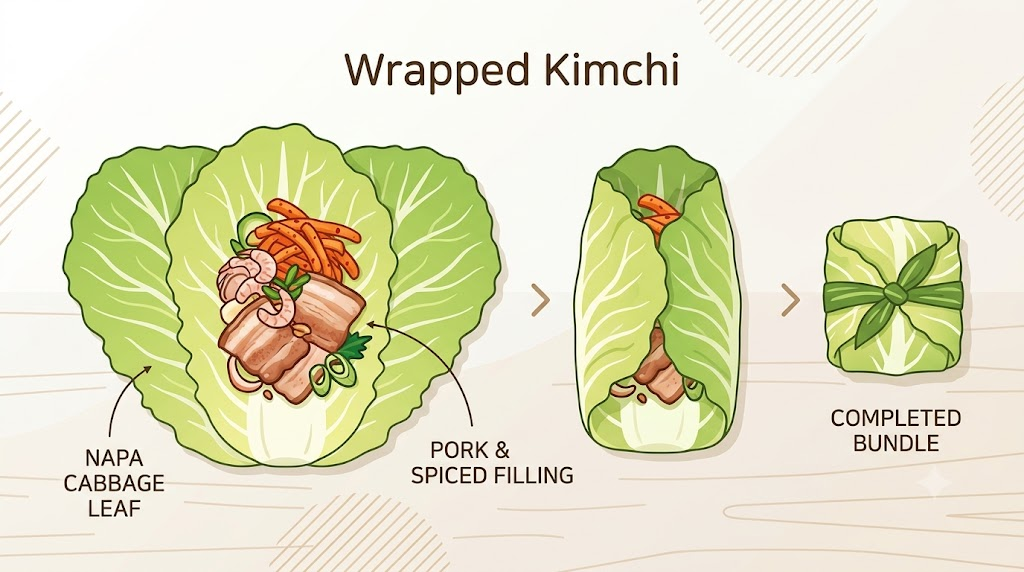
The parts worth noticing in the name are “bo” and “ssam.” “Ssam” easily brings to mind wrapping something or wrapping food before eating it. The same image appears in the traditional food called “bossam kimchi.” Bossam kimchi is made by filling napa cabbage leaves with various ingredients and wrapping them around the filling like a cloth bundle.
According to the Encyclopedia of Korean Culture, bossam kimchi is made by placing various fillings inside and wrapping them with napa cabbage leaves like a bojagi, or wrapping cloth. This makes it more fitting to understand “bossam” in the food name as connected to a “wrapped shape” or a “way of eating by wrapping,” rather than simply meaning boiled meat.
Is it the same word as bossam kimchi wrapped like a bojagi?
Looking at older uses of the word bossam, bossam kimchi stands out before pork does. Known as a local food of Gaeseong, bossam kimchi is made by spreading salted napa cabbage leaves, placing ingredients such as cabbage stems, radish, pear, chestnuts, and jujubes inside, and then wrapping everything with the outer leaves. The finished shape resembles a small bojagi bundle.
Here, “bo” suggests the image of wrapping something like a bojagi. Materials also show the form “褓쌈김치,” using the Chinese character “褓.” However, some caution is needed before drawing a straight line from this bossam kimchi to the pork dish called bossam in restaurants today.
The word bossam also had older uses outside food, and separate regional explanations are associated with bossam kimchi. Rather than claiming that the modern pork menu name became established through one definite process at one particular point in time, it is more appropriate to separate the shared image of “wrapping” from the way the food name is used today.
Then why does a menu call boiled pork bossam?
In restaurants today, bossam is used less in the sense of “meat that has been wrapped” and more like “a pork spread prepared for wrapping and eating.” A typical serving includes sliced boiled pork alongside napa cabbage, bossam kimchi, radish kimchi, saeujeot, and similar accompaniments. Restaurant listings from the Korea Tourism Organization also repeatedly describe bossam as a menu of suyuk-style pork served with kimchi, salted napa cabbage, and related sides.
Because of this, the word “bossam” by itself can sound like the name of a pork cooking method. In practice, its meaning is broader and often refers to the full serving, including the foods used to wrap and eat the pork. Restaurants may also add another ingredient to the name, producing menus such as kimchi bossam, cabbage bossam, oyster bossam, or garlic bossam.
Oyster bossam does not mean that oysters replace the pork entirely. It is usually an expanded version of the menu in which oysters are served together with pork and kimchi. Names such as hongeo bossam or octopus bossam can similarly highlight an added ingredient, so checking the menu description gives a clearer picture.
Bossam and suyuk can look similar, but their names emphasize different things
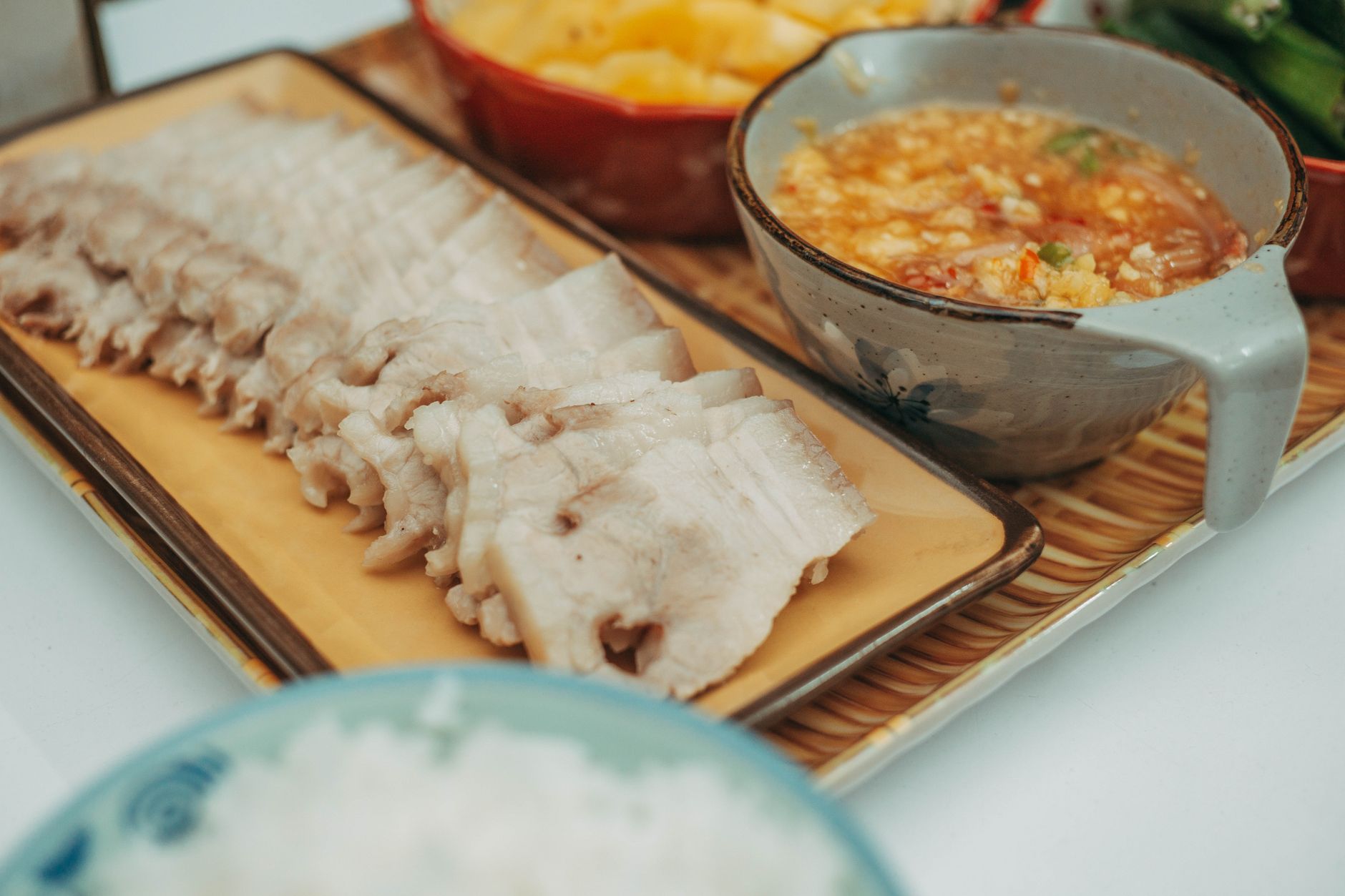
Bossam and suyuk are often confused because the meat on the plate can look almost identical. Both commonly feature pork that has been boiled or otherwise cooked and then sliced thinly. The distinction is easier to see not in a single piece of meat, but in what each menu name emphasizes.
| Menu name | What the name emphasizes | Common presentation on menus |
|---|---|---|
| Bossam | A serving built around wrapping the meat with kimchi, cabbage, or vegetables | Boiled pork with bossam kimchi, salted napa cabbage, and wrap ingredients |
| Suyuk | The boiled or cooked meat itself | Sliced meat as the main item, served with seasonings or kimchi |
The boundary is looser in actual restaurants. Suyuk may also come with kimchi, while bossam may be served with only a simple selection of wrap vegetables. Rather than treating them as completely different cooking methods, it is easier to understand suyuk as a name weighted toward the cooked meat itself, while bossam has broadened into a menu name that emphasizes the spread used to wrap and eat that meat.
The older meaning of “bossam” and the food name should be kept separate
Searching for the origin of bossam also brings up an old custom unrelated to food. The Encyclopedia of Korean Culture has a separate entry describing a past practice called “bossam,” in which a person was wrapped in cloth and taken away. The fact that the same word was used does not by itself prove that this custom was the direct origin of the modern pork dish called bossam.
Descriptions of bossam kimchi also include a regional account that people in Gaeseong called it “ssam kimchi” instead. The source explains that the name “bossam” was avoided because of the old custom associated with the word. This is a story about the regional name of bossam kimchi, not a record that establishes when modern pork bossam was created.
What can be confirmed is that bossam kimchi is a food in which filling is wrapped in napa cabbage leaves like a bojagi, and that on modern menus bossam is widely used for a dish of boiled pork eaten with kimchi, cabbage, and similar accompaniments. The detailed development of the name between these uses is better left separate rather than combined into a single confirmed origin story.
How to read the bossam name meaning on a menu
Even when the name becomes longer, as in bossam set meal, oyster bossam, or garlic bossam, boiled pork usually remains at the center. “Oyster” or “garlic” often indicates an ingredient eaten with the pork or added on top, while “set meal” is commonly used for a meal arrangement that includes rice, soup, and side dishes.
Bossam kimchi, on the other hand, does not mean a small serving of the pork dish bossam. It is the name of the kimchi itself, made by wrapping filling in napa cabbage leaves. If a menu lists “bossam + bossam kimchi,” the same food has not been written twice. One refers to the pork dish, and the other to the kimchi served with it.
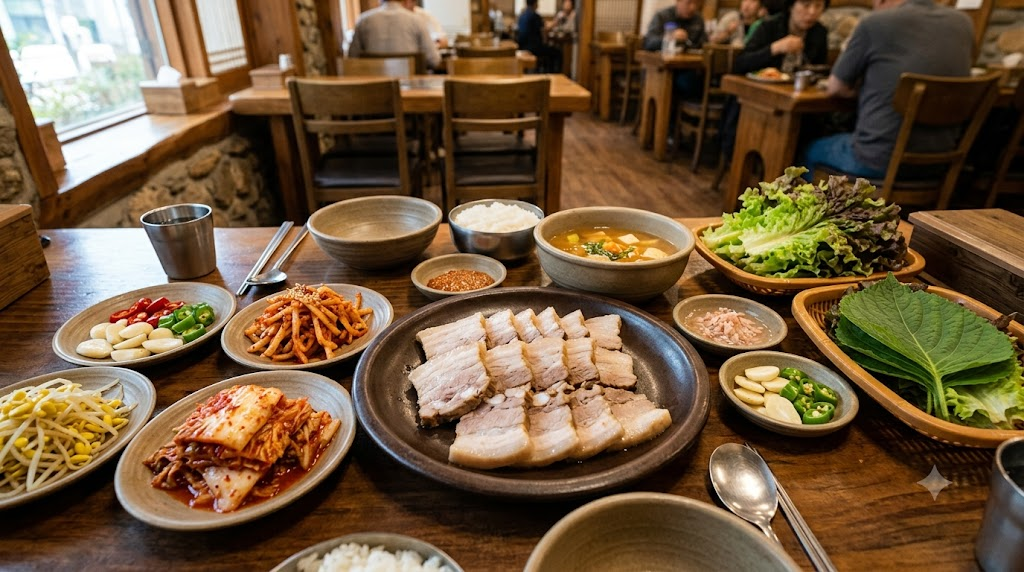
In short, the bossam name meaning comes from the idea of “a wrapped shape or a way of eating by wrapping.” On menus today, the meaning has broadened and usually refers to boiled pork served together with kimchi, napa cabbage, and seasonings. If bossam and suyuk appear side by side, look beyond the cooking method of the meat and check whether the menu includes the cabbage, kimchi, and other accompaniments that make up the full bossam spread.
※ This content is provided as a reference for food names and food culture.
※ Food origins, regional names, and cooking methods may be described differently depending on documents, regions, households, and restaurants, so please refer to official sources together with the actual menu information.
Korean version: 한국어로 읽기