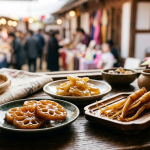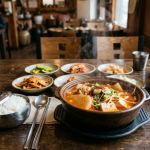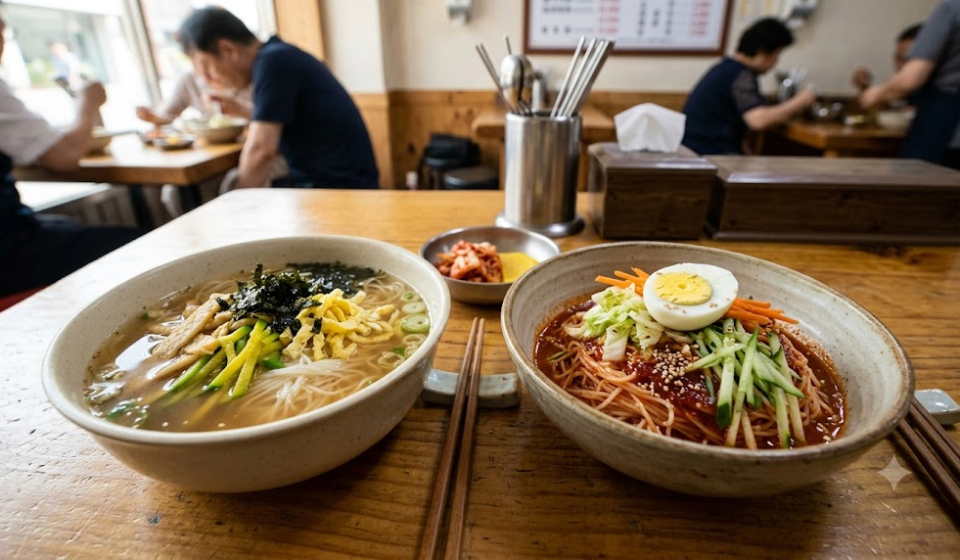

At Korean snack bars, janchi guksu and bibim guksu often appear next to each other on the menu. Both may use the same thin somyeon noodles and even look similar because of their toppings. But once the bowls arrive, the difference is clear: one has noodles in warm broth, while the other is tossed with seasoning.
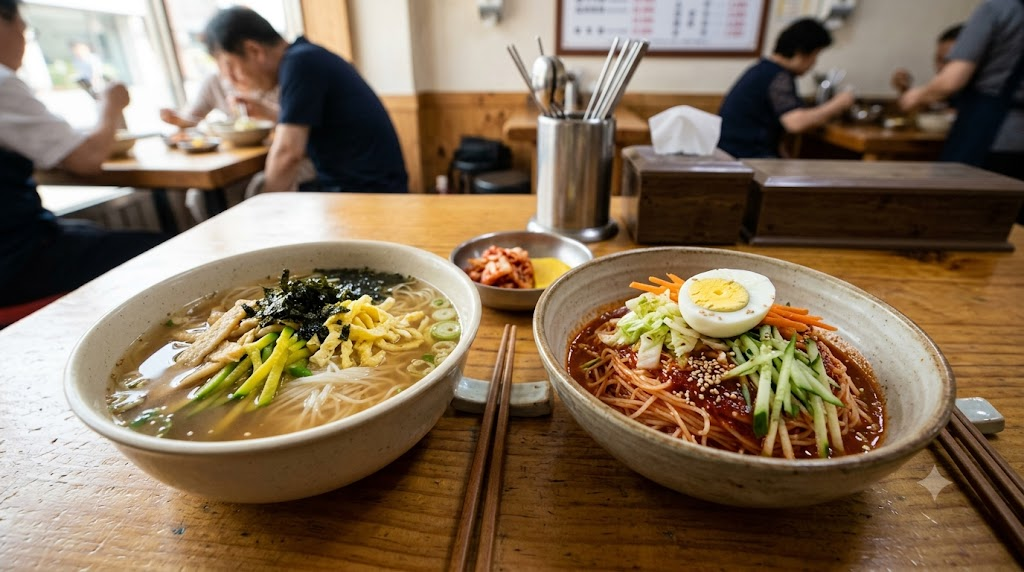
Why two names appear on the menu even though both are noodles
The quickest way to understand the difference between janchi guksu and bibim guksu is to focus on how the noodles are eaten rather than the type of noodle itself. The word guksu can refer to strands of noodles, but it also broadly covers dishes in which noodles are served in broth or mixed with other ingredients.
Janchi guksu is commonly known as a dish of cooked noodles served in warm broth, often made with jang-guk or anchovies. Bibim guksu, as its name suggests, centers on cooked noodles mixed with seasoning and other ingredients. Even when both dishes use the same wheat noodles, the way they are served is different from the start.
This is also why the two names are listed separately on menus. What changes the dish most is not the noodle itself, but whether it is served in broth or mixed with seasoning.
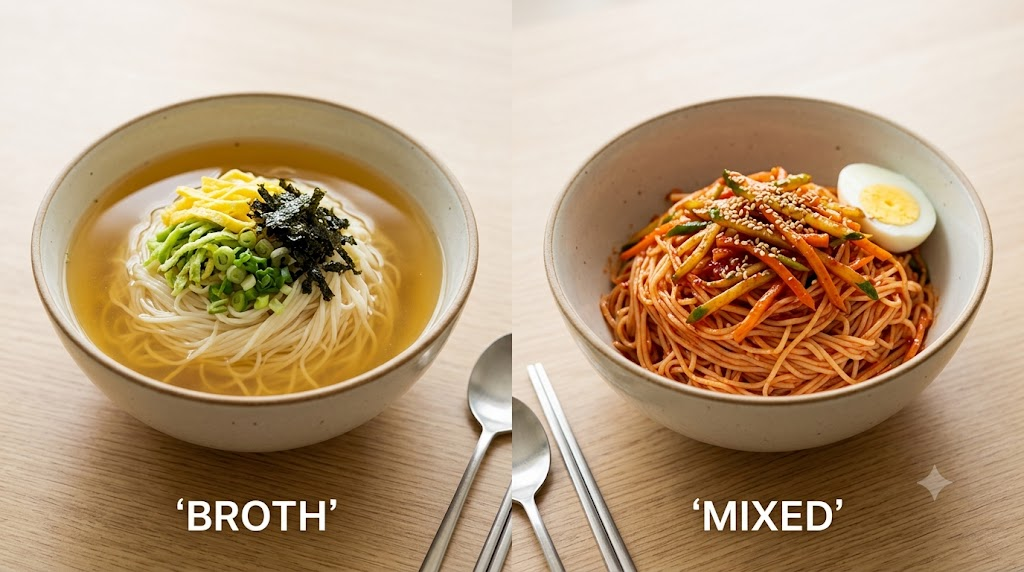
In janchi guksu, “janchi” refers more to the occasion than the cooking method
The name bibim guksu directly describes what is done to the food. The word “bibim” makes it easy to guess that the noodles and seasoning are mixed together.
Janchi guksu is a little different. “Janchi” does not refer to the broth ingredients or the type of noodle. The name is more closely connected with occasions when many people gathered and shared food, including weddings and other large celebrations.
Noodles have long been recorded as one of the foods served to guests or prepared for special occasions. Still, it is difficult to treat the janchi guksu served in restaurants today as one old cooking method passed down unchanged. Today, the name usually refers to the familiar dish of somyeon noodles and toppings served in warm broth.
Does bibim guksu simply mean spicy noodles?
Bibim guksu served in restaurants today is usually coated in red seasoning. Because of this, some people immediately think of it as spicy noodles.
But the main meaning of the name is not spiciness. It is the act of mixing the ingredients. The Encyclopedia of Korean Culture explains bibim guksu as noodles mixed with various ingredients and notes that it was once called “guksu bibim” or “goldongmyeon.”
Older records also describe versions of bibim guksu mixed with seasonings such as soy sauce and sesame oil. Limiting the meaning only to the gochujang-seasoned bibim guksu commonly found in snack bars today gives a somewhat different picture from older forms.
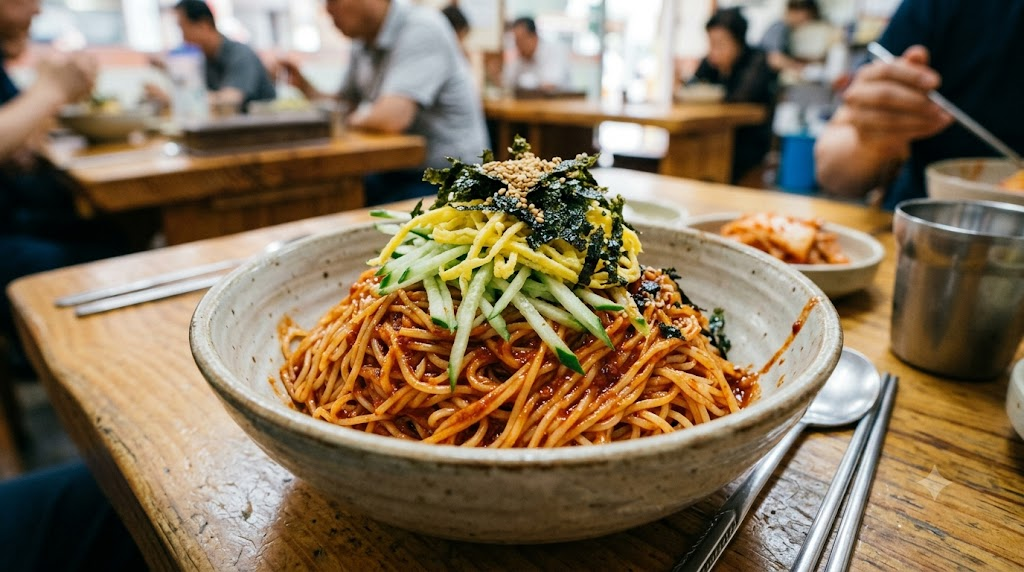
When ordering, check for broth first
If you are deciding between the two dishes, look for broth before focusing on the toppings. Broth, seasoning, and vegetables differ from one restaurant to another, but the broad distinction between the two noodle dishes is fairly clear.
| Category | Janchi guksu | Bibim guksu |
|---|---|---|
| What the name points to | A feast or occasion for serving guests | The method of mixing noodles and ingredients |
| Appearance in the bowl | Usually noodles served in broth | Usually noodles mixed with seasoning without broth |
| Common flavor on menus today | Warm and mild broth | Tangy or spicy seasoning |
| What to consider when ordering | Whether you want noodles with broth | Whether you want noodles mixed with seasoning |
There are still dishes that blur the line, such as bibim guksu served with a little broth or warm noodle dishes topped with spicy seasoning. The name printed on a restaurant menu and the actual preparation do not always match dictionary descriptions exactly.
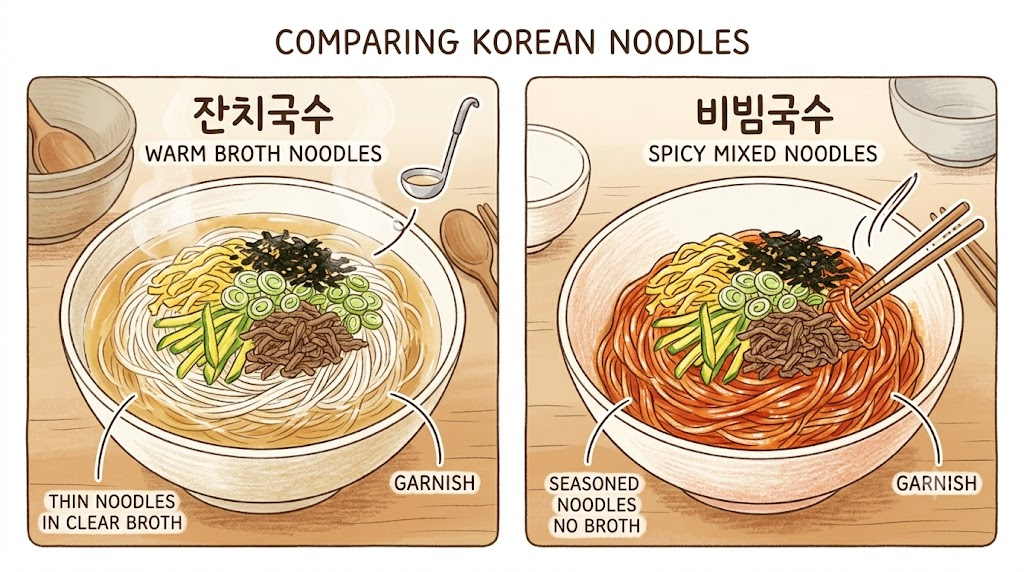
Similar toppings do not decide the name
Janchi guksu may include toppings such as seaweed, egg strips, and zucchini, while bibim guksu may also come with cucumber, seaweed, or egg. In a small menu photo, the two dishes can share more ingredients than expected.
Still, a single topping does not determine the name. With janchi guksu, the combination of noodles and broth comes first. With bibim guksu, the focus is on mixing the noodles with seasoning.
The two dishes do not have to use different types of noodles either. Korean noodle dishes have used various noodles, including wheat and buckwheat noodles, served in broth or mixed with other ingredients. Bibim guksu is not limited to only one type of noodle.
How to read janchi guksu and bibim guksu on menus today
In restaurants today, janchi guksu usually means a somyeon noodle dish centered on warm broth, while bibim guksu commonly refers to noodles mixed with seasoning. The historical background of these food names and their modern menu usage do not cover exactly the same range, but this difference is the easiest one to notice when ordering.
The clearest difference between janchi guksu and bibim guksu is not the noodle strand itself, but how it is eaten. Think of janchi guksu as noodles served in warm broth and bibim guksu as noodles mixed with seasoning. The next time both names appear together on a Korean snack bar menu, the presence or absence of broth will tell you more than the toppings shown in the photo.
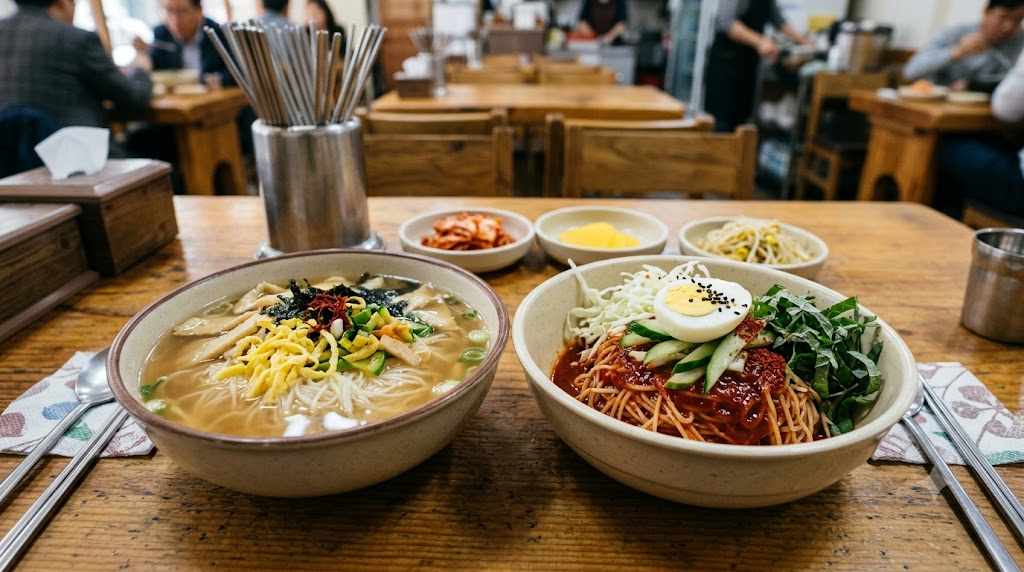
※ This content is provided as a reference for food names and food culture information.
※ Food origins, regional names, and cooking methods may vary across documents, regions, households, and restaurants, so please refer to official sources together with the actual menu information.
Korean version: 한국어로 읽기