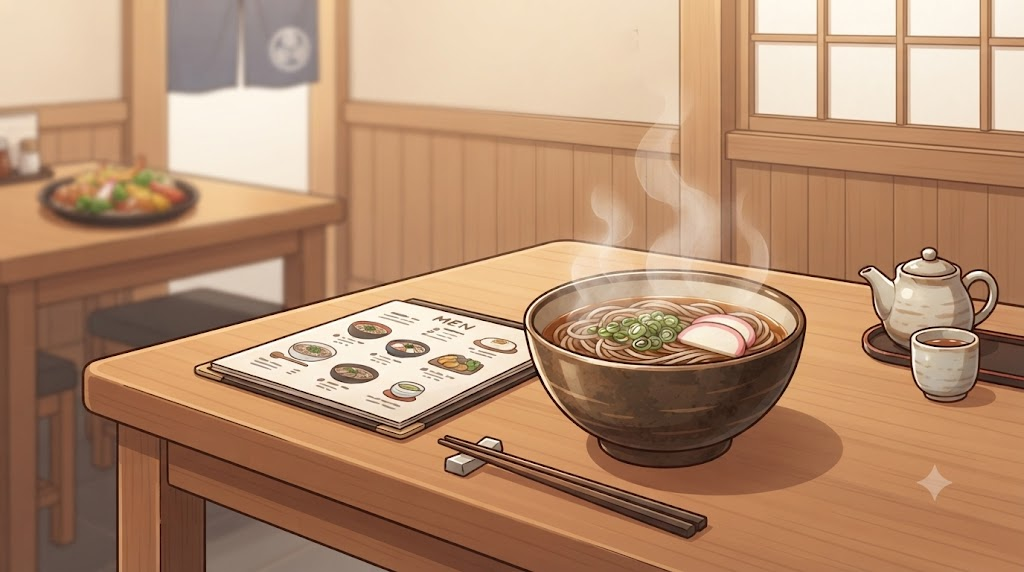

When looking at a Japanese restaurant menu, some people pause at the word “kake soba” written next to zaru soba. Both use buckwheat noodles, but one comes in broth while the other is eaten by dipping the noodles separately. Japanese noodle names often include clues about how the food is prepared or served, so following the meaning of the words makes the menu easier to understand.
What does “kake” mean on a menu?
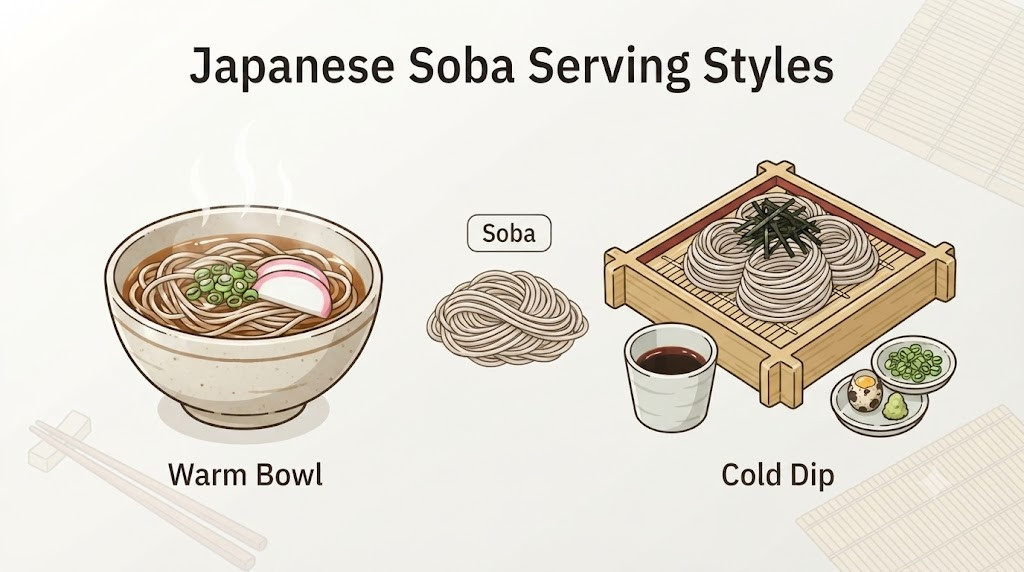
The “kake” (かけ) in the kake soba name meaning comes from the Japanese verb “kakeru” (かける), which is connected with the idea of pouring or placing something over another thing. In soba dishes, it refers to a style where warm broth is poured over the noodles.
In other words, kake soba is not a noodle dish served with a separate dipping sauce. It is a menu item where cooked soba noodles are placed in a bowl and broth is poured over them. The name shows the way the dish is served rather than a special ingredient.
Why was it named as soba with broth poured over it?
Japanese soba often has different names depending on how the noodles meet the broth. Kake soba is commonly served with warm dashi broth and noodles together in one bowl.
On menus, it may also appear with the term “onsoba,” but kake soba is closer to a Japanese classification name. The broth flavor, toppings, and noodle style may vary by restaurant, while the method of serving noodles with poured broth remains the same.
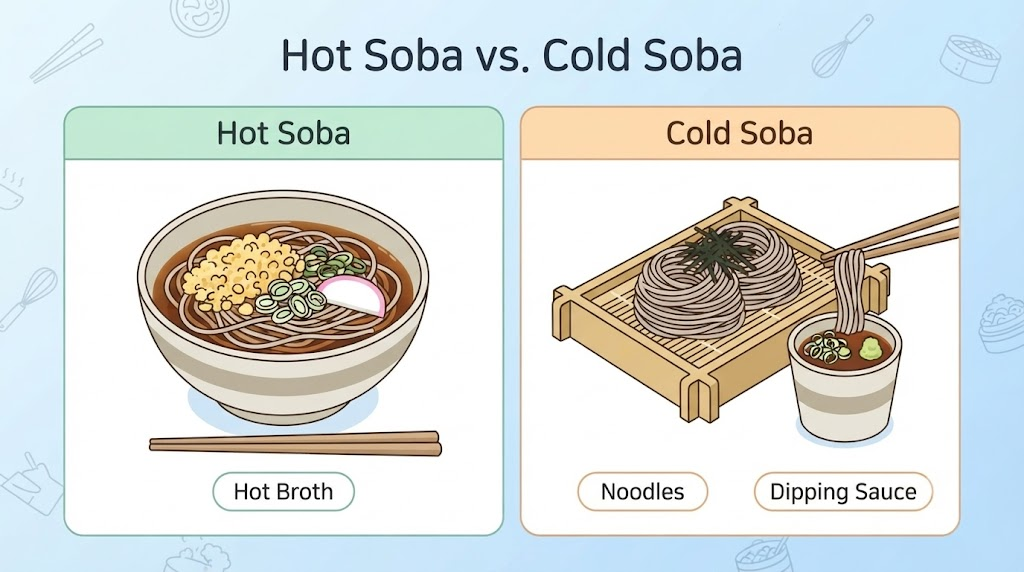
The noodles are the same, but the way they are eaten is different from zaru soba
Kake soba and zaru soba both share the name soba, but the way they are served is different. Zaru soba uses chilled noodles dipped into separately prepared tsuyu, while kake soba is eaten with warm broth served together with the noodles.
| Part shown in the name | Serving style | Menu point that can be confusing |
|---|---|---|
| Kake soba | Soba with warm broth poured over the noodles | Sometimes used with a similar meaning to onsoba |
| Zaru soba | Cold soba noodles eaten with dipping sauce | Easy to miss the difference because both are soba |
Japanese restaurants may sell several forms of soba under similar names depending on the season or region. When seeing the word kake soba, focusing on whether the noodles come together with broth rather than only the noodle type makes the choice clearer.

When did the name kake soba start being used?
The name kake soba has been used in Japanese soba culture to distinguish the style of eating noodles with broth poured over them. However, sources describe differently when the current name became established.
Japanese soba-related materials introduce how various soba styles developed after the Edo period, including warm broth soba and cold dipping soba. Rather than saying that one specific event created the name, it is better understood as an expression that became established while separating cooking styles and ways of eating.
How is it written on Korean menus?
Japanese restaurants in Korea sometimes use the Japanese-style name “kake soba,” while others write it as “onsoba” or “warm soba” to make the meaning clearer. Product names and restaurant menus may also include expressions that are easier for customers to understand.
Knowing the kake soba name meaning helps when encountering unfamiliar Japanese menu words. For someone looking for a bowl of soba with broth, kake soba is the closer choice. For someone wanting chilled noodles eaten with dipping sauce, zaru soba is the closer option.
Where do we see the name kake soba today?
Today, the expression kake soba can be found not only in Japanese restaurants but also in travel destination restaurants, Japanese menu introductions, and refrigerated food sections. Places that keep the Japanese name use it to show the serving style, while explanatory menus may add the meaning of warm broth soba.
The kake soba name meaning begins with the word “kake.” It refers to soba served with broth poured over the noodles, and the difference from zaru soba comes from how the noodles and broth come together rather than the ingredients.
※ This content is provided as reference information about food names and food culture.
※ Food origins, regional names, and cooking methods may differ depending on documents, regions, households, and restaurants, so please refer to official information and actual menu descriptions together.