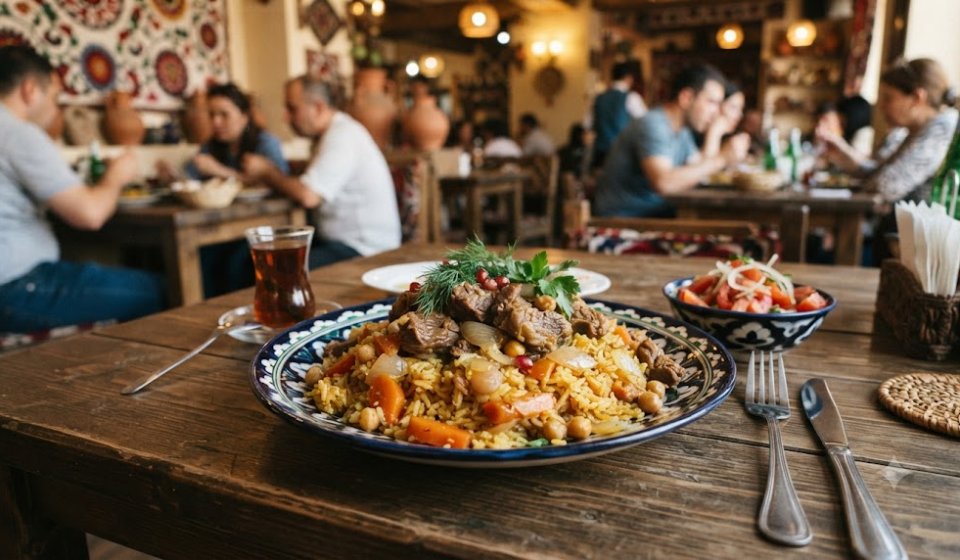

When you see the name “plov” on a restaurant menu while traveling, it may stop you for a moment. The dish with golden rice mixed with meat and vegetables looks similar to fried rice, but the nearby menu item called “pilaf” can make you wonder whether they are the same food or different dishes.
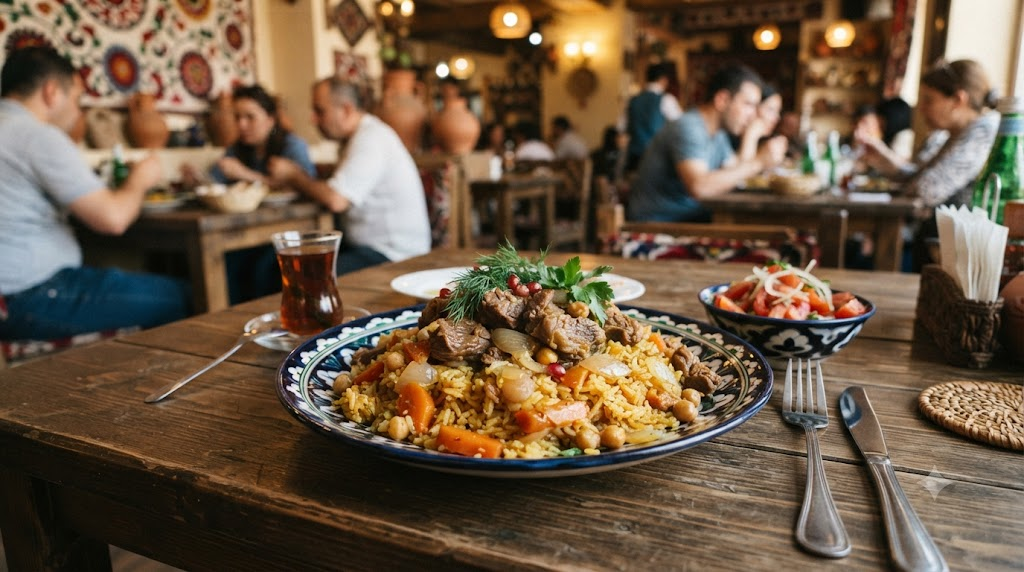
The plov name meaning refers to the name of a rice dish that has been eaten in Central Asia. Rather than describing only one cooking method, the name is an expression that has continued through regional languages and food cultures. On menus, it is often introduced as a Central Asian dish from places such as Uzbekistan and Tajikistan, and it may also appear together with “pilaf” in Western-style descriptions.
What does the name plov refer to?
“Plov” is a food name used in Central Asian regions. In English-speaking areas it is written as “plov,” while in Russian it appears as “плов.” As the same type of dish spread across different regions, its pronunciation and spelling changed.
The root of this name is connected with a wider rice dish culture. It is explained as belonging to the same family of food names as Persian “polo” and Indian “pulao,” which refer to dishes made by cooking rice together with ingredients such as spices and meat.
Simply translating the plov name meaning as “fried rice” does not fully show the character of the dish. The name remains connected with a cooking style where rice absorbs the flavors of ingredients and with the regional identity attached to the food.
Why does it look like the same food as pilaf?
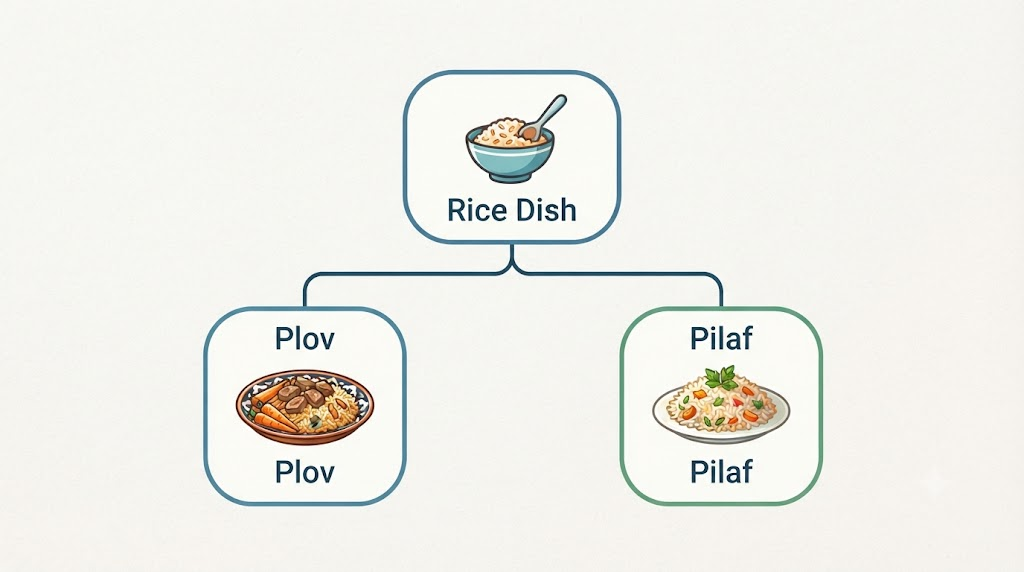
The reason plov and pilaf are often confused is that both names share a food culture with the same roots. Rice dishes developed across wide areas including Turkey, Iran, Central Asia, and South Asia, and similar names became established in different regional styles.
On menus, “pilaf” is more familiar as a rice dish name in Western-style restaurants, while “plov” is often introduced as a traditional Central Asian food name.
| Name | Main regions where it is used | How it appears on menus |
|---|---|---|
| Plov | Central Asia | Introduced as a traditional rice dish made with ingredients such as meat, carrots, and onions |
| Pilaf | West Asia, Europe, and other regions | Used as a broad term for rice dishes made with various ingredients |
What ingredients and cooking style are included in plov?
Central Asian plov looks slightly different from rice dishes made only by stir-frying rice. A common method is cooking rice together with meat such as lamb or beef, carrots, and onions, while the ingredients and spices vary by region.
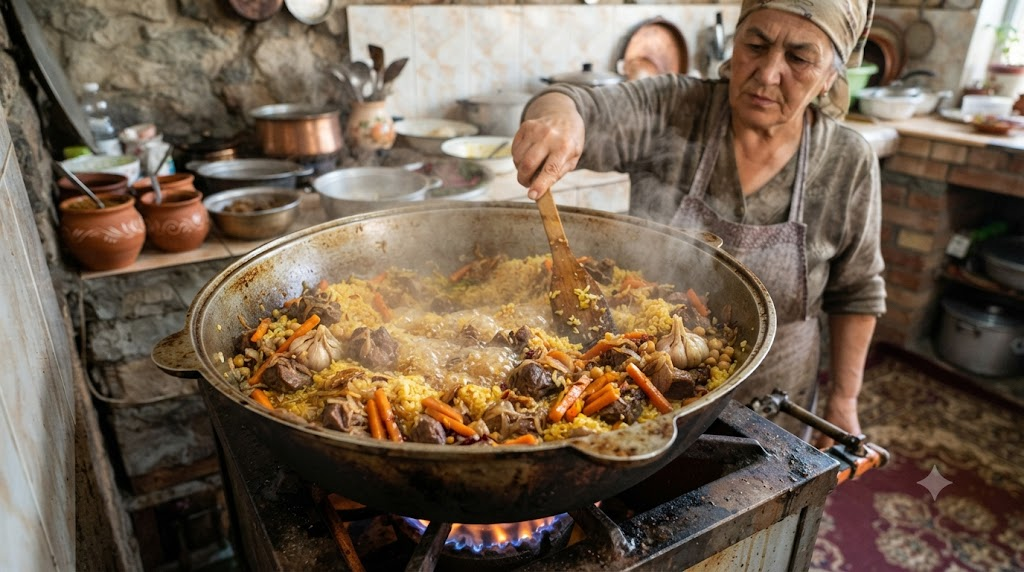
Uzbekistan’s plov is also known for being cooked in large pots in large quantities. In some regions, it became a food served for gatherings and celebrations, so the name carries not only the dish itself but also the setting where people share it.
Even with the same name plov, the type of meat, rice variety, and spices can differ by region, making it difficult to judge the differences only from a menu photo.
What should you look for when you see plov on a menu?
When choosing plov at an overseas restaurant or Central Asian restaurant, looking at the description written with the name can be faster than checking only the title. The impression changes depending on the type of meat used, whether it is closer to a fried rice style or a steamed style, and which region’s food it represents.
- Plov: Often refers to a Central Asian-style rice dish.
- Pilaf: Used as a broad expression for rice dishes in the same family.
- Plov with a regional name: Shows the cooking characteristics of that area.
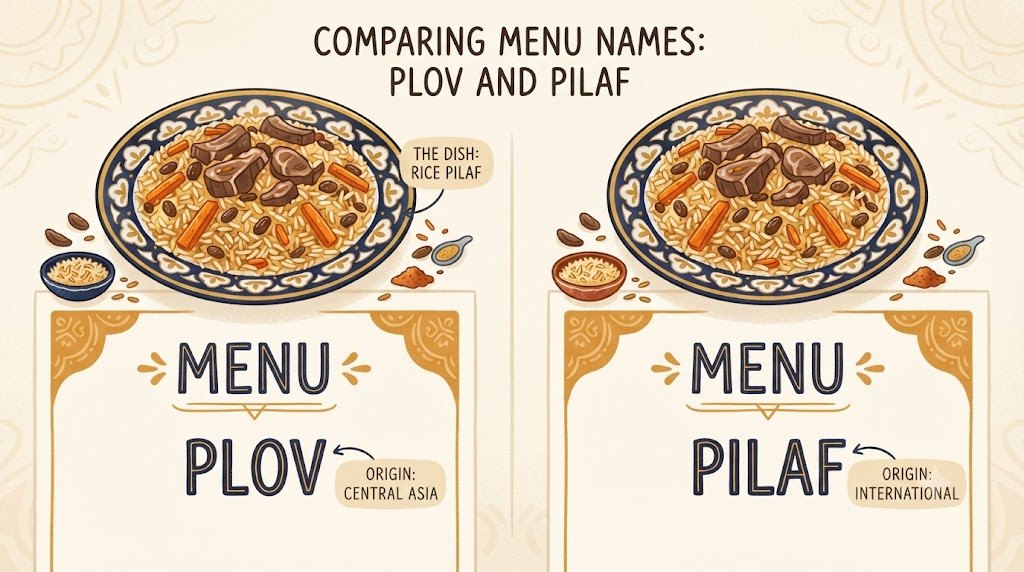
Korean restaurants may also show different spellings such as “plov,” “plov” variations, or “plau” when writing foreign food names. These differences come from different ways of representing pronunciation, and one spelling cannot always be considered the only correct form.
How far is the plov name meaning used today?
Today, the name plov is used on menus in many regions around the world, including Central Asian restaurants. In Russian-speaking regions, it is a familiar home food name, while in other countries it is often introduced as a representative Central Asian dish.
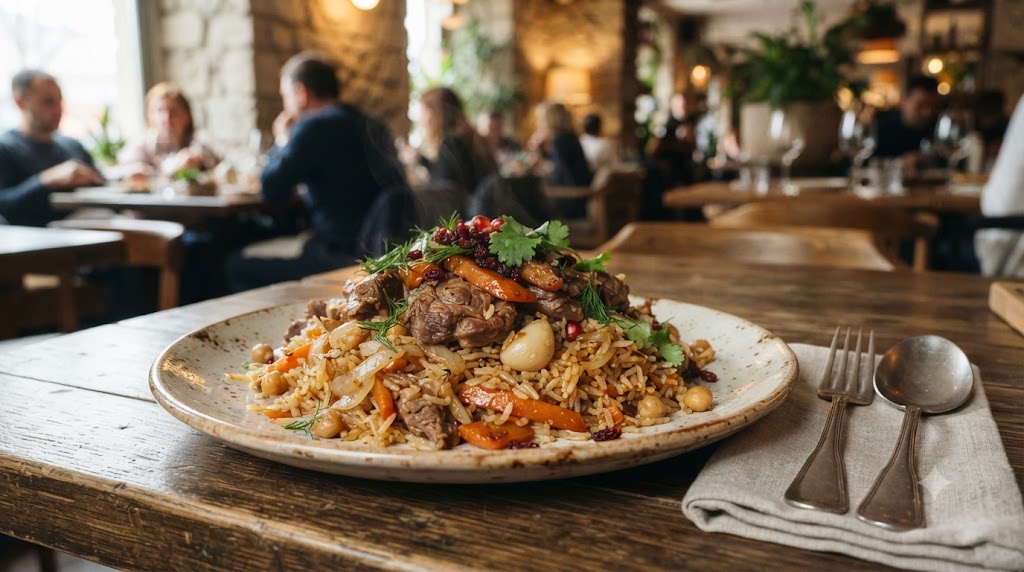
The plov name meaning can be explained in one sentence as “the name of a traditional rice dish that continued in Central Asia.” When plov appears together with pilaf on a menu, they are often not completely different foods but regional names for rice dishes from the same family, with plov being closer to the Central Asian expression.
※ This content is provided as reference information about food names and food culture.
※ Food origins, regional names, and cooking methods may vary depending on documents, regions, families, and restaurants, so please check official sources and actual menu descriptions together.