
At snack shops and old-fashioned noodle restaurants, kalguksu and sujebi often appear right next to each other on the menu. When both use anchovy or seafood broth and similar ingredients such as zucchini or potatoes, it can be hard to choose from the photos alone. The clearest kalguksu sujebi difference is not the broth but the shape of the dough that goes into it.
If Both Use Wheat Dough, Where Do Kalguksu and Sujebi Differ?
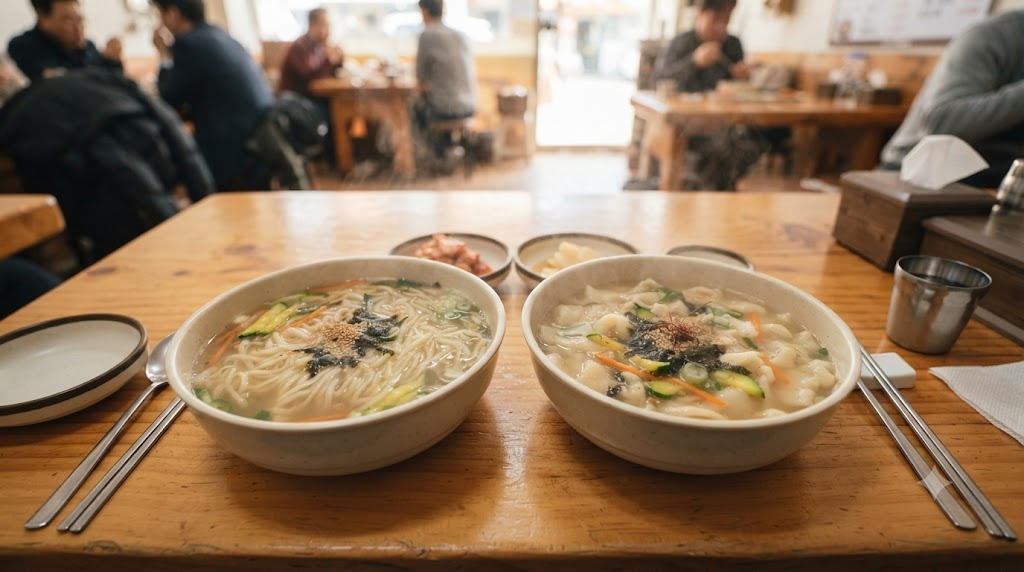
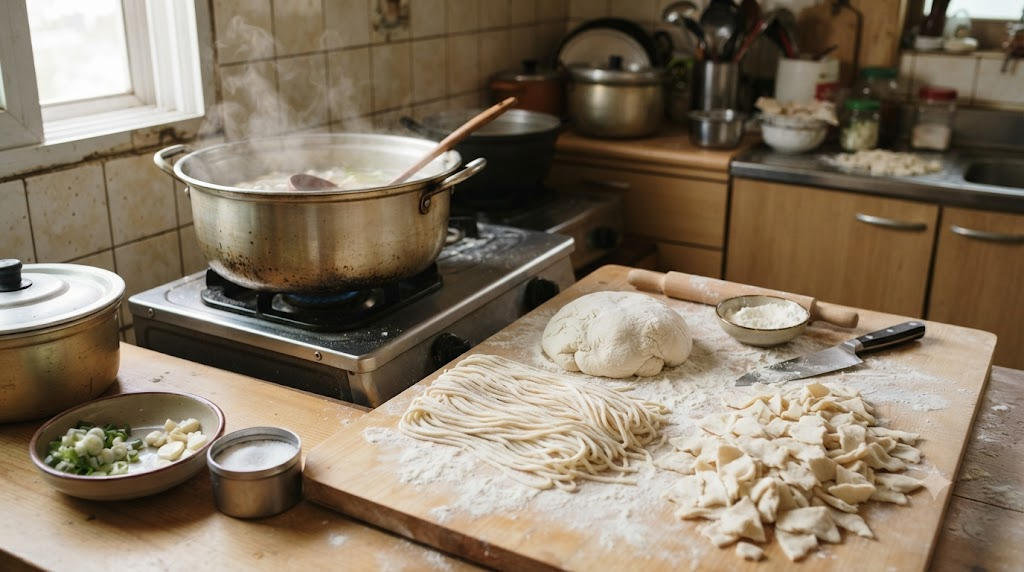
The name kalguksu directly points to the tool used to make it. Wheat dough is rolled out, cut into long thin strands with a knife, and cooked in broth. The Encyclopedia of Korean Culture also describes kalguksu as noodles made by cutting wheat dough into thin strips with a knife.
Sujebi is shaped differently. Instead of cutting the dough into thin noodles, pieces are torn off by hand or with a tool and dropped into boiling broth. As a result, the pieces in one bowl can vary slightly in size and thickness.
Both dishes combine wheat dough with broth, so their ingredient lists can look very similar. In kalguksu, however, the long continuous noodles are the main feature, while sujebi centers on flat pieces of torn dough.
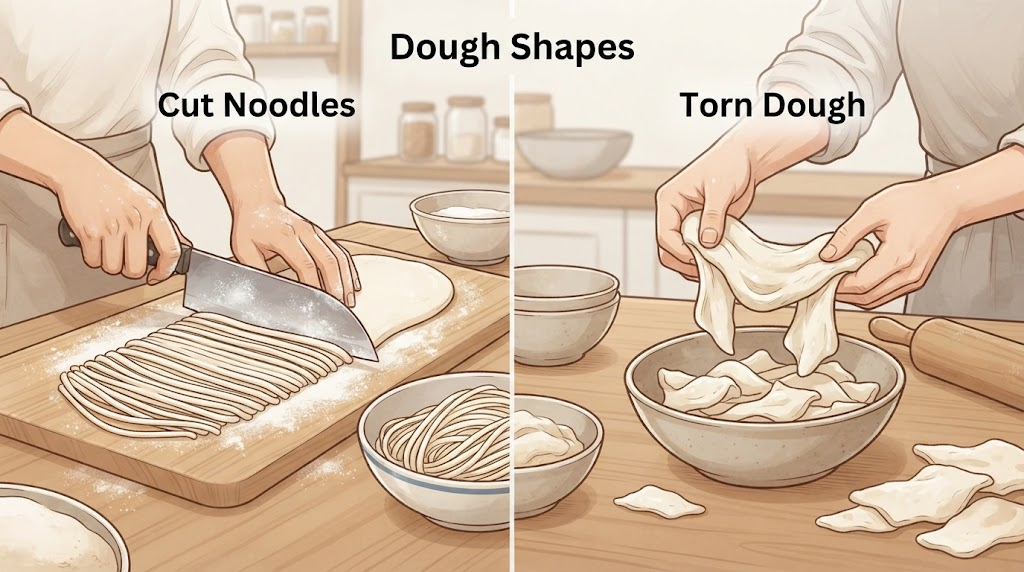
The Names ‘Kal’ and ‘Sujebi’ Point to Different Ways of Shaping the Dough
The “kal” in kalguksu is connected to the process of turning dough into noodles. The dough is rolled out, folded into several layers or left flat, and then cut with a knife to make long strands. Because the name also includes “guksu,” meaning noodles, the shape is fairly easy to picture from the name alone.
With sujebi, it is better to look at the actual form of the food rather than trying to explain its origin from the modern name alone. A noticeable feature of the way it is prepared today is that pieces of dough are torn off and cooked in broth. The dough may be stretched thin and torn by hand, or placed on a tool and dropped into the broth a little at a time.
It is difficult to say that both dishes were always called by their present names in old records. Kalguksu appears in Joseon-era cooking texts under the name jeolmyeon, while sujebi was also recorded in the past under other names such as undubyeong. The names seen on menus today more directly describe the familiar forms of the dishes now.
In the Bowl, Look at the Noodles and Dough Pieces
Whether the broth is clear or thick, whether it contains potatoes, or whether clams are added can vary from restaurant to restaurant. That is why broth color or toppings alone do not always separate kalguksu from sujebi.
| Category | Kalguksu | Sujebi |
|---|---|---|
| Dough shape | Thin, long noodle shape | Wide or flat pieces |
| How the shape is made | Dough is rolled out and cut with a knife | Dough is torn into suitable pieces and dropped in |
| What stands out when eating | Continuous noodle strands | Dough pieces with slightly different thicknesses and shapes |
| Broth | Anchovy, seafood, meat, and other styles | Anchovy, seafood, meat, and other styles |
| What to look for on the menu | Noodle shape rather than broth | Dough-piece shape rather than broth |
The same distinction remains when the same ingredient name comes first, as in bajirak-kalguksu and bajirak-sujebi. “Bajirak” refers to the broth and accompanying ingredient, while “kalguksu” and “sujebi” at the end indicate the main shape of the dough.
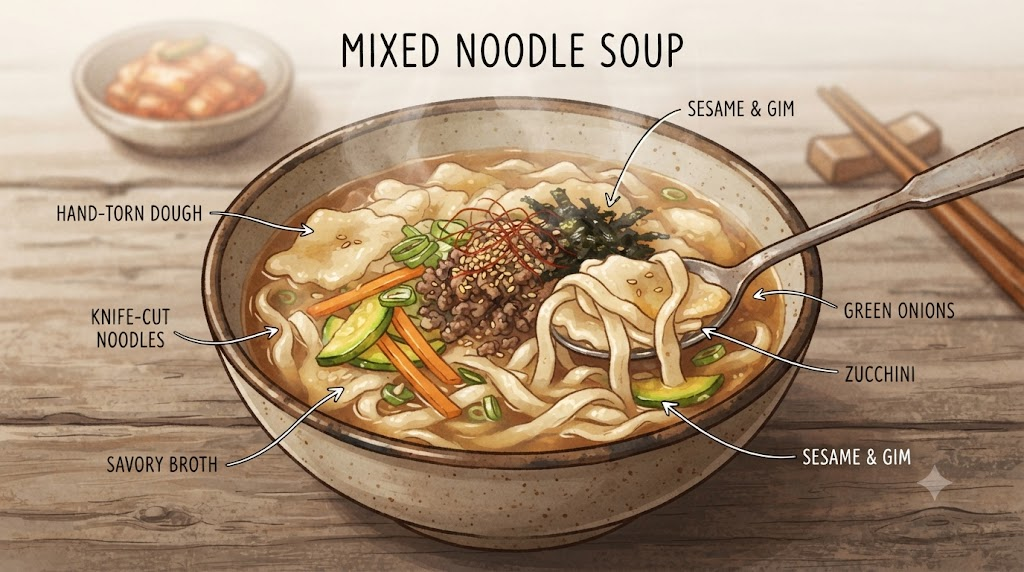
Kaljebi Puts Both Names in One Bowl
When you see the name “kaljebi” on a menu, the boundary between the two dishes may seem less clear again. In restaurants, kaljebi generally refers to a dish that combines kalguksu noodles and sujebi dough pieces in the same broth. You eat long cut noodles and flat pieces of dough from the same bowl.
The existence of this menu item actually makes the difference between kalguksu and sujebi easier to see. The two are not separated because they must use completely different broths; their broth flavors can be similar enough to share one pot. The more useful clue is the shape of the dough.
There is no reason to assume that kaljebi always follows a fixed ratio of noodles to sujebi pieces or a fixed broth composition. One restaurant may serve more noodles, another may add more sujebi, and names such as seafood or perilla may also be placed in front.
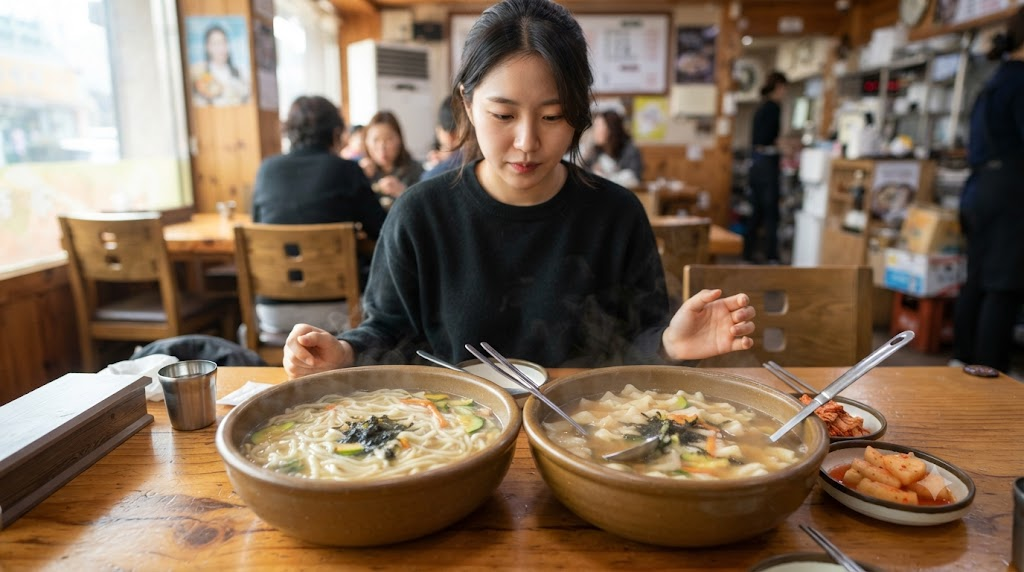
When Ordering, Look at This Rather Than the Broth
If you want chewy dough in long strands that you can slurp, look for kalguksu. If you are thinking of flat pieces of dough that you pick up with a spoon or chopsticks, sujebi is the closer choice.
- If long cut noodles are the main part, it is kalguksu
- If flat pieces of dough torn by hand are the main part, it is sujebi
- If both forms are served together, the name kaljebi may be used
The same approach works when the broth name is shared, as with deulkkae-kalguksu and deulkkae-sujebi. Rather than treating them as the same dish because both say “deulkkae,” look at the final food name to match the form you want to order.
The Kalguksu Sujebi Difference Comes Down to How the Dough Is Shaped
In the shortest terms, the kalguksu sujebi difference is that kalguksu uses dough cut into long noodles with a knife, while sujebi uses pieces of dough torn off and cooked in broth. Even when the broth ingredients are similar, this difference in shape remains.
So when the same words such as bajirak, deulkkae, or seafood appear before both items on a restaurant menu, look at the name that comes after them. The choice between long noodles and flat torn dough is what clearly separates kalguksu from sujebi.
※ This content is provided as a reference for food names and food culture information.
※ Food origins, regional names, and cooking methods may be passed down differently depending on documents, regions, households, and restaurants, so please also refer to official sources and actual menu information.
Korean version: 한국어로 읽기