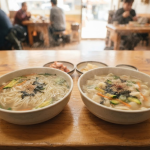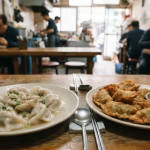

At a kalguksu restaurant, the menu may list “kalguksu” and “bajirak kalguksu” as separate dishes. In the photos, the wide noodles and broth may look similar, yet the prices and menu names are different. If seafood kalguksu is listed as well, you may look at the menu again and wonder how kalguksu with clams differs from the other choices.
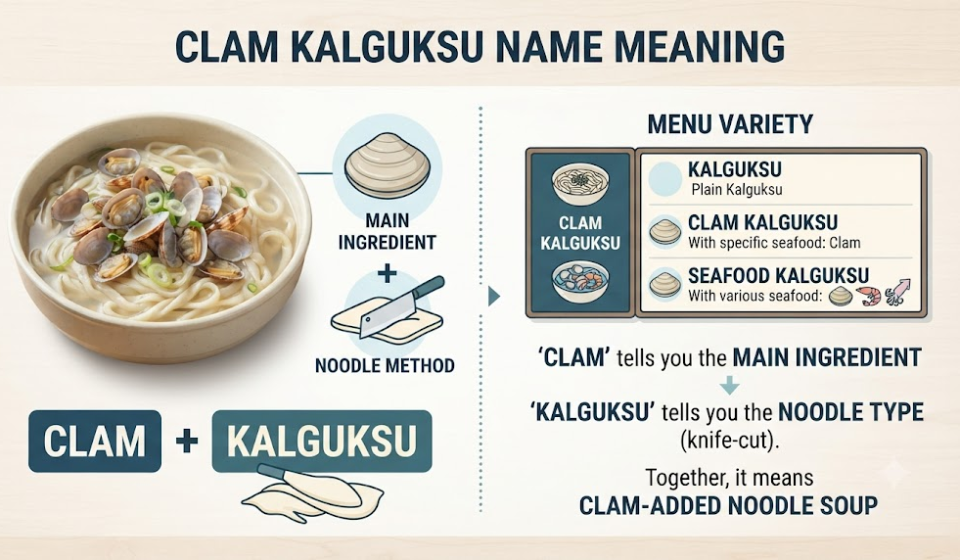
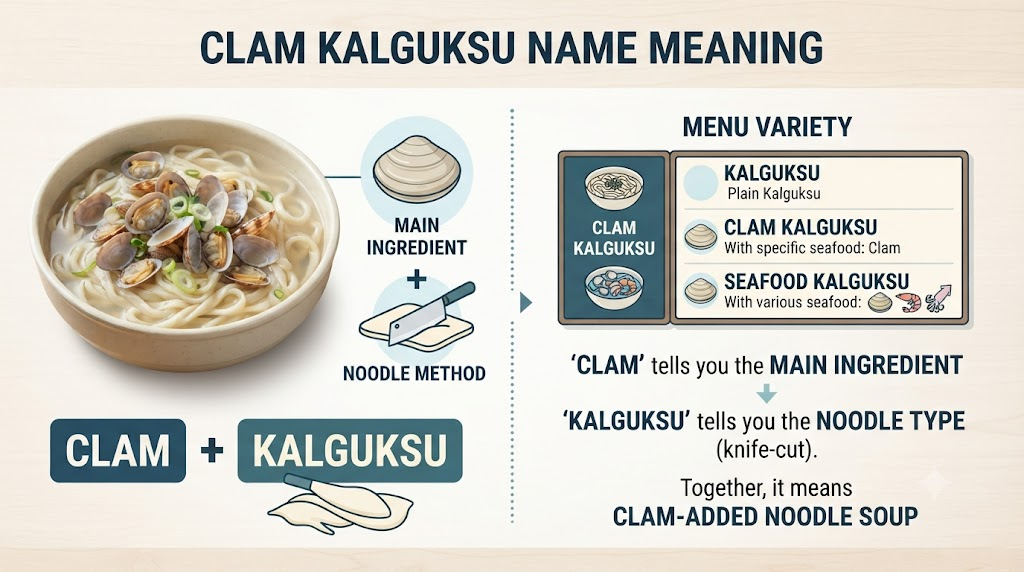
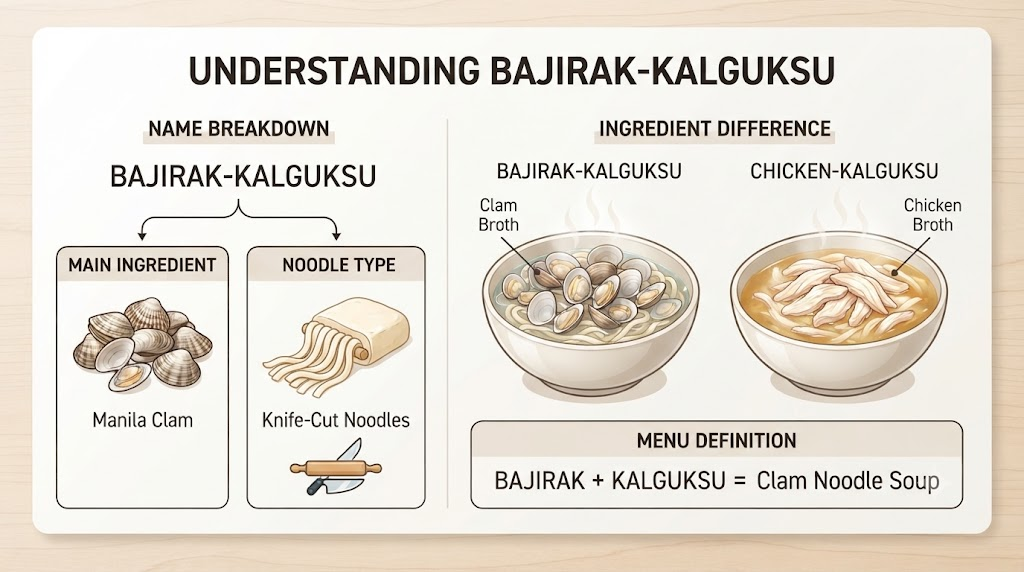
The bajirak kalguksu meaning becomes clearer when the menu name is split into its two parts rather than treated as a complicated food origin story. “Bajirak” is the ingredient name placed first, while “kalguksu” is a name connected to how the noodles are made. One menu name therefore combines a main ingredient with a word describing the form of the noodles.
What does “bajirak” tell you on the menu?
Bajirak is the name for a small clam with shell patterns that spread outward like a fan. The same word is also used for the food ingredient, so the first part of bajirak kalguksu tells you what kind of ingredient is featured in the kalguksu.
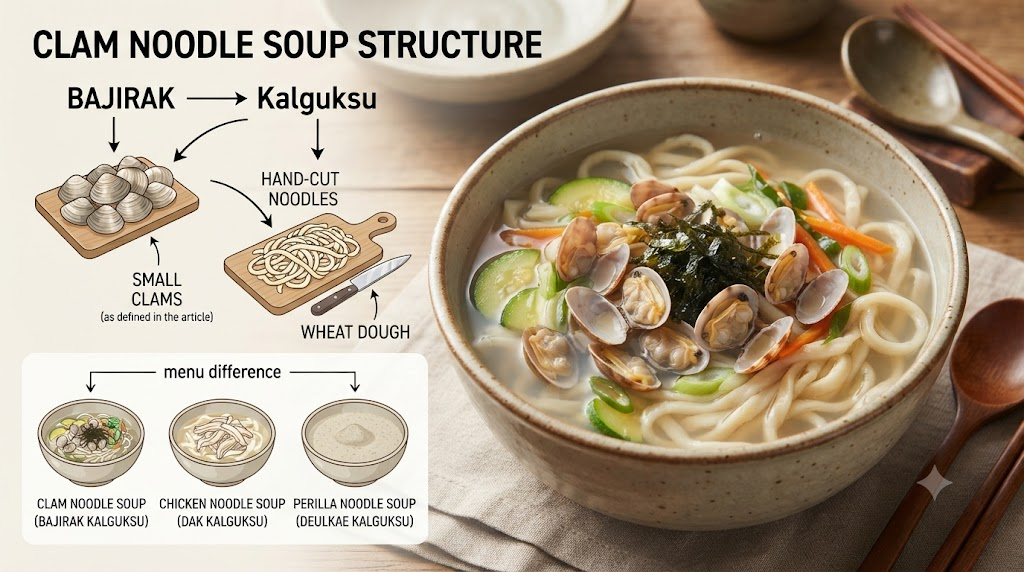
In today’s menu language, “bajirak kalguksu” is therefore close to saying “kalguksu with bajirak clams.” It follows a pattern similar to dak kalguksu or deulkkae kalguksu, where an ingredient or a characteristic of the broth is added before kalguksu to distinguish the dish.
Still, a menu name containing bajirak does not mean every restaurant uses exactly the same broth ingredients or cooking method. The name tells you that bajirak is being highlighted, but the broth and accompanying vegetables can differ from one restaurant to another.
The name “kalguksu” starts with the noodles, not the broth
The second part of the bajirak kalguksu meaning, “kalguksu,” is also worth noticing. The Basic Korean Dictionary explains kalguksu as noodles made by rolling wheat-flour dough thin and cutting it into narrow strips with a knife, or as a dish made by cooking those noodles.
Here, “kal,” meaning knife, is connected not to a tool for cooking the broth but to the way the dough is cut. Looking only at the name kalguksu, the way the noodles are made comes before the question of which shellfish is added.
For this reason, bajirak kalguksu can be understood as a name formed from two words with different roles. “Bajirak” points to the ingredient, while “kalguksu” refers to the noodle form and the cooked noodle dish.
Are regular kalguksu and bajirak kalguksu different dishes?
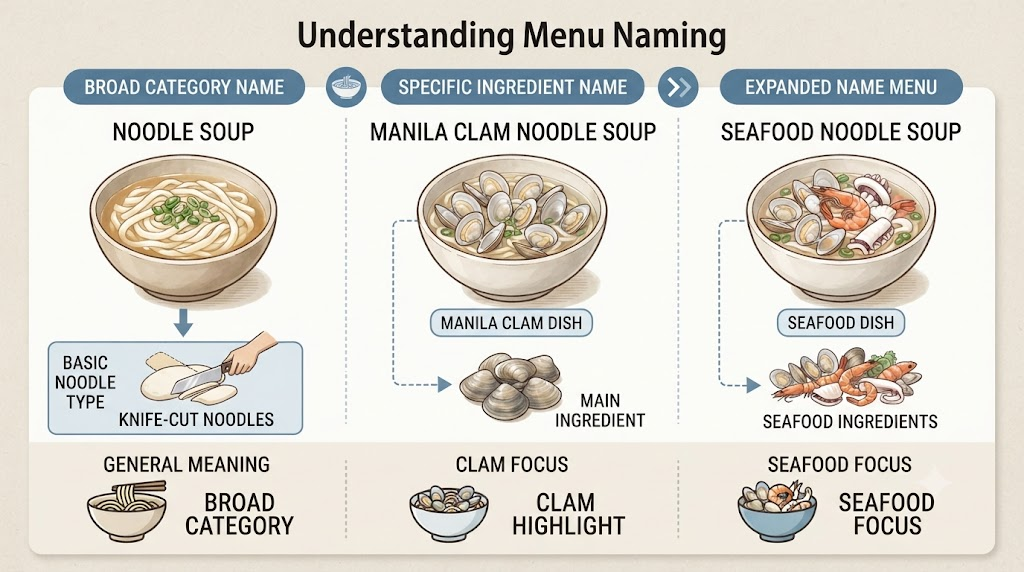
If a restaurant lists “kalguksu” and “bajirak kalguksu” side by side, the names emphasize different ranges. Kalguksu is the broader food name, while bajirak kalguksu specifically brings the ingredient bajirak to the front.
| Menu name | What the name highlights first | What the menu name tells you |
|---|---|---|
| Kalguksu | Knife-cut noodles | A broad name for a dish made with kalguksu noodles |
| Bajirak kalguksu | Bajirak + kalguksu | A kalguksu menu item that highlights bajirak clams |
| Seafood kalguksu | Seafood + kalguksu | A kalguksu menu item that highlights seafood |
That does not mean regular kalguksu can never contain bajirak. A restaurant may simply call its main dish “kalguksu” while still adding clams. When ordering, the menu description or the restaurant’s own information can show the actual ingredients more clearly.
What should you look for when seafood kalguksu is listed beside it?
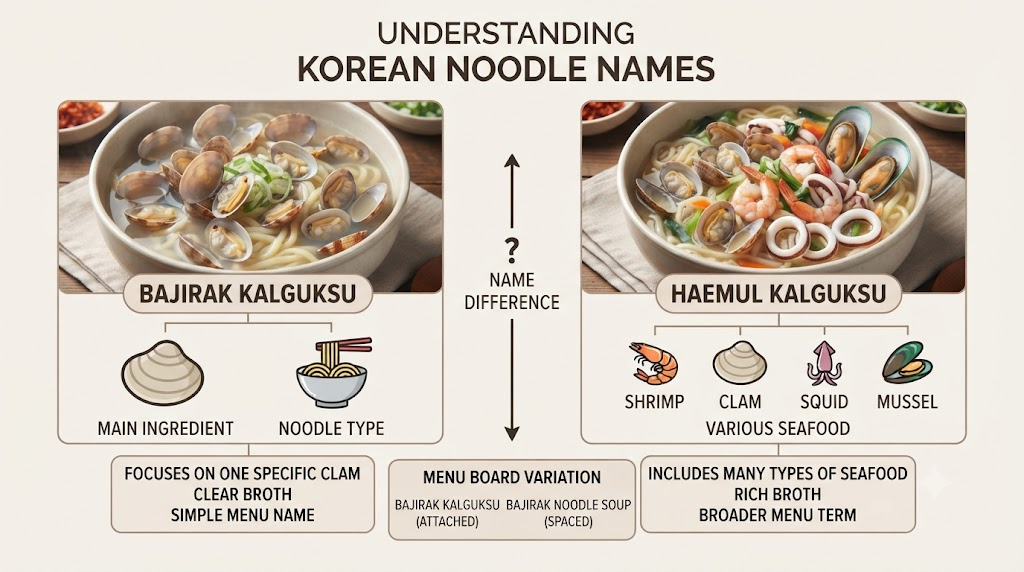
When ordering, the more confusing pair may be bajirak kalguksu and seafood kalguksu. Bajirak is itself seafood, so the two names do not feel like completely separate categories. The difference lies in which ingredient the menu name puts at the front.
When the menu says “bajirak kalguksu,” the specific clam name bajirak stands out. “Seafood kalguksu,” by contrast, is understood as a broader expression that can cover several kinds of seafood rather than one specific type. Even so, the name alone does not tell you exactly which ingredients are included in seafood kalguksu.
So when the two dishes appear side by side, check the menu description to see whether bajirak kalguksu centers on bajirak clams and what seafood is included in the seafood kalguksu. A clam appearing in the photo does not by itself make the two dishes the same.
How should “바지락 칼국수” and “바지락칼국수” be understood?
On restaurant signs and menus, you may see both “바지락칼국수,” written together, and “바지락 칼국수,” written with a space. Restaurant menu names, like product names or wording on signs, can appear in different forms depending on how they are used.
This article uses “바지락칼국수” as the main form for the name of the dish. A difference in spacing on a menu does not change the basic meaning created by combining bajirak and kalguksu.
The bajirak kalguksu meaning becomes clear when the two words are separated
The meaning of bajirak kalguksu can be simply explained as a menu name for “kalguksu with bajirak clams.” Bajirak means the clam used in the dish, while kalguksu refers to noodles made by rolling wheat-flour dough and cutting it with a knife, as well as the dish cooked with those noodles.
Compared with regular kalguksu, the key point is that a specific ingredient, bajirak, appears at the front of the name. If seafood kalguksu is listed beside it, the first distinction is whether the menu highlights one specific clam or groups several kinds of seafood together. The next time you look at a kalguksu restaurant menu, separating what “bajirak” and “kalguksu” each refer to makes the menu name much easier to read.
※ This content is provided as reference material about food names and food culture.
※ Food origins, regional names, and cooking methods may be passed down differently depending on documents, regions, households, and restaurants, so please also refer to official sources and the actual menu information.
Korean version: 한국어로 읽기