
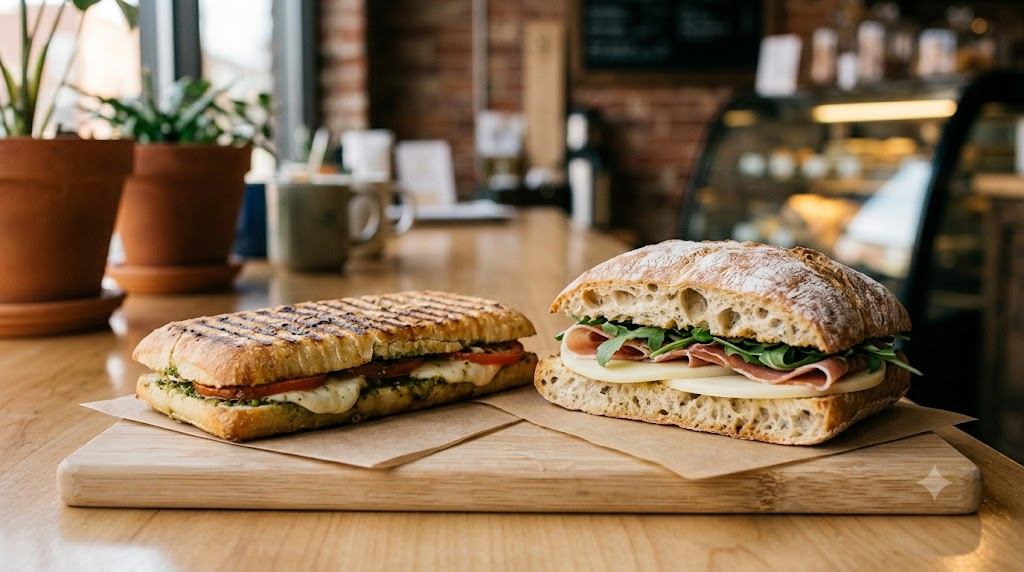
When choosing lunch at a cafe, you may see a ham-and-cheese panini listed right next to a ciabatta sandwich. Both have cheese and vegetables between slices of bread, and even the photos may show them served warm and toasted. From the name alone, it can be hard to tell whether panini refers to a type of bread, a cooking method, or a food different from a sandwich.
The long pressed lines on the surface can also make it seem as though the word panini came from the way the bread is pressed. But when the origin of the name is traced back, the Italian word for “bread” comes before the pressing method.
What is the first difference to notice between a sandwich and a panini?
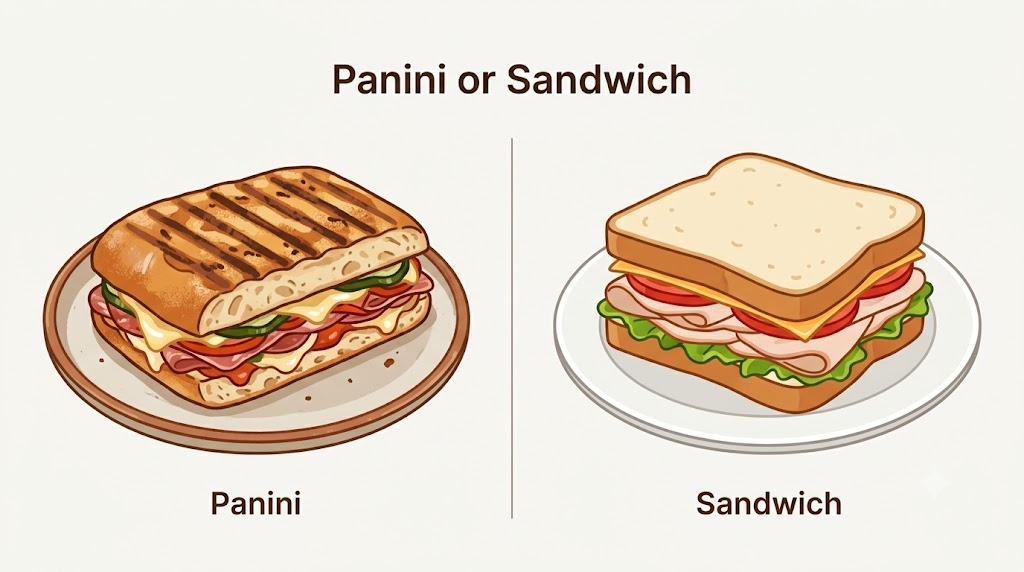
Sandwich is a broad name for food made by placing fillings between pieces of bread. Some sandwiches are served cold, while others are heated in a pan or on a grill. In Korean cafes, however, menus labeled panini commonly feature bread filled with cheese, ham, or vegetables and served warm.
That is why panini on a modern cafe menu is often understood as something close to a “warm pressed sandwich.” Even so, it is difficult to separate the two names into completely different food categories. In a broad sense, panini also overlaps greatly with sandwiches because it is bread with fillings inside.
Ciabatta is not a bread used only for panini either. If a menu lists both a “ciabatta sandwich” and a “ciabatta panini,” the more useful distinction comes from how each one is heated and what fillings it contains rather than from the bread name alone.
Following the panini name meaning leads back to pane
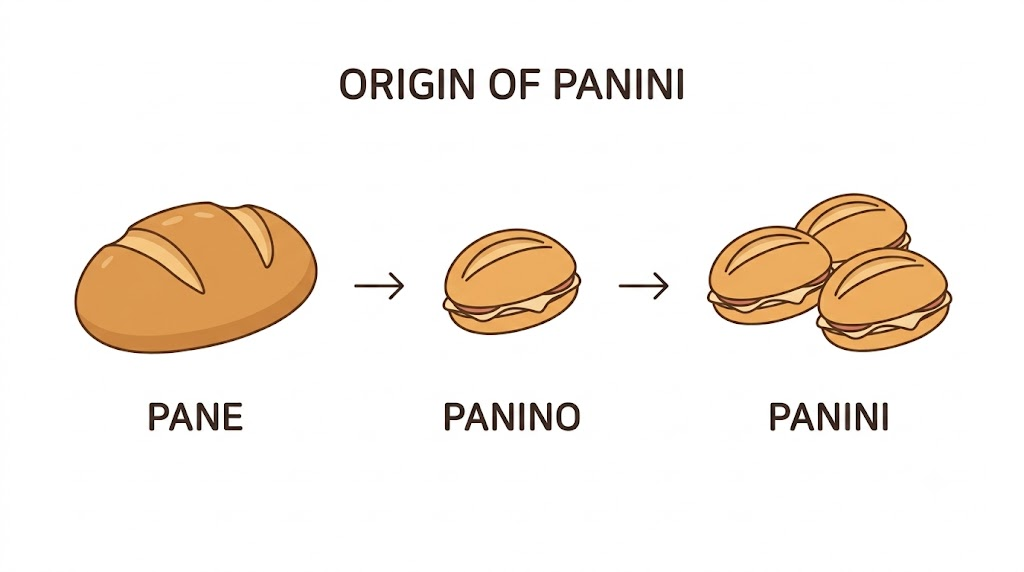
In Italian, bread is called pane. The related word panino refers to a small bread roll and is also used for bread split open and filled with ingredients such as ham, salami, or cheese. Treccani likewise explains panino as a diminutive form derived from pane.
Seen through this relationship, the panini name meaning is not connected to the name of a particular meat or cheese. Its origin is much closer to the bread itself. Whether the filling is ham, chicken, or vegetables, the root of the name stays the same.
There is another detail worth noticing. In Italian, one is panino, while several are panini. The Cambridge Italian dictionary also defines panino as a small bread roll and includes the meaning of a sandwich when the bread is filled.
Why do we order one item and still call it a “panini”?
In Italian grammar, panini is the plural form of panino. After the word entered English, however, panini became widely used as though it could refer to a single menu item. Merriam-Webster also records English usage in which panini functions in both singular and plural contexts.
This English-language usage also helps explain Korean cafe menus. Seeing “1 panini” on a menu does not sound unusual as a Korean food name. The grammar of the original language and the menu name established abroad now operate on different levels.
English also uses the separate plural form paninis. This is another reason it is difficult to declare a Korean menu name incorrect simply by applying the original Italian form.
Does a panini need pressed grill marks?
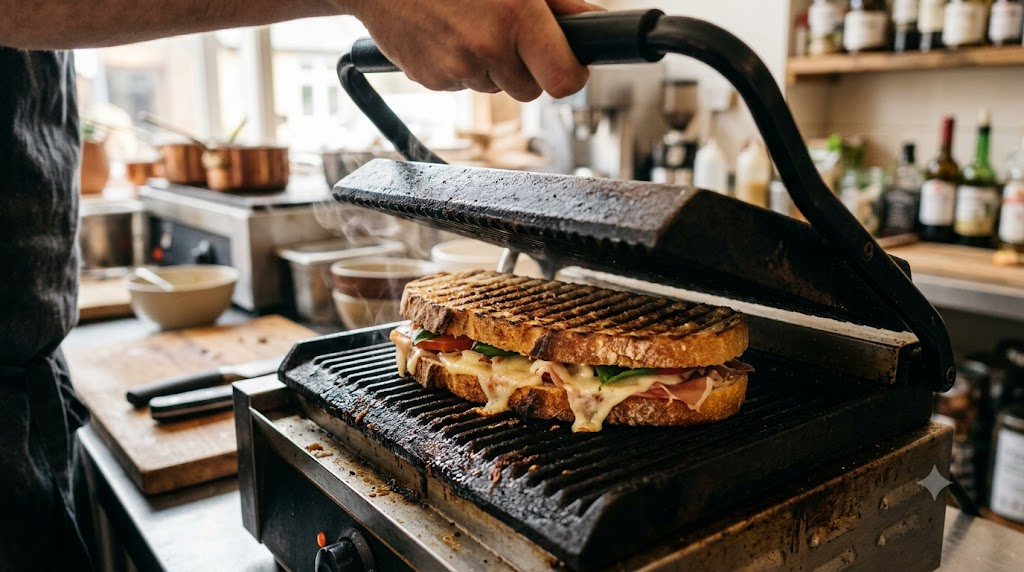
In Korea, panini is often associated with the marks left by a sandwich press. Because the bread is heated between hot plates, parallel lines remain on the surface while the cheese melts and the fillings warm through.
However, the origin of the word itself does not come from a term meaning “to press” or “to grill in a press.” The Italian word panino covers both a small bread roll and filled bread, and pressing is not presented as the starting point of the name.
The menu meaning in modern English has become somewhat narrower. Merriam-Webster describes panini as a sandwich made with Italian bread and usually grilled, while Cambridge also describes a small Italian bread split open, filled with ingredients such as cheese, meat, or vegetables, and eaten warm.
So grill marks are a familiar visual clue for recognizing panini in cafes today, but those marks alone do not define the entire meaning of the word.
How to read these three names on a menu
| Name | Basic meaning of the word | Common menu usage |
|---|---|---|
| panino | In Italian, one small bread roll or one filled bread | Italian singular form |
| panini | In Italian, the plural form of panino | In Korea and English-speaking countries, it may also be used like the name of a sandwich category |
| sandwich | A broad term for food with fillings placed between bread | Covers a wide range from cold sandwiches to warm grilled versions |
When ordering, it is practical to read the description that follows the name as well. In names such as “chicken panini,” “mozzarella panini,” and “ham and cheese panini,” the first part identifies the main filling, while panini works like the menu format that groups these foods together.
If the same cafe sells regular sandwiches and panini separately, check whether they are served warm and pressed, what bread is used, and how the fillings differ. At that point, a few lines of menu description tell you more than the name alone.
What remains from the origin of the panini name
The name panini did not begin with the name of a person who created a particular sandwich or with the name of a pressing machine. It comes from the relationship between the Italian word for bread, pane, its diminutive form panino, and the plural form panini.
As the word spread outside Italy, panini moved beyond its original role as an Italian plural form and became established like the name of a menu item. This usage also became familiar in Korean cafes, where a single warm sandwich is commonly called a “panini.”
In terms of today’s menus, the panini name meaning can be briefly described as “a name for warm sandwiches made with Italian-style bread.” The root of the word itself, however, reaches back to “bread” rather than to the cooking method.

The next time you see a ciabatta sandwich and a panini side by side on a cafe menu, you can remember that “panini originally comes from the plural form of panino, meaning a small bread roll.” For the actual order, check the next line for the bread, fillings, and whether it is served warm and grilled, and the difference between the menu items becomes much clearer.
※ This content is provided as reference information about food names and food culture.
※ Food origins, regional names, and preparation methods may be described differently depending on documents, regions, households, and restaurants, so please refer to official sources together with the actual menu information.
Korean version: 한국어로 읽기