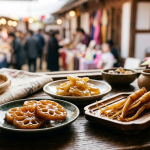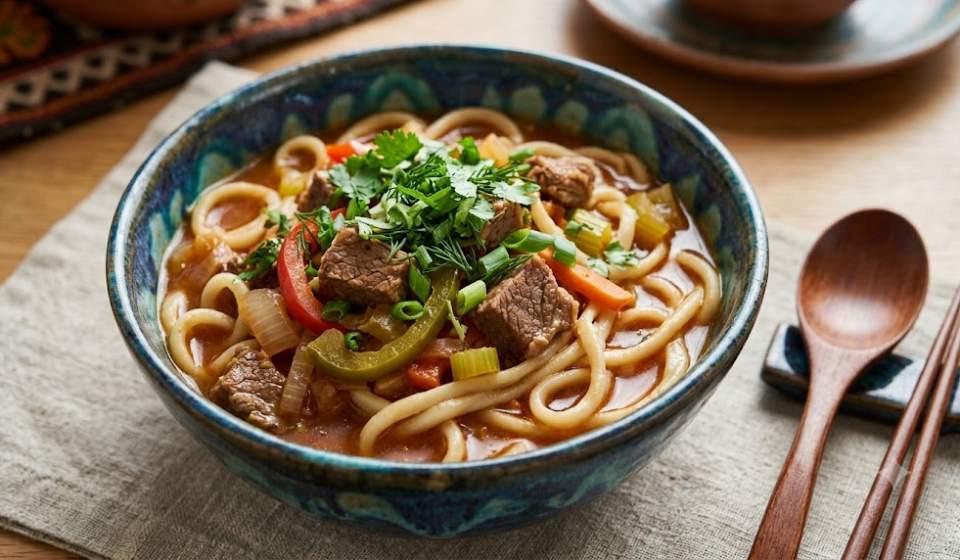

When you look through a Central Asian restaurant menu, you may come across the name “lagman” between dishes such as plov and shashlik. The photos usually show thick noodles, meat, and vegetables, but one restaurant may serve it with plenty of broth while another presents it more like stir-fried noodles. That difference is often what leads people to search for the lagman name meaning.
Rather than referring to one specific type of soup, the name is better understood as a noodle dish that has taken several forms across Central Asia. The appearance of the bowl can change considerably depending on how the noodles are made and how the meat and vegetables are served with them.
Why the name lagman alone does not tell you whether it is noodles or soup
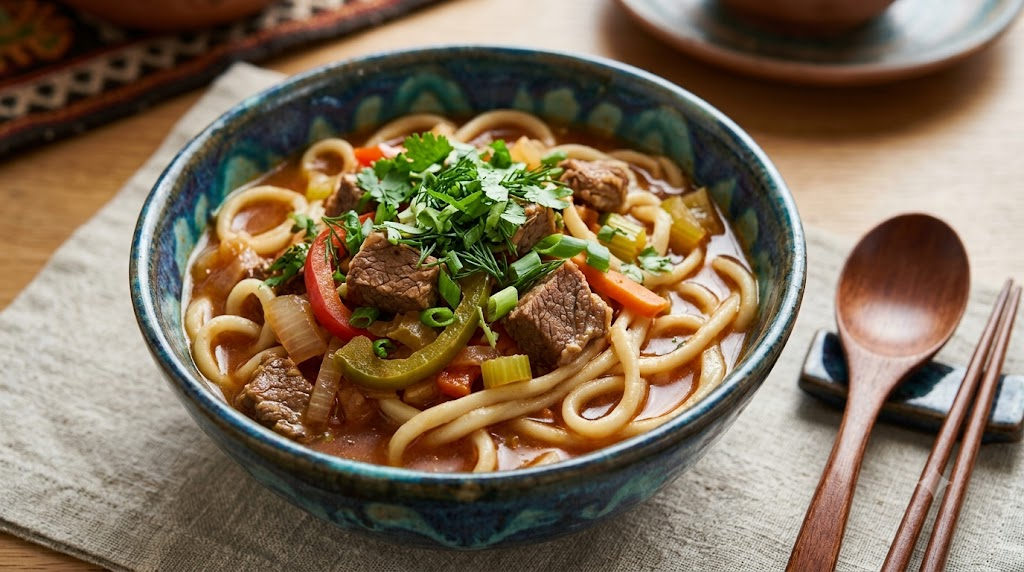
Lagman is the name of a family of noodle dishes associated with Uyghur food and several parts of Central Asia. Uzbekistan food information also describes it as a dish made with handmade noodles served with meat, vegetables, and spices rather than presenting only one fixed style.
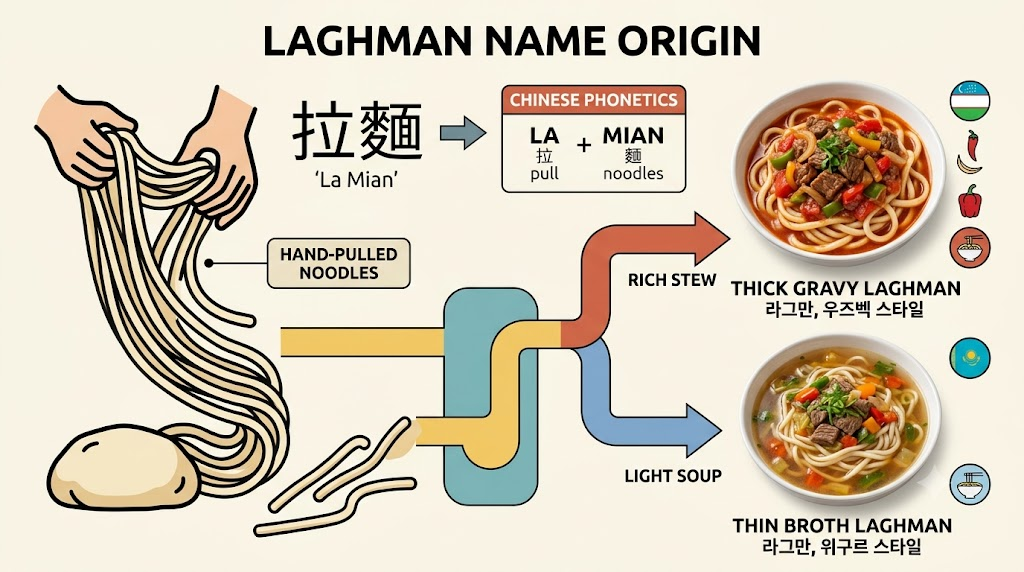
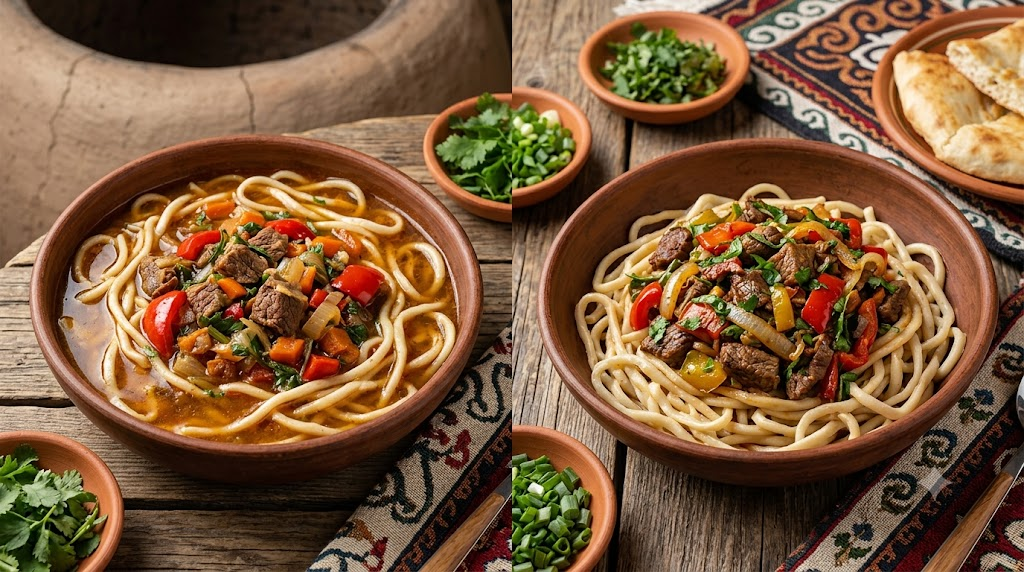
So seeing “Lagman” on a menu does not necessarily mean you should expect a bowl with as much broth as a typical Korean noodle soup. Some versions have plenty of broth or sauce, while others are prepared by stir-frying the noodles with the other ingredients.
Instead of thinking of “lagman” as simply “noodles in broth,” it is clearer to think of it as the name of a Central Asian noodle dish centered on noodles served with meat and vegetables.
How is the lagman name meaning connected to the Chinese word lāmiàn?
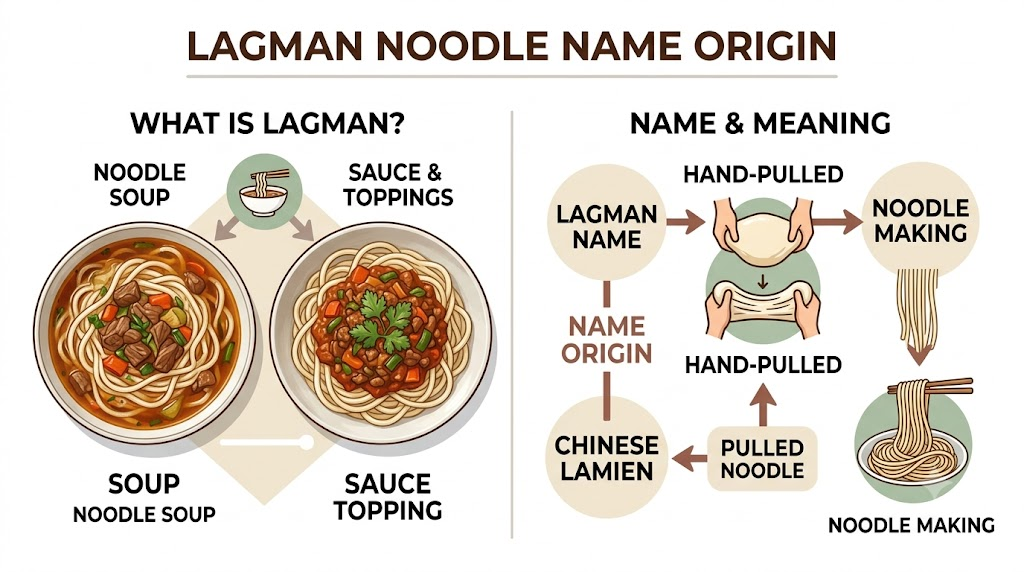
One word that often appears in explanations of the name lagman is the Chinese “lāmiàn (拉面).” “拉” means to pull or stretch, while “面” refers to noodles, so the word is connected with noodles made by stretching dough by hand.
Regarding the relationship between the Uyghur läghmän form and the Chinese lāmiàn, linguistic explanations have suggested that the word was likely borrowed from Chinese. This does not mean that all lagman dishes today are simply the same as Chinese lāmiàn. As the dish became established in different parts of Central Asia, local ways of serving the noodles with meat and vegetables and different cooking styles developed around it.
For that reason, reducing the lagman name meaning to the Korean equivalent of “stretched noodles” would leave out part of the picture. It makes more sense to consider both the background of hand-worked noodles and the food name that became established across Central Asia. The origin of the word and the range of dishes served under that name today are worth treating separately.
Why two lagman dishes can look very different
Uzbekistan food materials show several names within the broader category of lagman. Some versions use noodles stretched from dough, others use thick cut noodles, and still others are prepared by stir-frying the noodles with the other ingredients.
| Name seen on the menu | Noticeable difference | What to expect when ordering |
|---|---|---|
| Chuzma lagman | Centered on stretched noodles | Noodles served with meat and vegetables |
| Kesma lagman | Uses thick cut noodles | Noodles served with a meat and vegetable sauce |
| Kovurma lagman | Noodles and ingredients are stir-fried | Closer to stir-fried noodles than a brothy noodle dish |
These differences explain why photos of lagman do not always look alike. Extra words can be added to the broad name lagman to indicate how the noodles are made or how the final dish is cooked. If a word such as “kovurma” appears, paying attention to that cooking term can tell you more about what will arrive at the table than the basic name alone.
Are Lagman, Laghman, and Lagʻmon different foods?
When you look at restaurant menus while traveling or browse menus from other countries, the spelling is not always consistent. English-language materials use lagman and laghman, while Uzbek uses forms such as lagʻmon. The spelling can also change when names from Uyghur and other languages are written in the Latin alphabet.
Those spelling differences alone are not a strong reason to treat them as separate dishes. They reflect different ways of representing names from different languages in Roman letters. Korean menus may also favor the easier-to-read Korean form “라그만” rather than following one original-language spelling exactly.
Words added after the name, however, are more useful to notice. Even within the same lagman family, the amount of broth, the shape of the noodles, and whether the dish is stir-fried can vary, so those descriptions often reveal more about the actual plate than the spelling does.
On a menu, look at the words that come after “lagman”
When ordering lagman at an unfamiliar restaurant, it is practical to check the menu description and photo rather than relying only on the name. Whether the dish has plenty of broth, comes with meat and vegetable sauce over the noodles, or is stir-fried tells you more directly what kind of bowl or plate to expect.
If another word appears next to lagman, see whether it describes a region, the way the noodles are made, or a stir-frying method. Because several cooking styles exist under the same food name, a lagman dish may not look exactly like one you have eaten before.
In the end, the lagman name meaning is closer to the name of a Central Asian noodle dish built around hand-worked noodles served with meat and vegetables than to the name of one specific kind of soup. The name is widely explained as being connected to the Chinese lāmiàn, while the lagman found on menus today reflects cooking styles that developed among Uyghur and other Central Asian food traditions.
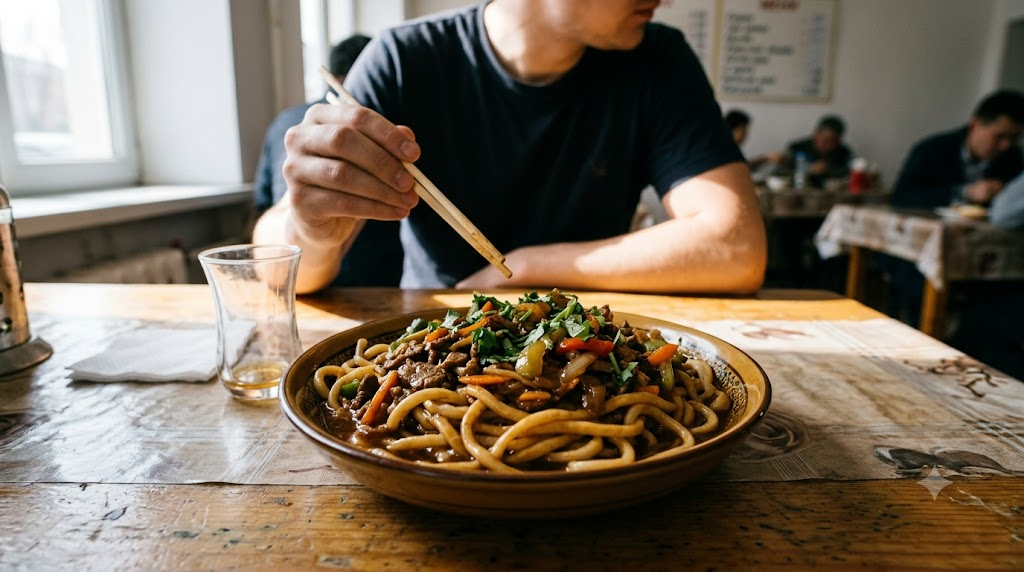
The next time you see Lagman, Laghman, or Lagʻmon on an Asian restaurant menu, it is more useful to read the cooking description that follows than to focus first on the spelling. Once you check whether it is a brothy noodle dish or a stir-fried one, the range covered by the name “lagman” becomes much clearer.
※ This content is provided as a reference for food names and food culture information.
※ Food origins, regional names, and cooking methods may be described differently depending on documents, regions, households, and restaurants, so please also refer to official materials and the actual menu information.
Korean version: 한국어로 읽기