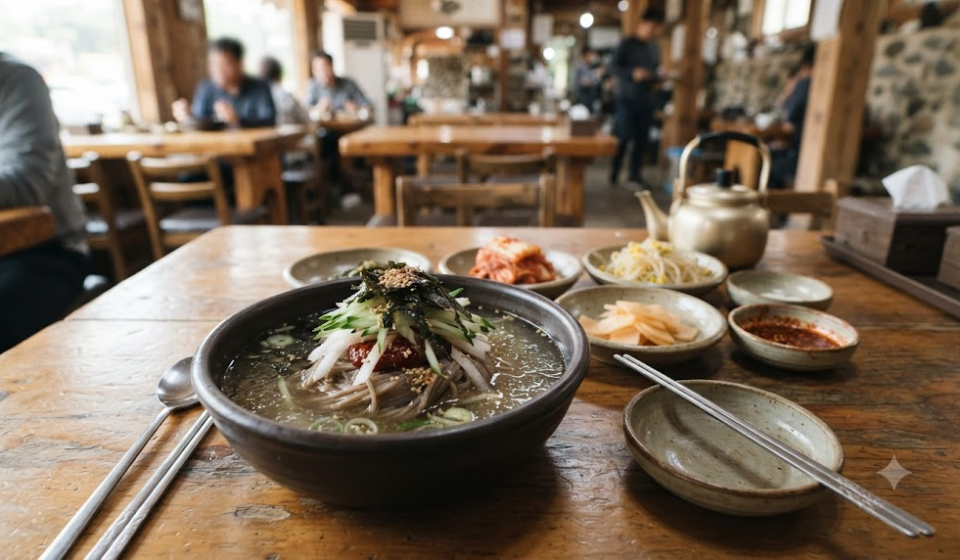

When you walk through restaurant areas while traveling in Gangwon-do, you may notice the longer name ‘Bongpyeong buckwheat noodles’ more often than the simpler ‘buckwheat noodles.’ The name Bongpyeong also appears on dried noodles in supermarkets and on online products. The noodles themselves may not look very different from other buckwheat noodles, so it can be unclear at first whether Bongpyeong refers to a special cooking method or to a place.
To understand the meaning of the name Bongpyeong buckwheat noodles, it is more useful to look at why ‘Bongpyeong’ became closely linked with buckwheat than to focus only on the shape of the noodles. This becomes especially clear on menus where names such as makguksu appear alongside it, because the place name and the food type need to be read separately.
What is the difference between buckwheat noodles and Bongpyeong buckwheat noodles?
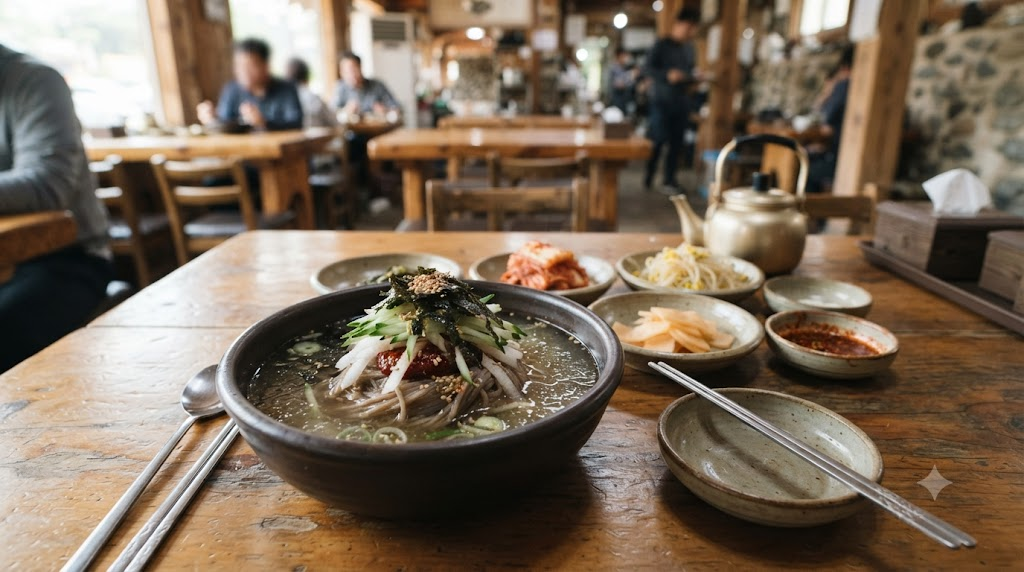
‘Buckwheat noodles’ is a food name for noodles made with buckwheat. In ‘Bongpyeong buckwheat noodles,’ a place name is added in front of the food name. Bongpyeong here means Bongpyeong-myeon in Pyeongchang-gun, Gangwon State.
For that reason, it is difficult to treat the two expressions as completely different kinds of noodles. The name Bongpyeong buckwheat noodles combines the food category of buckwheat noodles with the regional image of Bongpyeong.
| Menu name | What the name tells you | What to check on the menu |
|---|---|---|
| Buckwheat noodles | Noodles made with buckwheat | The actual serving style, such as cold broth, mixed, or hot noodles |
| Bongpyeong buckwheat noodles | A name combining the Bongpyeong place name with buckwheat noodles | Check the restaurant’s ingredient information separately from whether the ingredients are from Bongpyeong |
| Makguksu | A separate food name widely associated with the Gangwon region | The noodle, broth, and seasoning combination varies by restaurant |
This means that seeing ‘Bongpyeong’ in a menu name does not mean every restaurant uses the same noodle blend or broth. A place name used as part of a food identity and the actual origin of the ingredients are separate matters.
Why does the Bongpyeong buckwheat noodles name begin with a place name?
The connection between Bongpyeong and buckwheat did not suddenly appear on modern tourist menus. Pyeongchang-gun tourism materials explain that buckwheat was used in Bongpyeong as a food in place of wheat, and that dishes such as buckwheat noodles and buckwheat pancakes developed there. Various buckwheat foods are also treated as local foods at Bongpyeong Traditional Market today.
Against this regional background, the combination ‘Bongpyeong + buckwheat’ became familiar, and the Bongpyeong place name also came to be used in noodle names. However, it is difficult to confirm a single origin story in which one restaurant first named the dish ‘Bongpyeong buckwheat noodles.’
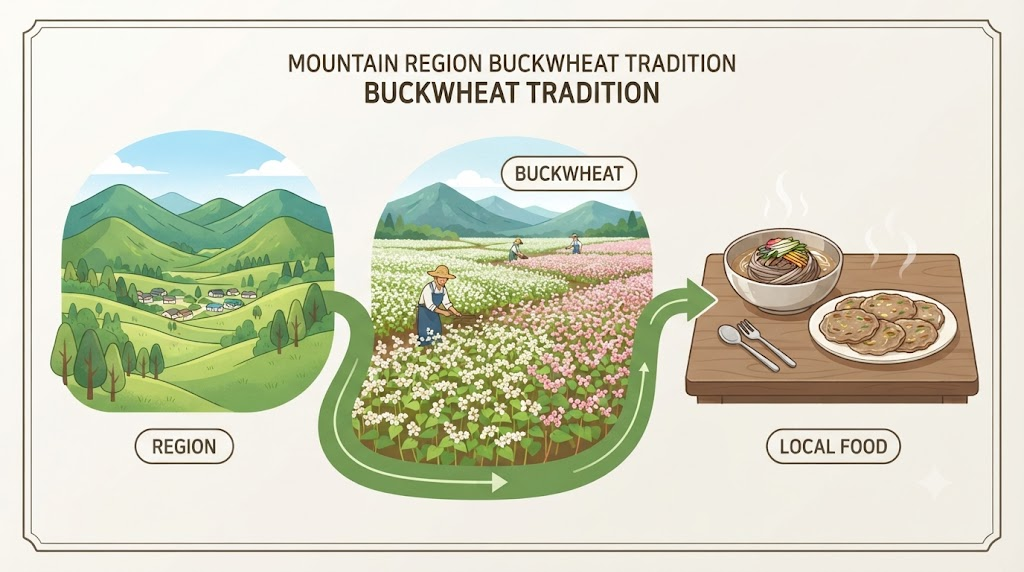
When Buckwheat Flowers Bloom brought Bongpyeong and buckwheat even closer together
Literature also played a large role in making people associate the name Bongpyeong with buckwheat flowers. Lee Hyo-seok’s short story 「When Buckwheat Flowers Bloom」 was published in 1936 and is set around Bongpyeong.
Regional culture materials from the Korean Local Culture and Arts Foundation explain that the buckwheat field scenery described in the story played a major role in spreading the image of Bongpyeong and buckwheat. Bongpyeong is also Lee Hyo-seok’s hometown, and as more visitors came to the area through the literary work, the regional image connected with buckwheat became even stronger.
It is useful here to separate the beginning of the food from the reason the regional image became widely known. The novel did not create buckwheat noodles. Rather, it is one of the factors that made the Bongpyeong place name and buckwheat feel closely linked across the country.
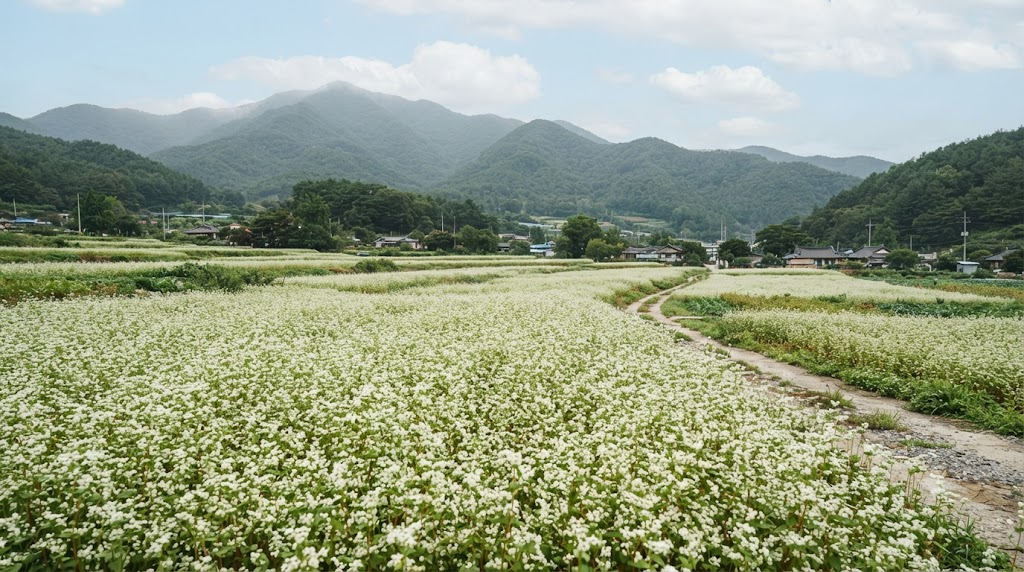
Bongpyeong buckwheat noodles and makguksu are not the same name
Restaurant signs may show similar names such as ‘Bongpyeong buckwheat noodles,’ ‘Bongpyeong makguksu,’ and ‘buckwheat makguksu.’ Because buckwheat appears in all of them, they can seem like different names for the same food.
However, the parts of the names work differently. In Bongpyeong buckwheat noodles, ‘Bongpyeong’ tells you the place, while ‘buckwheat noodles’ tells you the ingredient and noodle form. Makguksu is an established food name in its own right, so it does not simply match the Bongpyeong place name.
When ordering, reading the menu description is often faster than relying on the name alone. Buckwheat noodles can be served with cool broth, mixed with seasoning sauce, or served in hot broth, even within the same restaurant. The word ‘Bongpyeong’ by itself does not tell you what kind of broth or seasoning will be used.
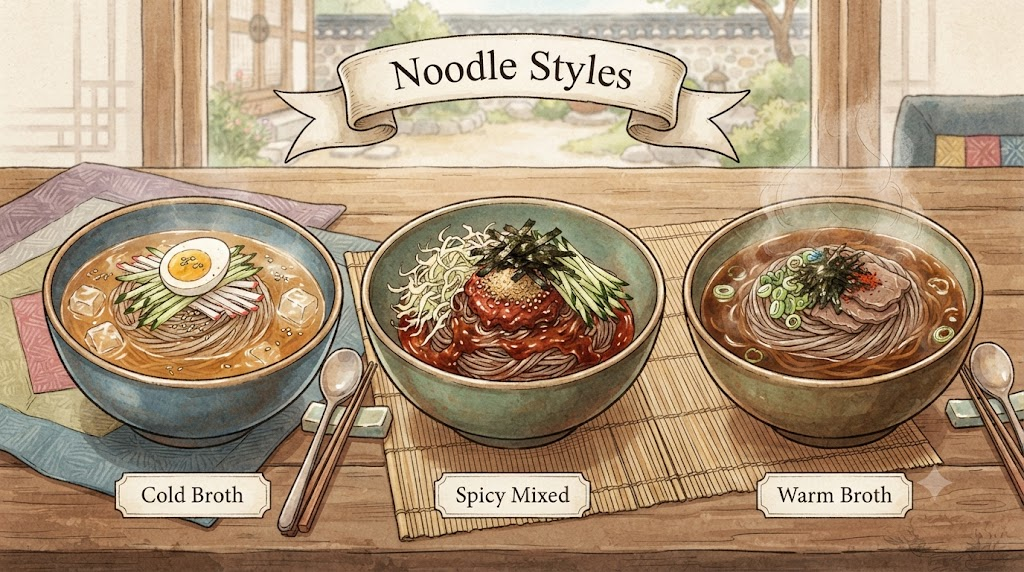
‘Bongpyeong’ in a product name should be read separately from the ingredient origin
Outside local restaurants, the name Bongpyeong also appears frequently on products in supermarkets and online food shops. There are businesses in the Bongpyeong area that produce or sell buckwheat flour, buckwheat noodles, buckwheat tea, and other products.
However, the product name on the front and the ingredient information do not always say the same thing. A product called ‘Bongpyeong buckwheat noodles’ may emphasize the regional image of Bongpyeong buckwheat food, so anyone looking specifically for buckwheat from Bongpyeong should read the ingredient list and country or place of origin information separately.
The same idea applies to restaurants. A place name on a sign can describe the style or identity of the restaurant, while the actual origin of the buckwheat is shown in separate origin information. The meaning of the name and the ingredient label should not be treated as the same thing.
How to read Bongpyeong buckwheat noodles on a menu today
Rather than explaining the origin of the Bongpyeong buckwheat noodles name through one single event, it makes more sense to see it as a name shaped by the long relationship between the region and the food. Buckwheat foods associated with Pyeongchang’s Bongpyeong, everyday food culture around Bongpyeong market, and the strong regional image created by 「When Buckwheat Flowers Bloom」 all helped make the pairing of ‘Bongpyeong’ and ‘buckwheat’ familiar.
In short, the meaning of Bongpyeong buckwheat noodles is close to ‘buckwheat noodles with the regional name Bongpyeong attached.’ The name does not need to be read as referring to one fixed broth or one specific noodle blend.
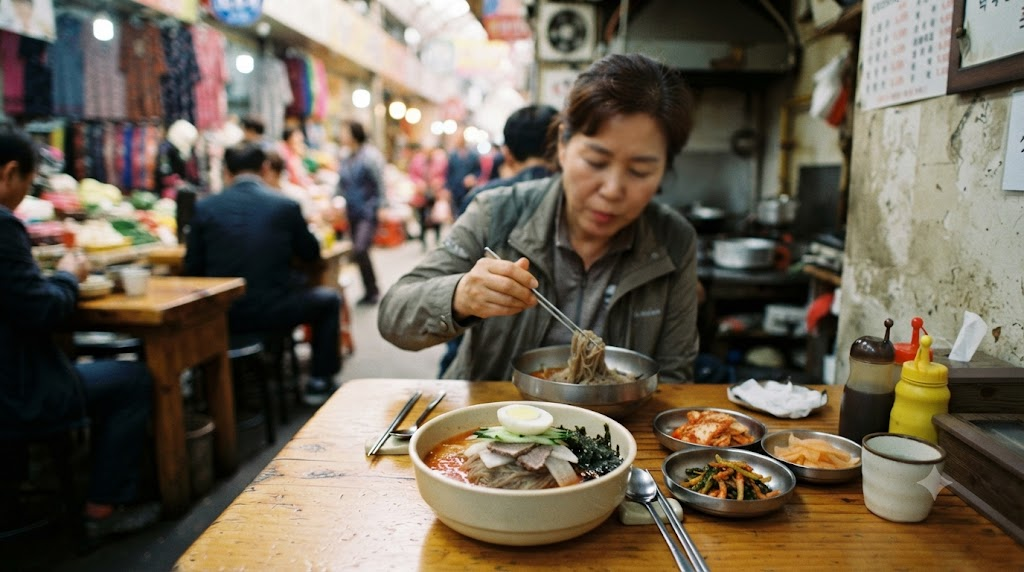
If you see this name again on a restaurant menu while traveling in Bongpyeong, read ‘Bongpyeong’ as the place and ‘buckwheat noodles’ as the type of food. Then check the menu description to see whether the dish is served in broth or mixed with seasoning.
※ This content is provided as reference information about food names and food culture.
※ Food origins, regional names, and cooking methods may differ depending on documents, regions, households, and restaurants, so please also refer to official materials and actual menu information.
Korean version: 한국어로 읽기