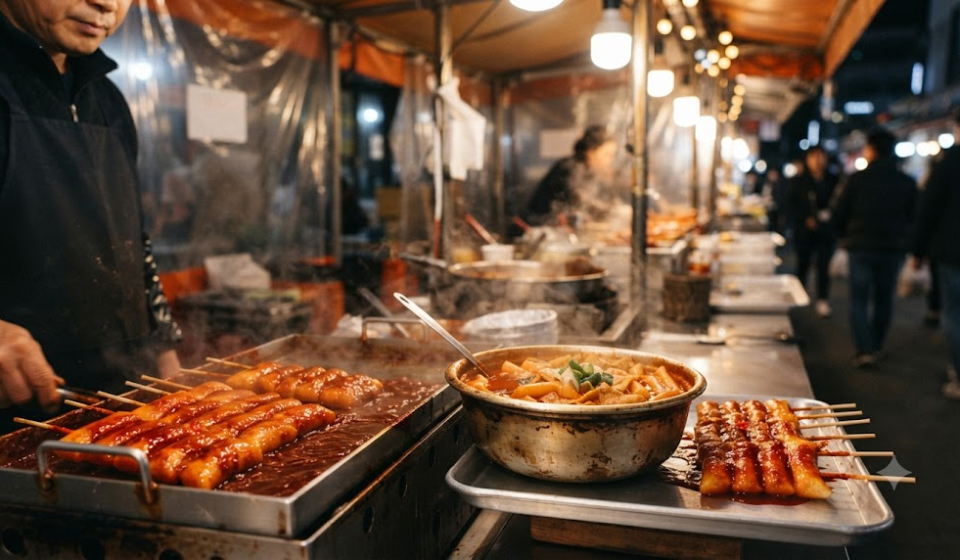

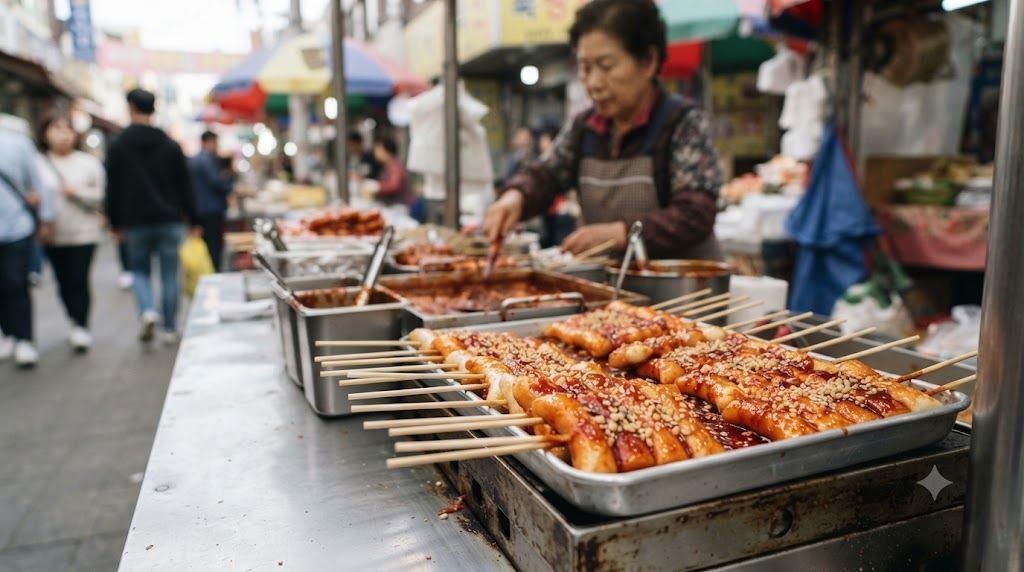
When you see rice cakes coated in red sauce at a snack shop display, tteokbokki may be the first food that comes to mind. But when the same rice cakes are lined up on a wooden stick, the menu says “tteokkkochi.” If sausage is added, it may instead be called sotteok-sotteok, so the name of this snack has more to do with how the rice cake is served than with the sauce.
The Skewer Matters More Than the Red Sauce
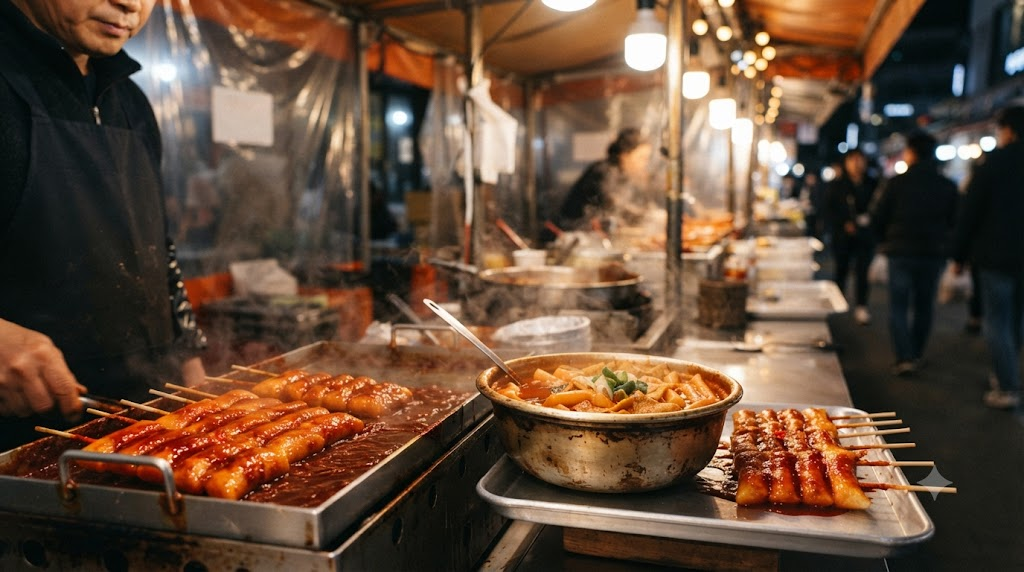
Tteokbokki and tteokkkochi often use similar rice cakes, and red sauce is common with both. Still, their serving styles make them easy to tell apart. Tteokbokki is served as several rice cakes together with sauce in a bowl, while tteokkkochi is usually served with pieces of rice cake threaded onto a skewer for easy eating.
This means the tteokkkochi name meaning can be understood simply by reading the two parts of the word. “Tteok” is the main ingredient, or rice cake, while “kkochi” refers to food threaded onto a skewer. It follows the same pattern as dak-kkochi and eomuk-kkochi, where the ingredient comes first and the word for skewer follows.
Signs Written as “Tteok-kkoji” and the Name “Tteokkkochi”
On old snack shop signs or handwritten menus, you may sometimes see the name incorrectly written as “tteok-kkoji.” It can be easy to write it that way because it sounds similar to the Korean word meaning “to stick or insert,” but the correct word for food threaded onto a skewer is “kkochi.” The food name is therefore correctly written as “tteokkkochi.”
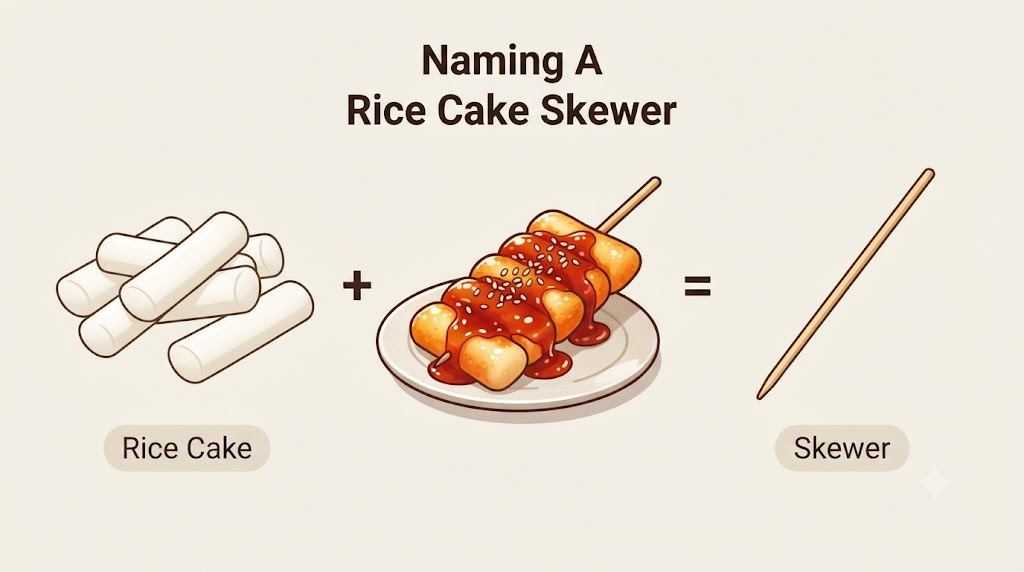
The name does not contain the name of a particular neighborhood or person. Instead, it combines the ingredient, rice cake, with the skewer form so that the food is easy to picture from the name alone. That is why both the ingredient and the way it is served come to mind when you hear the name.
Street-style tteokkkochi is often made by threading several long or small pieces of rice cake onto a skewer, grilling or cooking them, and then adding sauce. The food-related public material referenced here also uses the name “tteokkkochi” for rice cakes placed on a skewer and served with sauce.
For the Origin, Separate the Meaning from the Starting Point
The meaning of the word “tteokkkochi” is fairly clear, but it is harder to explain in the same way who first made it or when people began calling it by this name. Based on the materials currently available, there is not enough evidence to identify one specific year or one shop as the definite starting point.
There are descriptions of tteokkkochi becoming widely known through the history of bunsik and street snacks, but that does not necessarily identify the moment when the name itself was first created. When discussing the origin of the tteokkkochi name, it is more reasonable to separate the clear structure of the name, “rice cake threaded on a skewer,” from the fact that its exact starting point is not known.
If Sotteok-Sotteok Is Next to It, Look at the Ingredients
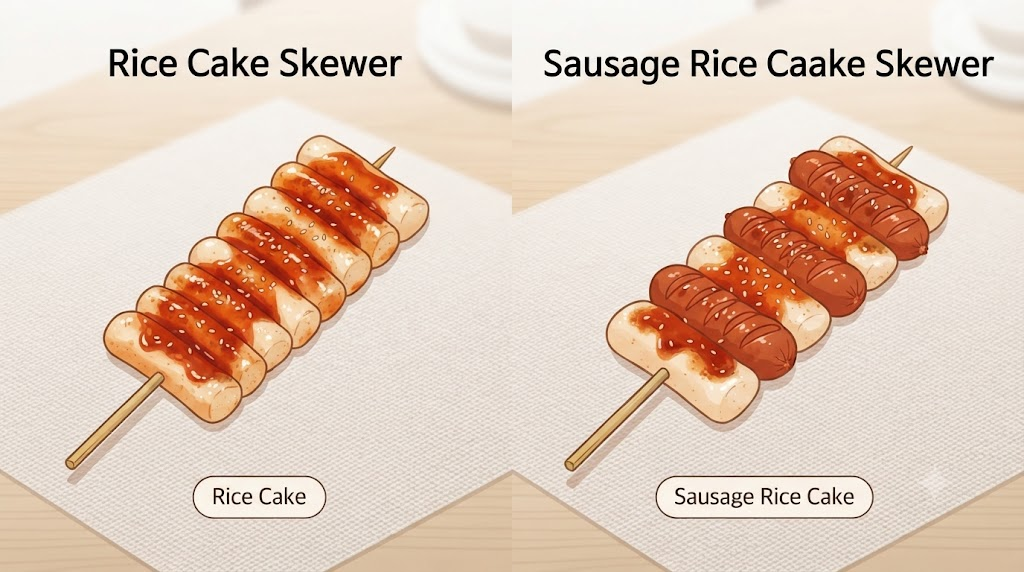
At highway rest stops or snack shops, tteokkkochi and sotteok-sotteok may appear together on the menu. Both use skewers and are coated with sauce, but the ingredient combinations indicated by their names are different.
| Menu name | What the name shows | Typical composition | What to check on the menu |
|---|---|---|---|
| Tteokkkochi | Rice cake + skewer | Rice cake threaded onto a skewer | A snack centered on rice cake |
| Sotteok-sotteok | Sausage + rice cake repeated | Sausage and rice cake threaded together | Check whether sausage is included |
| Tteokbokki | Rice cake + bokki | Rice cake cooked with sauce and served together | Closer to a bowl dish than a skewer |
The name sotteok-sotteok immediately shows that sausage and rice cake are used together. Tteokkkochi, on the other hand, centers on rice cake, and the fact that the rice cake is threaded onto a skewer is reflected directly in the name. Even when the same red sauce is used, checking which ingredients are on the skewer makes ordering less confusing.
The Name Can Stay the Same Even When the Sauce Changes
Tteokkkochi often brings to mind a sweet and spicy gochujang-style sauce. However, that one sauce is not an absolute condition for using the name tteokkkochi.
The public material reviewed here also introduces tteokkkochi made by placing rice cakes on a skewer and topping them with a sauce made with lemon and perilla seeds. It is an example where the familiar red sauce is not used, but the food is still called tteokkkochi because the rice cakes are served on a skewer.
A similar pattern appears in products sold at stores. Names such as “ssal-tteokkkochi” or “cheese tteokkkochi” may add the type of rice cake or another ingredient at the front, while tteokkkochi remains at the end. The combination of rice cake and skewer is more central to the name than the flavor of the sauce.
One Thing to Check When Choosing Tteokkkochi
At a snack shop or in a frozen snack section, a quick way to read the name is to check what has been threaded onto the skewer. If only rice cakes are lined up, it is tteokkkochi. If sausage and rice cake alternate on the stick, it is sotteok-sotteok. The menu name and the actual appearance connect in this way.
Eomuk-kkochi and sausage skewers can be read in the same way. The word before “kkochi” tells you what the main ingredient is, so names in this group are close to menu names that describe both the ingredient and its form.
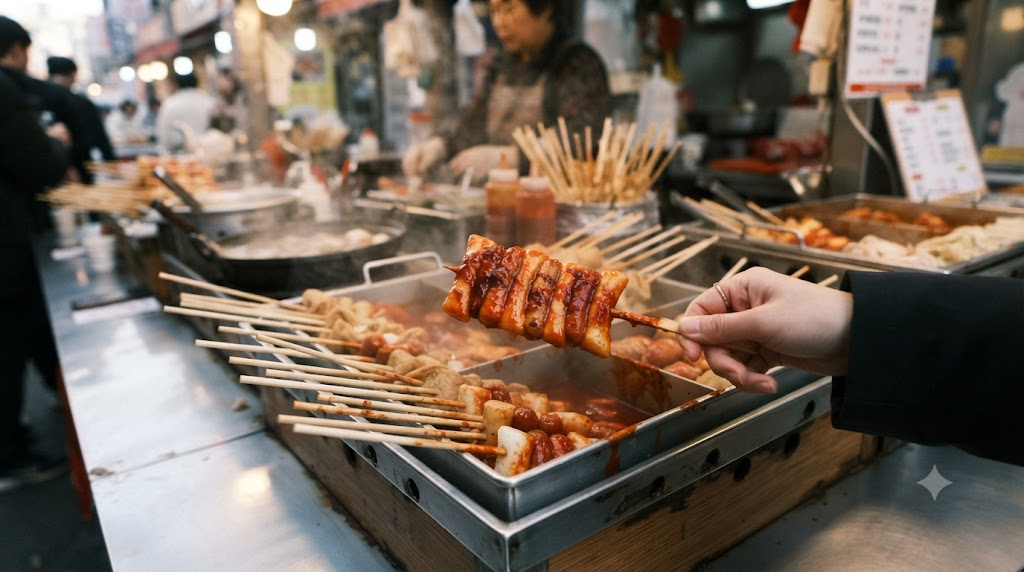
The tteokkkochi name meaning can be explained as a snack made by threading rice cakes onto a skewer. “Tteok” refers to the rice cake, while “kkochi” refers to food threaded onto a skewer, and the exact first use of the name or a single place of origin cannot be confirmed from the materials currently available.
The next time you see tteokbokki and tteokkkochi together on a snack shop menu, the bowl or stick may tell you more than the color of the sauce. If the rice cakes are lined up on a stick rather than sitting in a dish, the meaning of “kkochi” in the menu name becomes clear right away.
※ This content is provided as a reference for food names and food culture information.
※ Food origins, regional names, and cooking methods may be passed down differently depending on documents, regions, households, and restaurants, so please refer to official materials together with the actual menu information.
Korean version: 한국어로 읽기